Our Verdict
EnginStar Portable Power Station Wins
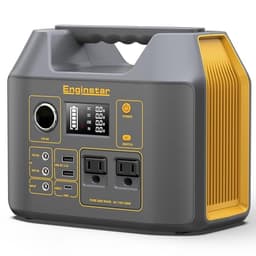
At a significantly lower price of $111.10, it provides essential 300W AC output via two pure sine wave outlets, a critical feature completely absent in the EF ECOFLOW. While its Li-ion battery (296Wh) is slightly larger than ECOFLOW's 288Wh LiFePO4, its AC versatility and price point offer superior value. The EF ECOFLOW is the better pick if AC power is not needed and priority is given to the longer lifespan of LiFePO4 chemistry and faster 1.77-hour recharge time.
Bottom Line: EnginStar Portable Power Station is the better choice. At a significantly lower price of $111.
In-Depth Analysis
How they compare in practice
The core distinction between the EF ECOFLOW TRAIL 300 and the EnginStar Portable Power Station lies in their fundamental power output capabilities. The EnginStar stands out by providing two 300W pure sine wave AC outlets, making it a true portable power station capable of running small household appliances, laptop chargers, or camp lights. This is a critical advantage for many users, as the EF ECOFLOW is limited to DC and USB outputs, effectively acting more as an advanced power bank than a versatile generator. For typical camping, tailgating, or emergency home use, the ability to plug in standard electronics directly gives the EnginStar a significant edge.
However, the EF ECOFLOW makes a strong case for long-term durability and efficiency in its niche. It utilizes LiFePO4 battery chemistry, known for its superior cycle life, safety, and stability compared to the EnginStar's Li-ion battery (rated for 1000+ cycles). For users who intend to heavily cycle their power station over many years, the ECOFLOW offers a better long-term investment. Additionally, the ECOFLOW boasts an impressively fast 1.77-hour recharge time, dramatically minimizing downtime, whereas the EnginStar's AC recharge takes a much longer 7 hours. The ECOFLOW also provides more DC ports (5 vs 3) and dual powerful USB-C outputs, catering excellently to modern gadget charging needs.
The EnginStar compensates for its slower recharge and different battery chemistry with a much more attractive price point of $111.10, compared to the ECOFLOW's $146.99. It also offers a higher 300W solar input capacity versus ECOFLOW's 110W, allowing for faster solar recharging if a high-wattage panel is used. Ultimately, the choice depends on priorities: the EnginStar offers essential AC power and better value for budget-conscious users, while the ECOFLOW delivers premium battery longevity, faster charging for DC devices, and robust connectivity for USB and 12V accessories, albeit at a higher cost and without AC outlets.
Key Differences
The most significant spec differences at a glance
Battery Capacity
3% lessAC Output
100% lessAC Outlets
100% lessCharge Time
75% lessDc Ports
67% moreAdvantages
Where each product wins

EF ECOFLOW
- Charge Time: 75% lower (1.77 vs 7)
- Dc Ports: 67% higher (5 vs 3)
- USB-C Ports: 100% higher (2 vs 1)

EnginStar
- Battery Capacity: 3% higher (288 vs 296)
- AC Output: 100% higher (0 vs 300)
- AC Outlets: 100% higher (0 vs 2)
- Solar Input: 63% higher (110 vs 300)
Which to Pick for Your Situation
Concrete scenarios with a clear recommendation
For powering small AC appliances during camping
EnginStarThe EnginStar provides two 300W pure sine wave AC outlets, essential for standard electronics, a feature entirely missing from the EF ECOFLOW.
For rapid charging of modern USB-C devices
EF ECOFLOWThe EF ECOFLOW features dual 140W USB-C ports and a significantly faster recharge time of just 1.77 hours, minimizing downtime for your gadgets.
For off-grid solar charging efficiency
EnginStarThe EnginStar supports a higher 300W solar input, allowing for much faster recharging from solar panels compared to the EF ECOFLOW's 110W input.
For those prioritizing long-term battery health and safety
EF ECOFLOWThe EF ECOFLOW uses LiFePO4 battery chemistry, known for its superior cycle life, stability, and enhanced safety over standard Li-ion batteries.
Who Should Buy Which?
Find the right product for your needs

Buy EF ECOFLOW if...
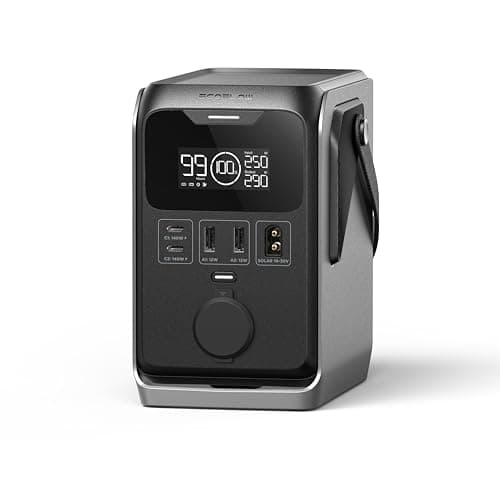
EF ECOFLOW TRAIL 300
The EF ECOFLOW TRAIL 300 is perfectly suited for the meticulous outdoor enthusiast or digital nomad who prioritizes battery longevity, quick recharges, and extensive DC/USB connectivity over traditional AC power. This buyer frequently camps, hikes, or works remotely, relying heavily on modern gadgets like smartphones, tablets, drones, and 12V portable fridges. They appreciate the peace of mind offered by the advanced LiFePO4 battery chemistry, which promises a significantly longer lifespan and enhanced safety compared to standard Li-ion alternatives, making it a sound long-term investment. The lightning-fast 1.77-hour recharge time is a critical feature, ensuring minimal downtime and maximum productivity during their adventures. Furthermore, with five dedicated DC ports and dual powerful USB-C outputs, they can efficiently power or recharge multiple devices simultaneously. This user is content to forgo AC outlets, understanding that their primary power needs are met by the robust DC and USB capabilities of the ECOFLOW. They're willing to pay a slightly higher price of $146.99 for these specific benefits, acknowledging they are trading off the EnginStar's AC versatility and lower initial cost.

Buy EnginStar if...
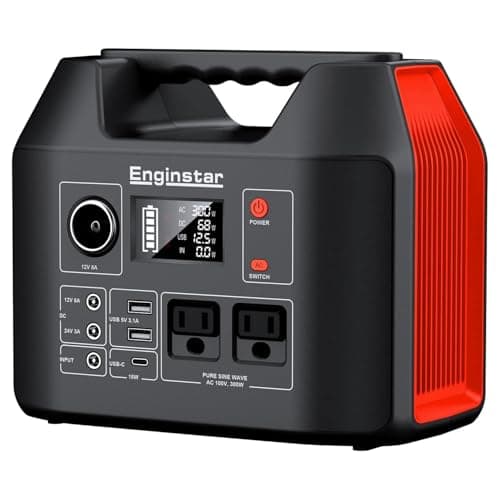
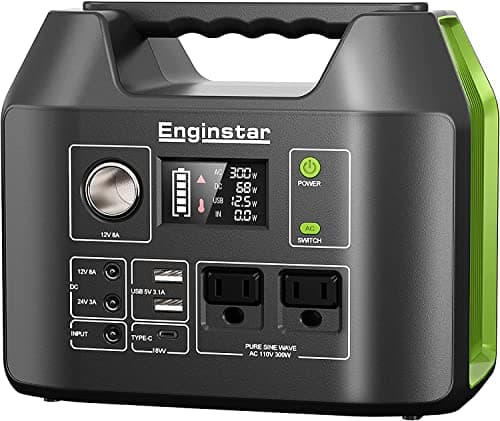
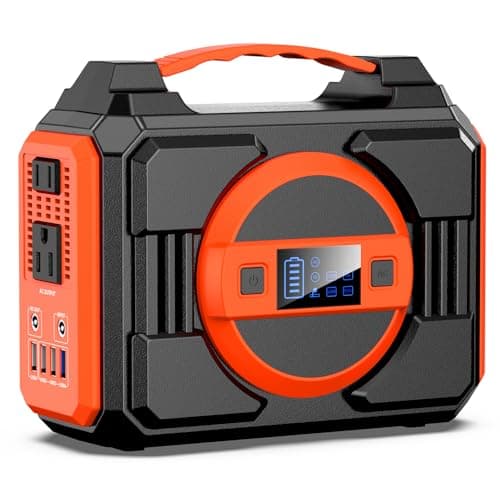
EnginStar Portable Power Station,300W
The EnginStar Portable Power Station is the ideal choice for the practical and budget-savvy individual who needs versatile power for everyday outdoor and emergency needs. This buyer is likely a weekend camper, casual tailgater, or someone seeking an affordable backup power source for minor home emergencies. Their primary need is the ability to run small standard appliances, and the EnginStar delivers with two 300W pure sine wave AC outlets, a feature crucial for powering items like laptops, small fans, or low-wattage lights. At just $111.10, it offers exceptional value, making reliable portable AC power accessible without breaking the bank. With a 296Wh capacity and weighing only 6.5 lbs, it's sufficiently powerful and portable for typical short trips or unexpected outages. While they might accept a slower 7-hour AC recharge time and the standard Li-ion battery chemistry, the EnginStar's strong 300W solar input capability provides a robust alternative for off-grid power replenishment. This user values the immediate utility of AC power at an unbeatable price, prioritizing functionality over the ECOFLOW's advanced battery longevity or rapid charging for DC-only devices.
Spec Comparison
12 specs compared
| Specification |  | 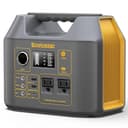 |
|---|---|---|
| Price | $147 | $111 |
| Rating | 4.4(158) | 4.3(1.6k) |
| Capacity Wh | 288W | 296W |
| Chemistry | LiFePO4 | Li-ion |
| AC Output Watts | 0W | 300W |
| Dc Ports | 5 | 3 |
| AC Outlets | 0 | 2 |
| USB A Ports | 2 | 2 |
| USB C Ports | 2 | 1 |
| Model Number | TRAIL DC | R300 |
| Charge Time Hours | 1.77 hrs | 7 hrs |
| Solar Input Watts | 110W | 300W |
| Cycle Life | — | 1000 |
| Weight | — | 6.5 lbs |
Swipe horizontally to see all columns
Pros & Cons
Quick overview of strengths and weaknesses
EF ECOFLOW TRAIL 300
- 288Wh LiFePO4 battery for durable power output
- 300W DC output powers multiple outdoor devices
- Five DC ports charge up to five devices concurrently
- Dual 140W USB-C ports enable rapid device charging
- No AC outlets; incompatible with standard appliances
- Charging cable not included; requires separate purchase
EnginStar Portable Power
- Two pure sine wave AC outlets for stable power.
- Weighs 6.5 lbs, compact for easy transport.
- 296Wh capacity powers small electronics.
- Charges via AC, car, or solar panel input.
- Max 300W output limits larger appliances.
- AC recharge time is 7 hours.
- Solar input requires separate panel purchase.
- 296Wh capacity may be insufficient for long trips.
Frequently Asked Questions
Common questions about this comparison
Can I power a laptop with these power stations?
Only the EnginStar Portable Power Station (Product B) can power a laptop via its two 300W pure sine wave AC outlets. The EF ECOFLOW TRAIL 300 (Product A) has no AC output, limiting it to DC and USB devices.
Which power station offers better long-term durability?
The EF ECOFLOW (Product A) features a LiFePO4 battery, offering significantly more charge cycles and a longer lifespan compared to the EnginStar's (Product B) Li-ion battery, which is rated for 1000+ cycles.
How quickly can these power stations recharge?
The EF ECOFLOW (Product A) recharges notably faster, taking only 1.77 hours via DC input. The EnginStar (Product B) has a longer AC recharge time of 7 hours, though it supports 300W solar input.
Are there differences in their charging port options?
Yes. The EF ECOFLOW (Product A) offers 5 DC ports and dual USB-C ports. The EnginStar (Product B) has 3 DC ports and a single USB-C port, but includes two crucial AC outlets.
Is one more portable than the other?
The EnginStar (Product B) weighs 6.5 lbs, making it very portable. While the EF ECOFLOW (Product A) is also described as compact and lightweight, its exact weight isn't specified, but both are designed for easy transport.
Related Comparisons
Similar products people compare
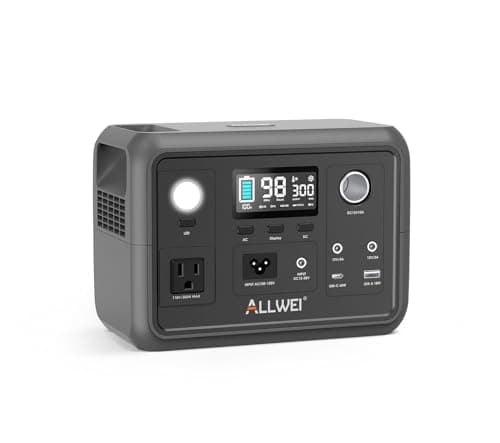
ALLWEI vs EF ECOFLOW
$129 vs $147
EF ECOFLOW vs Jackery
$147 vs $229
EnginStar vs EnginStar
$130 vs $111
EnginStar vs EnginStar
$111 vs $130
EF ECOFLOW vs SinKeu
$147 vs $103
EF ECOFLOW vs ENOFLO
$147 vs $120
EF ECOFLOW vs GRECELL
$147 vs $100
EF ECOFLOW vs VTOMAN
$147 vs $140
Anker vs EF ECOFLOW
$150 vs $147
EF ECOFLOW vs GRECELL
$147 vs $190
EnginStar vs ZeroKor
$111 vs $130
EnginStar vs Apowking
$111 vs $100
EF ECOFLOW vs EnginStar
$147 vs $130
EF ECOFLOW vs Tenergy
$147 vs $180
ALLWEI vs EnginStar
$129 vs $111
Explore Other Categories
Popular comparisons across the site
Ask AI
Get instant answers about specs
Get the Deets
Ask our AI assistant
Ask Deets anything!