Our Verdict
EnginStar Portable Power Station Wins
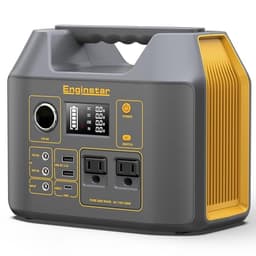
This unit offers a significantly higher capacity of 296Wh compared to Apowking's 220Wh for only an $11 price difference, providing more usable power per dollar. It also includes a crucial USB-C port, which the Apowking lacks, broadening its device compatibility. The Apowking Portable Power Station is a better pick for those prioritizing extreme portability due to its lighter 5.0 lbs weight and a slightly lower price point for basic power needs.
Bottom Line: EnginStar Portable Power Station is the better choice. This unit offers a significantly higher capacity of 296Wh compared to Apowking's 220Wh for only an $11 price difference, providing more usable power per dollar.
In-Depth Analysis
How they compare in practice
When comparing the EnginStar R300 and the Apowking HP200L, the primary distinction lies in their capacity and connectivity options, with subtle trade-offs in portability and value. The EnginStar R300 boasts a 296Wh lithium-ion battery, a substantial 34% more power than the Apowking HP200L's 220Wh capacity. This difference means the EnginStar can power a laptop or run a small fan for a longer duration, making it more suitable for extended off-grid use or longer power outages. For example, a 60W laptop could run for nearly 5 hours on the EnginStar compared to under 3.7 hours on the Apowking. While both offer a 300W AC output, the EnginStar's greater reservoir makes it a more reliable companion.
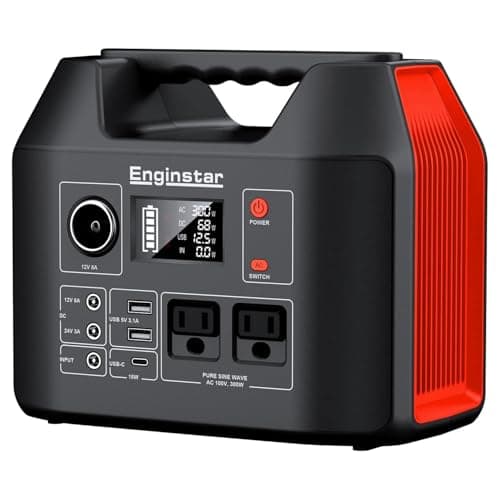
In terms of connectivity, the EnginStar edges out with a dedicated USB-C port, essential for charging modern smartphones, tablets, and even some laptops directly. It also features three DC ports, offering more flexibility than Apowking's single DC port. However, the Apowking counters with four USB-A ports compared to EnginStar's two, which is beneficial for users with multiple older USB-A devices. Physically, the Apowking is lighter at 5.0 lbs versus EnginStar's 6.5 lbs, a noticeable difference when hiking or backpacking. Both units share a robust 1000-cycle life, indicating similar long-term durability.
The real-world implications highlight value propositions. The EnginStar, priced at $111.1, offers a superior Wh-per-dollar ratio alongside modern USB-C connectivity, making it a more versatile and enduring power solution for most users. The Apowking, at $99.99, focuses on being the most lightweight and budget-friendly entry point, sacrificing some capacity and modern port options for ultimate portability and a lower upfront cost. Users needing maximum capacity and future-proof charging will find the EnginStar a better investment, while those prioritizing minimal weight and strict budget for lighter tasks will lean towards the Apowking.
Key Differences
The most significant spec differences at a glance
Battery Capacity
35% moreDc Ports
200% moreUSB-A Ports
50% lessWeight
30% moreAdvantages
Where each product wins

EnginStar
- Battery Capacity: 35% higher (296 vs 220.0)
- Dc Ports: 200% higher (3 vs 1)

Apowking
- USB-A Ports: 50% higher (2 vs 4)
- Weight: 30% lower (6.5 vs 5.0)
Which to Pick for Your Situation
Concrete scenarios with a clear recommendation
For extended off-grid camping or RV trips
EnginStarThe EnginStar offers a larger 296Wh capacity, providing more power and longer runtimes for essential devices compared to the Apowking's 220Wh.
For lightweight backpacking or hiking
ApowkingThe Apowking is significantly lighter at 5.0 lbs, making it easier to carry over long distances than the EnginStar's 6.5 lbs.
For charging modern USB-C devices
EnginStarThe EnginStar includes a dedicated USB-C port for faster and more compatible charging, which the Apowking unit lacks.
For a strict budget entry-level portable power solution
ApowkingThe Apowking is priced lower at $99.99, offering a more affordable option for basic portable power needs.
Who Should Buy Which?
Find the right product for your needs

Buy EnginStar if...
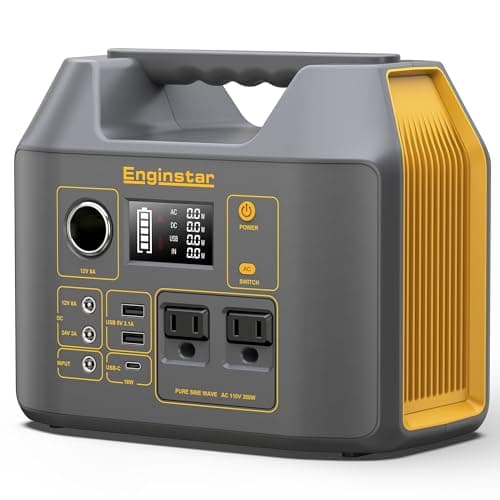
EnginStar Portable Power Station,300W
The EnginStar EnginStar Portable Power Station R300 is the ideal choice for individuals who need a reliable, higher-capacity power source for outdoor adventures, emergency backup, or remote work setups. This buyer prioritizes extended device runtimes and modern connectivity. They might be car campers, RV enthusiasts, drone operators, or those who use CPAP machines, where the 296Wh capacity offers a significant advantage over lesser units. The inclusion of a USB-C port is a key selling point for users with contemporary smartphones, tablets, and laptops, ensuring faster and more convenient charging without extra adapters. While slightly heavier at 6.5 lbs, this buyer accepts the minor weight trade-off for substantially more power and versatility. They are willing to pay the modest $11 price premium over the Apowking for a more robust and future-proof portable power solution, understanding that the additional capacity and USB-C port provide superior long-term value and utility.

Buy Apowking if...
Portable Power Station 300W,
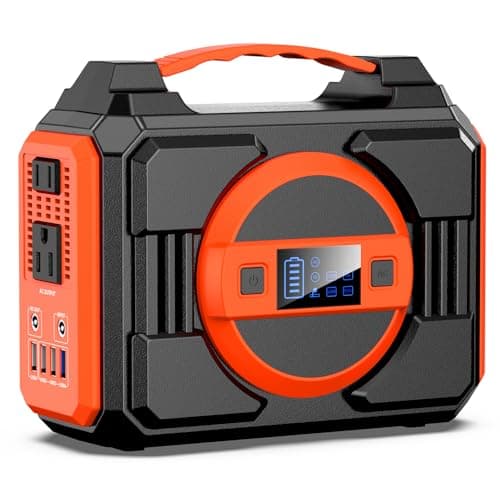
The Apowking Portable Power Station HP200L is perfectly suited for the ultra-portable enthusiast or the budget-conscious consumer seeking basic, lightweight power. This buyer values minimal weight (5.0 lbs) above all else, making it ideal for activities like day hikes, short backpacking trips, or as an easily transportable emergency kit component. Their primary needs revolve around charging smaller devices like phones, headlamps, and action cameras, or powering a very small fan for a few hours. The 220Wh capacity is perfectly adequate for these lighter demands, and the $99.99 price point offers an accessible entry into the portable power market. This user likely has multiple USB-A devices, benefiting from the Apowking's four USB-A ports. They are comfortable sacrificing a USB-C port and the EnginStar's larger capacity, as their use cases do not necessitate those advanced features, prioritizing cost savings and the lightest possible carry weight for their specific adventures.
Spec Comparison
13 specs compared
| Specification |  |  |
|---|---|---|
| Price | $111 | $100 |
| Rating | 4.3(1.6k) | 4.1(590) |
| Capacity Wh | 296W | 220W |
| Chemistry | Li-ion | Li-ion |
| AC Output Watts | 300W | 300W |
| Dc Ports | 3 | 1 |
| AC Outlets | 2 | 2 |
| Cycle Life | 1000 | 1000 |
| Weight | 6.5 lbs | 5 lbs |
| USB A Ports | 2 | 4 |
| USB C Ports | 1 | — |
| Model Number | R300 | HP200L |
| Charge Time Hours | 7 hrs | — |
| Solar Input Watts | 300W | — |
| Peak Output Watts | — | 600W |
Swipe horizontally to see all columns
Pros & Cons
Quick overview of strengths and weaknesses
EnginStar Portable Power
- Two pure sine wave AC outlets for stable power.
- Weighs 6.5 lbs, compact for easy transport.
- 296Wh capacity powers small electronics.
- Charges via AC, car, or solar panel input.
- Max 300W output limits larger appliances.
- AC recharge time is 7 hours.
- Solar input requires separate panel purchase.
- 296Wh capacity may be insufficient for long trips.
Apowking Portable Power
- 5 lbs weight for easy transport
- 220Wh capacity powers essential devices
- 7 output ports for simultaneous charging
- Pure Sine Wave AC output protects sensitive electronics
- 300W AC output limits high-power appliance use
- 220Wh capacity may be low for extended backup
- AC output verification displays momentary warning
Frequently Asked Questions
Common questions about this comparison
Which power station offers more battery capacity?
The EnginStar R300 provides 296Wh of capacity, which is notably more than the Apowking HP200L's 220Wh. This allows for longer device operation.
What is the weight difference between the two units?
The Apowking HP200L weighs 5.0 lbs, making it 1.5 lbs lighter than the EnginStar R300, which weighs 6.5 lbs, impacting portability.
Do both power stations support solar recharging?
Yes, both the EnginStar and Apowking units support solar charging, though a compatible solar panel must be purchased separately for either.
Can I charge devices with a USB-C cable using these?
Only the EnginStar R300 features a USB-C output port for direct charging of modern devices. The Apowking HP200L does not include a USB-C port.
What kind of AC output do these power stations provide?
Both units offer a 300W pure sine wave AC output, suitable for sensitive electronics, ensuring stable and clean power comparable to grid electricity.
What is the expected lifespan in terms of charge cycles?
Both the EnginStar and Apowking power stations are rated for over 1000 charge cycles, indicating a long and durable operational life for either unit.
Related Comparisons
Similar products people compare
Apowking vs SinKeu
$100 vs $103
ZeroKor vs Apowking
$130 vs $100
Apowking vs VTOMAN
$100 vs $140
Anker vs Apowking
$150 vs $100
EnginStar vs EnginStar
$130 vs $111
EnginStar vs EnginStar
$111 vs $130
EF ECOFLOW vs EnginStar
$147 vs $111
GRECELL vs Apowking
$100 vs $100
EnginStar vs ZeroKor
$111 vs $130
Apowking vs Tenergy
$100 vs $180
GRECELL vs Apowking
$190 vs $100
ENOFLO vs Apowking
$120 vs $100
ALLWEI vs Apowking
$129 vs $100
ALLWEI vs EnginStar
$129 vs $111
EnginStar vs SinKeu
$111 vs $103
Explore Other Categories
Popular comparisons across the site
Ask AI
Get instant answers about specs
Get the Deets
Ask our AI assistant
Ask Deets anything!