Our Verdict
BenQ TH671ST Wins
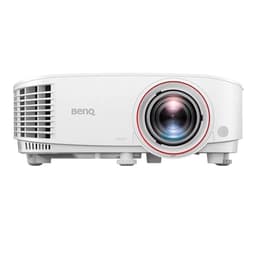
This projector offers a confirmed 3000 ANSI lumens brightness, significantly outperforming the Optoma ML1080UST's unspecified (0) lumen rating, making it superior for rooms with ambient light. Its explicit low input lag action also makes it the definitive choice for serious gamers. The Optoma ML1080UST, however, is the better pick for users prioritizing ultra-short throw convenience, integrated smart TV features, and portability from its built-in battery, especially for those with very confined spaces or who desire a complete entertainment hub without additional devices.
Bottom Line: BenQ TH671ST is the better choice. This projector offers a confirmed 3000 ANSI lumens brightness, significantly outperforming the Optoma ML1080UST's unspecified (0) lumen rating, making it superior for rooms with ambient light.
In-Depth Analysis
How they compare in practice
The BenQ TH671ST and Optoma ML1080UST present two distinct approaches to home projection, each catering to different priorities. The BenQ TH671ST firmly establishes itself as a strong contender for dedicated gaming and bright-room viewing, primarily due to its specified 3000 ANSI lumens brightness. This allows for a vibrant, clear image even with some ambient light, a crucial advantage where the Optoma ML1080UST's brightness is not specified. Furthermore, the BenQ's 'Gaming Mode for Intense Low Input Lag Action' directly addresses a critical need for competitive gamers, offering a responsive experience that the Optoma does not explicitly promise.
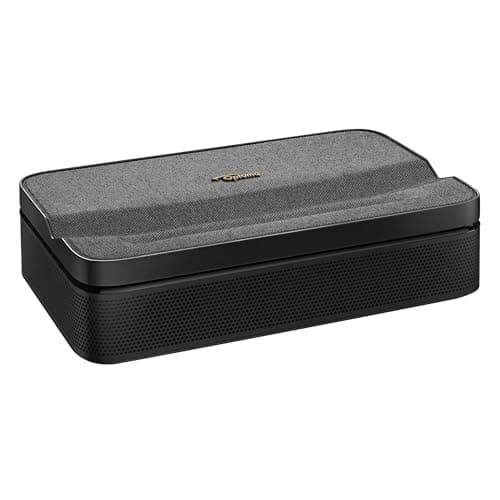
Conversely, the Optoma ML1080UST excels in its modern conveniences and form factor. Its ultra-short throw capability, projecting a 100-inch image from under a foot, is a game-changer for small apartments or spaces where traditional projector placement is impossible. This eliminates long cable runs and the need for dedicated installation, offering unparalleled flexibility. The inclusion of an integrated Google TV, Netflix, and Disney+ certified apps transforms it into an all-in-one entertainment hub, removing the need for external streaming devices. Its Triple RGB Laser light source promises superior color accuracy and longevity compared to the BenQ's lamp, though the lack of a specified brightness remains a key consideration for use in bright environments.
The BenQ’s short throw (100-inch from 5 feet) offers a balance between traditional and ultra-short throw, while its auto vertical keystone assists with setup. However, it lacks the horizontal adjustment found in more premium models. The Optoma’s built-in battery provides 1.5 hours of runtime, adding a layer of portability for outdoor movie nights or temporary setups, a feature entirely absent from the BenQ. Ultimately, the trade-off is between the BenQ’s higher specified brightness and gaming performance versus the Optoma’s spatial efficiency, smart features, and portability.
Key Differences
The most significant spec differences at a glance
Brightness Ansi Lumens
100% moreAdvantages
Where each product wins

BenQ
- Brightness Ansi Lumens: 100% higher (3000 vs 0)
Which to Pick for Your Situation
Concrete scenarios with a clear recommendation
For a dedicated gaming room
BenQThe BenQ TH671ST features a specific 'Gaming Mode for Intense Low Input Lag Action', ensuring a responsive experience vital for competitive gaming.
For a small apartment living room
OptomaThe Optoma ML1080UST's ultra-short throw can project a 100-inch image from under a foot, perfect for confined spaces without complex installation.
For backyard movie nights
OptomaThe Optoma ML1080UST offers a built-in battery for 1.5 hours of runtime and integrated Google TV, making it ideal for portable outdoor entertainment without external devices.
For bright rooms or daytime viewing
BenQThe BenQ TH671ST provides a confirmed 3000 ANSI lumens brightness, delivering a much clearer image than the Optoma's unspecified (0) lumen rating in rooms with ambient light.
Who Should Buy Which?
Find the right product for your needs

Buy BenQ if...
BenQ TH671ST | 1080p
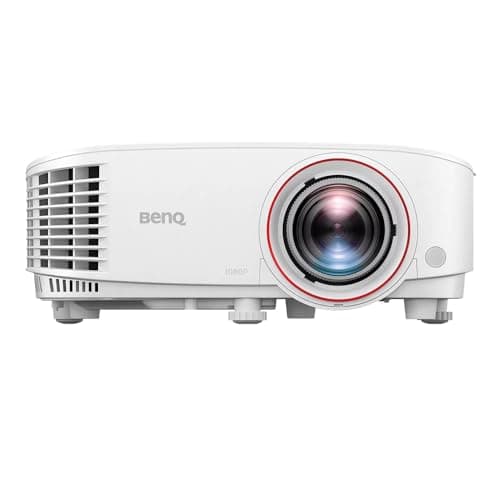
The BenQ TH671ST is ideal for the enthusiastic gamer or movie watcher who prioritizes bright, clear images and responsive performance in a dedicated or semi-dedicated viewing space. This buyer likely has a fixed setup in a living room or basement and may contend with some ambient light during their viewing sessions. Their primary need is a projector that can deliver crisp 1080p visuals and, crucially, a low input lag for competitive gaming, which the TH671ST specifically provides with its 'Gaming Mode for Intense Low Input Lag Action'. The 3000 ANSI lumens brightness is a key spec for them, ensuring the picture remains vibrant even with lights on or during daytime viewing. They appreciate the flexibility of a short-throw projector (100 inches from 5 feet), allowing for a large image without requiring an extremely long projection distance. While they might give up smart TV functionality and ultra-short throw convenience, they gain superior brightness and a focused gaming experience at a slightly higher price point of $949.

Buy Optoma if...
Optoma ML1080UST PHOTON GO
The Optoma ML1080UST is tailor-made for the modern, flexible home entertainment enthusiast living in smaller spaces, like apartments, or those seeking ultimate portability. This buyer values convenience, integrated features, and a sleek setup. Their primary needs include projecting a large image in a confined area, for which the ultra-short throw capability (100 inches from under a foot) is revolutionary, eliminating placement hassles. The integrated Google TV with certified Netflix and Disney+ is a major draw, simplifying their entertainment stack by removing the need for external streaming boxes. They appreciate the vivid colors and longevity offered by the Triple RGB Laser light source and might frequently move their projector for impromptu movie nights, leveraging the built-in battery for 1.5 hours of cordless operation. While they might compromise on explicit high brightness specifications or dedicated gaming input lag, they gain unparalleled spatial efficiency, smart connectivity, and portability at a more budget-friendly price of $899, making it a versatile entertainment hub.
Spec Comparison
7 specs compared
| Specification |  | 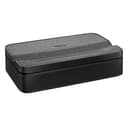 |
|---|---|---|
| Price | $949 | $899 |
| Rating | 4.4(843) | 4.0(32) |
| Brightness Ansi Lumens | 3000 | 0 |
| Native Resolution | 1080p | 1080p |
| Throw Ratio | 0.69 | — |
| Keystone Correction | Vertical | — |
| Hdr Support | — | Yes |
| Light Source | — | Laser |
| Speaker Watts | — | 20W |
Swipe horizontally to see all columns
Pros & Cons
Quick overview of strengths and weaknesses
BenQ TH671ST |
- Native 1080p resolution for clear images.
- 3000 lumens provides bright picture.
- Low input lag for responsive gaming.
- Projects 100-inch image from 5 feet.
- Lacks horizontal keystone adjustment.
- Integrated speaker typically offers low fidelity.
Optoma ML1080UST PHOTON
- Ultra-short throw projects 100" from under a foot.
- Integrated Google TV for certified streaming apps.
- Triple RGB laser for accurate 1080p color.
- Laser light source eliminates lamp replacements.
- Battery life limited to 1.5 hours.
- Requires perfectly flat projection surface.
Frequently Asked Questions
Common questions about this comparison
Which projector is better for gaming performance?
The BenQ TH671ST is explicitly designed for gaming with a 'Gaming Mode for Intense Low Input Lag Action', offering a more responsive experience than the Optoma ML1080UST, which does not feature specific gaming enhancements.
How far do I need to place each projector from the screen?
The BenQ TH671ST is a short-throw projector, capable of projecting a 100-inch image from approximately 5 feet (throw ratio 0.6883). The Optoma ML1080UST is ultra-short throw, projecting 100 inches from under a foot.
Does either projector have smart TV features built-in?
Yes, the Optoma ML1080UST includes onboard Google TV with certified Netflix and Disney+ apps, providing a complete streaming experience without needing additional devices. The BenQ TH671ST does not have integrated smart TV features.
What kind of light source do these projectors use?
The BenQ TH671ST uses a traditional lamp, while the Optoma ML1080UST utilizes a Triple RGB Laser light source. Laser projectors generally offer longer lifespan and consistent brightness compared to lamps.
Can the Optoma ML1080UST be used on battery power?
Yes, the Optoma ML1080UST has a built-in battery that provides up to 1.5 hours of runtime, making it convenient for portable use where a power outlet isn't readily available.
Related Comparisons
Similar products people compare
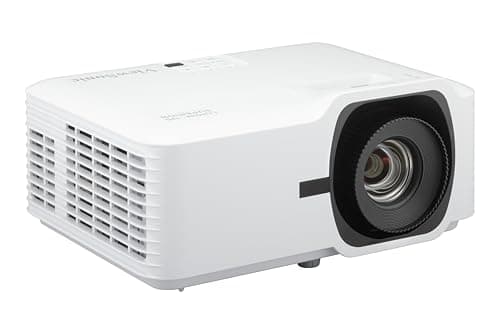
BenQ vs ViewSonic
$949 vs $1350
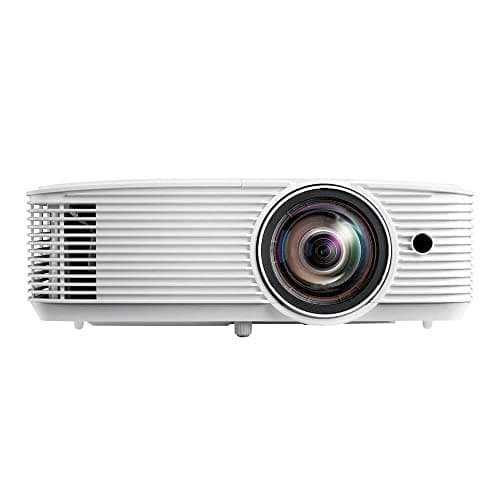
BenQ vs Optoma
$949 vs $970
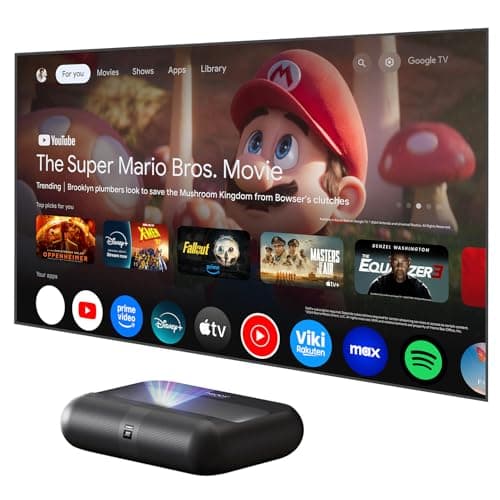
Optoma vs Yaber PROJECTOR
$899 vs $727
HAPPRUN vs BenQ
$380 vs $949
Epson vs Optoma
$830 vs $899
BenQ vs Optoma
$949 vs $999
BenQ vs Epson
$949 vs $830
HAPPRUN vs Optoma
$380 vs $899
BenQ vs Yaber PROJECTOR
$949 vs $727
Optoma vs VOPLLS
$899 vs $600
Optoma vs Optoma
$999 vs $899
Explore Other Categories
Popular comparisons across the site



Ask AI
Get instant answers about specs
Get the Deets
Ask our AI assistant
Ask Deets anything!