Our Verdict
FIFINE Amplitank K688 Black Wins
While both offer identical core features like dual USB/XLR connectivity, Cardioid polar pattern, 48kHz sample rate, and zero-latency monitoring, the K688 explicitly boasts a high 130dB SPL. The FIFINE AmpliGame AM8W could be a marginally better pick for users prioritizing gaming aesthetics with its RGB lighting (USB mode only), as functional differences are minimal.
Bottom Line: FIFINE Amplitank K688 Black is the better choice. While both offer identical core features like dual USB/XLR connectivity, Cardioid polar pattern, 48kHz sample rate, and zero-latency monitoring, the K688 explicitly boasts a high 130dB SPL.
In-Depth Analysis
How they compare in practice
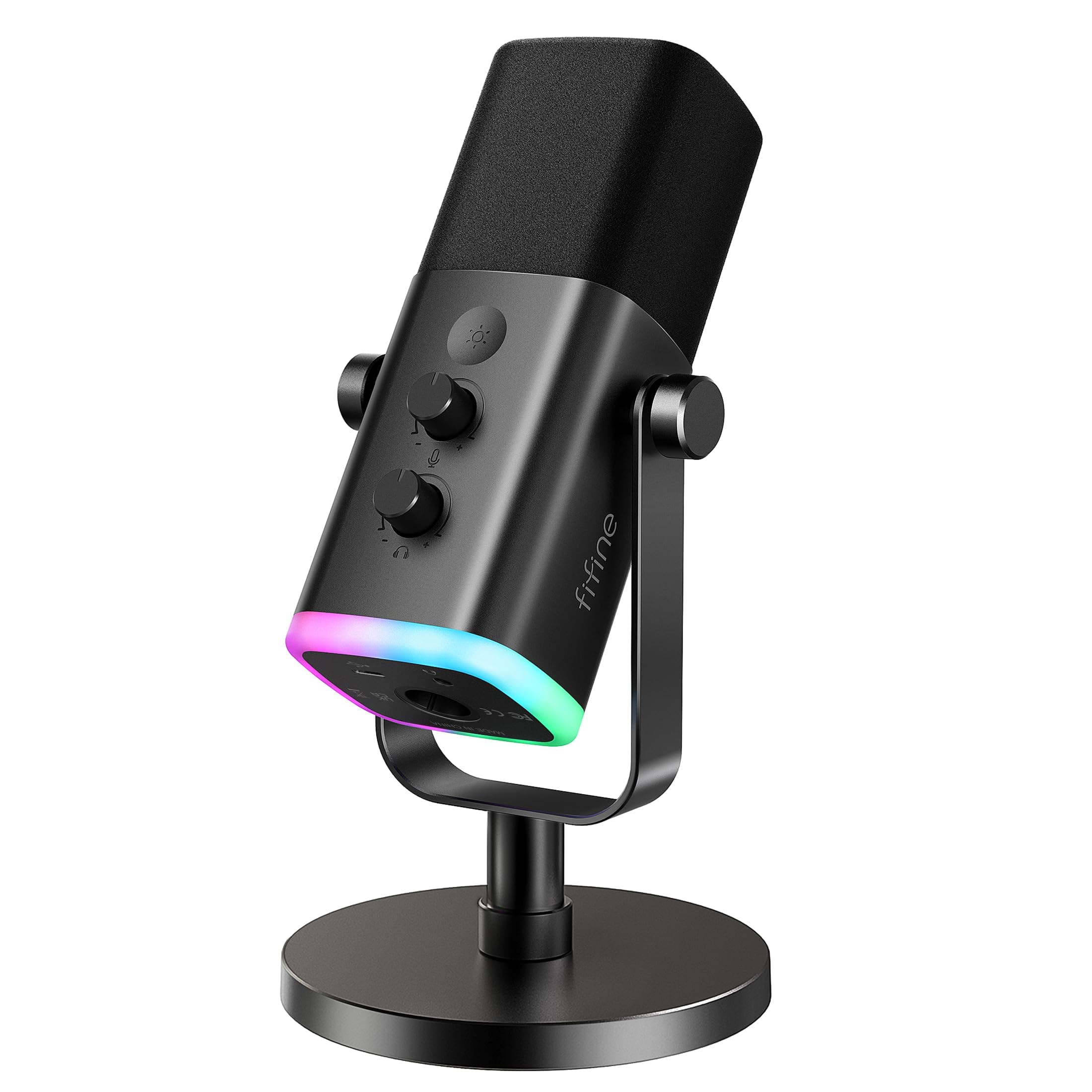
Both FIFINE microphones, the AmpliGame AM8W and the Amplitank K688 Black, present a highly similar value proposition for streamers, podcasters, and vocalists seeking versatile audio capture. At their core, both are dynamic microphones featuring a Cardioid polar pattern, effectively minimizing off-axis background noise—a crucial advantage in untreated home studio environments. Their dual USB and XLR connectivity, coupled with a 48kHz sample rate and zero-latency headphone monitoring, means users can plug-and-play into a PC/Mac via USB for convenience or integrate into a professional audio interface with XLR for advanced setups. In real-world use, this flexibility is invaluable, allowing seamless transitions between casual streaming and more dedicated recording sessions. The primary technical distinction lies in the FIFINE K688's explicit specification of a high 130dB SPL (Sound Pressure Level) handling capability. For users who might occasionally speak or sing with significant volume, or capture loud instruments, this spec directly translates to cleaner audio free from distortion and clipping, offering a tangible advantage for dynamic performances. The AM8W, while likely capable, doesn't advertise this headroom, which can be a point of concern for more expressive vocalists. Conversely, the AM8W carries the "AmpliGame" moniker and offers RGB lighting, a feature clearly aimed at the gaming and streaming aesthetic, though it functions only in USB mode, limiting its appeal for professional XLR setups. Both microphones share a critical operational caveat: their onboard gain, headphone volume controls, and mute functions are exclusively active when connected via USB. This means XLR users will need an external audio interface for these adjustments, a common trade-off but important for new users to understand. The K688, weighing 1.12 lbs, feels substantial, suggesting a durable construction, though both require close proximity to the sound source for optimal performance, a characteristic inherent to dynamic microphones.
Which to Pick for Your Situation
Concrete scenarios with a clear recommendation
For a vocalist with a powerful voice
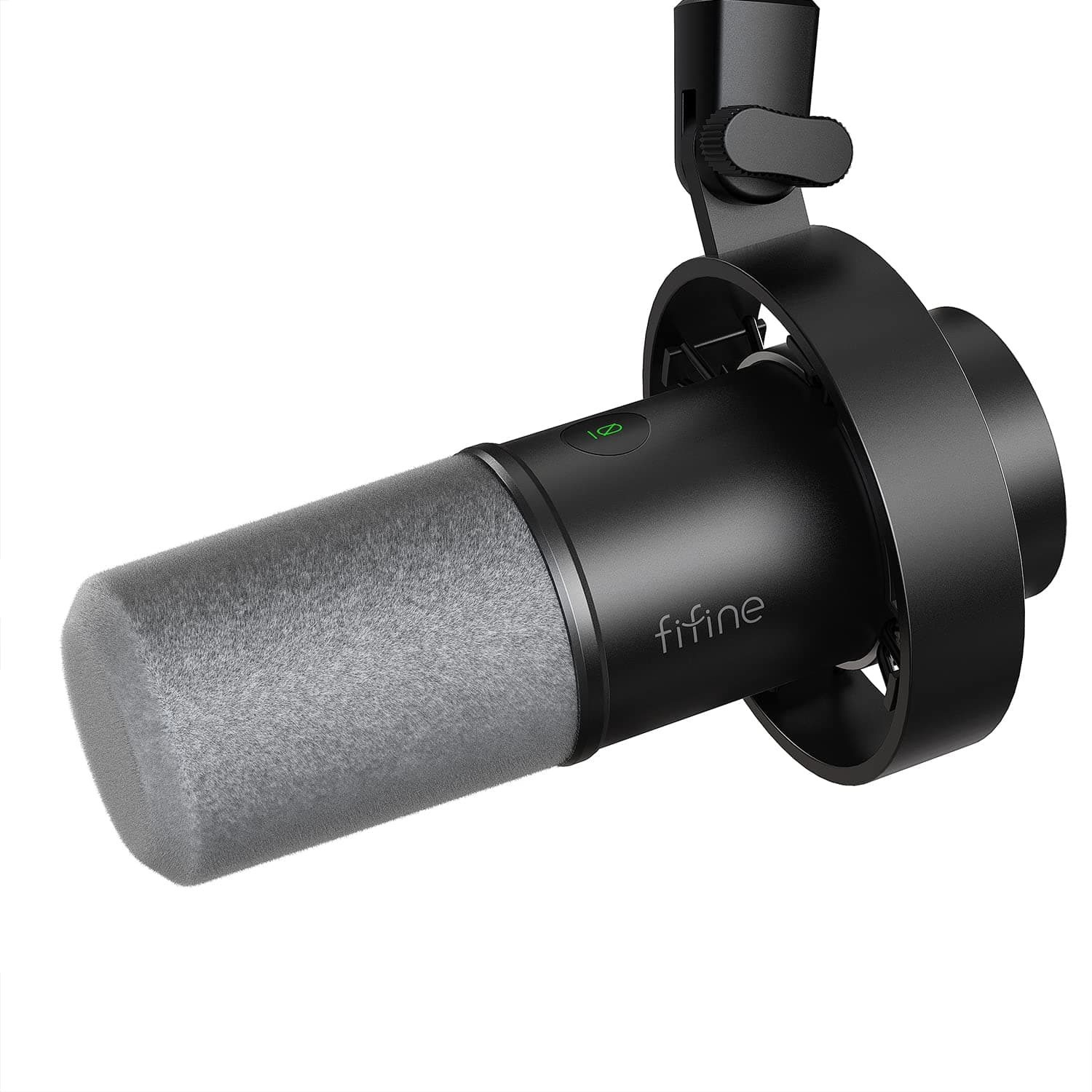
FIFINEThe FIFINE K688 explicitly handles a high 130dB SPL, preventing distortion from loud vocal performances, a crucial spec for dynamic singers.
For a gamer wanting an aesthetic setup
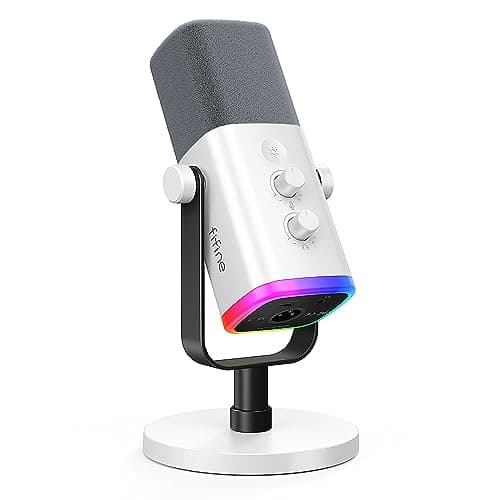
FIFINEThe FIFINE AmpliGame AM8W features RGB lighting, adding a gaming aesthetic that complements many modern streaming setups, though it's USB-only.
For a podcaster in an untreated room
TieBoth microphones utilize a Cardioid polar pattern, which effectively isolates the speaker's voice and reduces ambient background noise common in home podcasting environments.
Who Should Buy Which?
Find the right product for your needs

Buy FIFINE if...
AmpliGame AM8W XLR/USB Gaming Microphone
The FIFINE AmpliGame AM8W is tailor-made for the burgeoning gamer, casual streamer, or aspiring content creator who prioritizes ease of use, a distinctive aesthetic, and solid audio performance without breaking the bank. This user is likely running a PC-centric setup, valuing the plug-and-play simplicity offered by the USB connection. They appreciate features like the integrated mute button and gain control, which make on-the-fly adjustments during gameplay or live streams effortless, ensuring smooth audio management. The "AmpliGame" branding and its unique RGB lighting feature (when in USB mode) are significant draws, allowing them to personalize their streaming setup and create an engaging visual experience for their audience. While not explicitly stating high SPL handling like its counterpart, the AM8W's Cardioid polar pattern ensures clear voice capture by focusing on the speaker and minimizing ambient room noise, making it perfect for dedicated gaming communication or commentary. With its dual USB/XLR connectivity and 48kHz sample rate, it provides room for growth beyond simple USB, making it a versatile entry point into better audio. They're willing to forgo the K688's explicit 130dB SPL rating, understanding their vocal dynamics generally fall within typical speaking ranges, and they prioritize the gaming-specific flair and straightforward functionality more.

Buy FIFINE if...
Dynamic Microphone
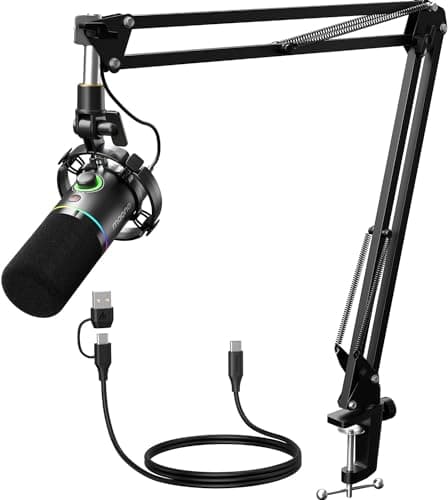
The FIFINE Amplitank K688 Black is ideally suited for podcasters, vocalists, and content creators who demand pristine audio quality, especially when dealing with a wide range of sound dynamics. This buyer might frequently raise their voice, sing, or even record louder instruments, and therefore, the explicit 130dB SPL handling capacity is a critical specification. It provides assurance that their audio will remain clean and free from distortion, even during energetic performances, which is paramount for professional-sounding content. The K688’s dual USB/XLR connectivity at a 48kHz sample rate means it's equally at home as a simple plug-and-play USB microphone for quick recordings or integrated into a full XLR studio setup for more control and pristine signal. Its 1.12 lbs weight suggests a robust, durable build, inspiring confidence in its longevity and stability on a desk. The Cardioid polar pattern effectively isolates the voice, making it excellent for home studios susceptible to ambient noise. This user prioritizes raw audio performance and reliability over flashy gaming aesthetics like RGB lighting, which the AM8W offers. They are looking for a workhorse microphone that delivers consistent, high-fidelity sound for diverse recording needs.
Spec Comparison
11 specs compared
| Specification |  | 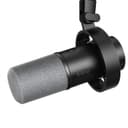 |
|---|---|---|
| Rating | 4.6(11.7k) | 4.6(3.7k) |
| Sample Rate | 48 kHz | 48 kHz |
| Connection | USB/XLR | USB/XLR |
| Polar Pattern | Cardioid | Cardioid |
| Zero-Latency | Yes | Yes |
| Mute Button | Yes | Yes |
| Gain Control | Yes | Yes |
| Model Number | AM8W | — |
| Headphone Out | Yes | Yes |
| Weight | — | 1.12 lbs |
| Software | — | None |
| Freq. Response | — | {"high":20000} |
Swipe horizontally to see all columns
Pros & Cons
Quick overview of strengths and weaknesses
FIFINE AmpliGame AM8W XLR/USB Gaming Microphone
- Dual USB and XLR connectivity options.
- Onboard gain and headphone volume controls.
- Integrated mute button for quick audio cuts.
- Cardioid polar pattern reduces background noise.
- Onboard controls only function when using USB.
- RGB lighting feature is limited to USB mode.
- Requires close proximity for optimal audio capture.
FIFINE Dynamic Microphone
- High 130dB SPL prevents audio distortion
- Cardioid pattern reduces ambient background noise
- Dual USB and XLR connectivity options
- Plug-and-play USB for quick setup on PC/Mac
- XLR cable, boom arm, mic stand not included
- Onboard controls only function via USB connection
- Requires close mic distance for best audio pickup
Frequently Asked Questions
Common questions about this comparison
Do the onboard controls work with XLR?
No, for both FIFINE AM8W and K688, the onboard gain, headphone volume, and mute controls are only functional when connected via USB. When using XLR, adjustments must be made through an external audio interface.
Which microphone is better for loud sound sources?
The FIFINE Amplitank K688 Black is explicitly rated to handle a high 130dB SPL, making it the better choice for recording powerful voices or loud instruments without audio distortion.
Do these microphones require phantom power for XLR?
No, as dynamic microphones, neither the FIFINE AM8W nor the K688 requires phantom power when connected via XLR. They operate passively and draw power from the USB connection or an interface's preamp.
Can I monitor my audio in real-time with these mics?
Yes, both the FIFINE AM8W and K688 feature a 3.5mm headphone output and support zero-latency monitoring, allowing you to hear your audio live as you speak or record, ensuring proper levels.
What polar pattern do these microphones use?
Both the FIFINE AmpliGame AM8W and Amplitank K688 Black utilize a Cardioid polar pattern. This design focuses audio capture directly in front of the microphone, reducing unwanted background noise effectively.
Is an XLR cable included with either microphone?
No, the specifications for both the FIFINE AM8W and K688 indicate that an XLR cable, boom arm, or mic stand is not included, requiring separate purchase to complete a full setup.
Related Comparisons
Similar products people compare
Explore Other Categories
Popular comparisons across the site



Ask AI
Get instant answers about specs
Get the Deets
Ask our AI assistant
Ask Deets anything!