Our Verdict
FIFINE AmpliGame AM8W Wins
This microphone provides superior versatility with dual USB/XLR connectivity, offering direct plug-and-play convenience via USB and advanced XLR options. The Movo PC-M6 is the better pick for users who already own an XLR audio interface with phantom power and prioritize a lower initial microphone cost with included essential accessories.
Bottom Line: FIFINE AmpliGame AM8W is the better choice. This microphone provides superior versatility with dual USB/XLR connectivity, offering direct plug-and-play convenience via USB and advanced XLR options.
In-Depth Analysis
How they compare in practice
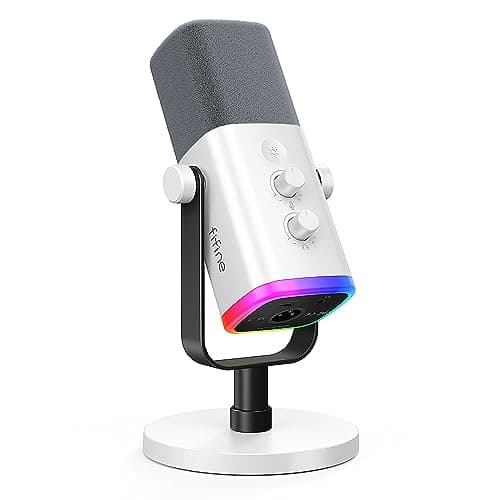
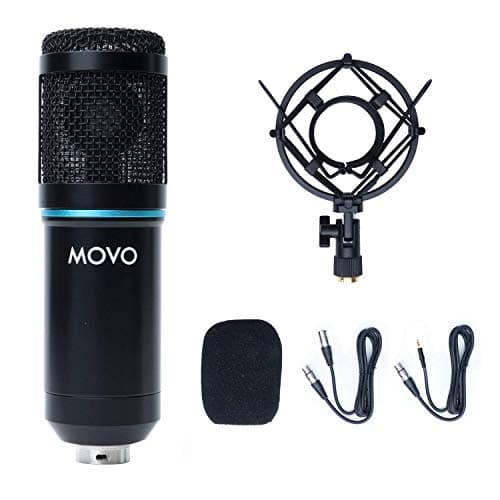
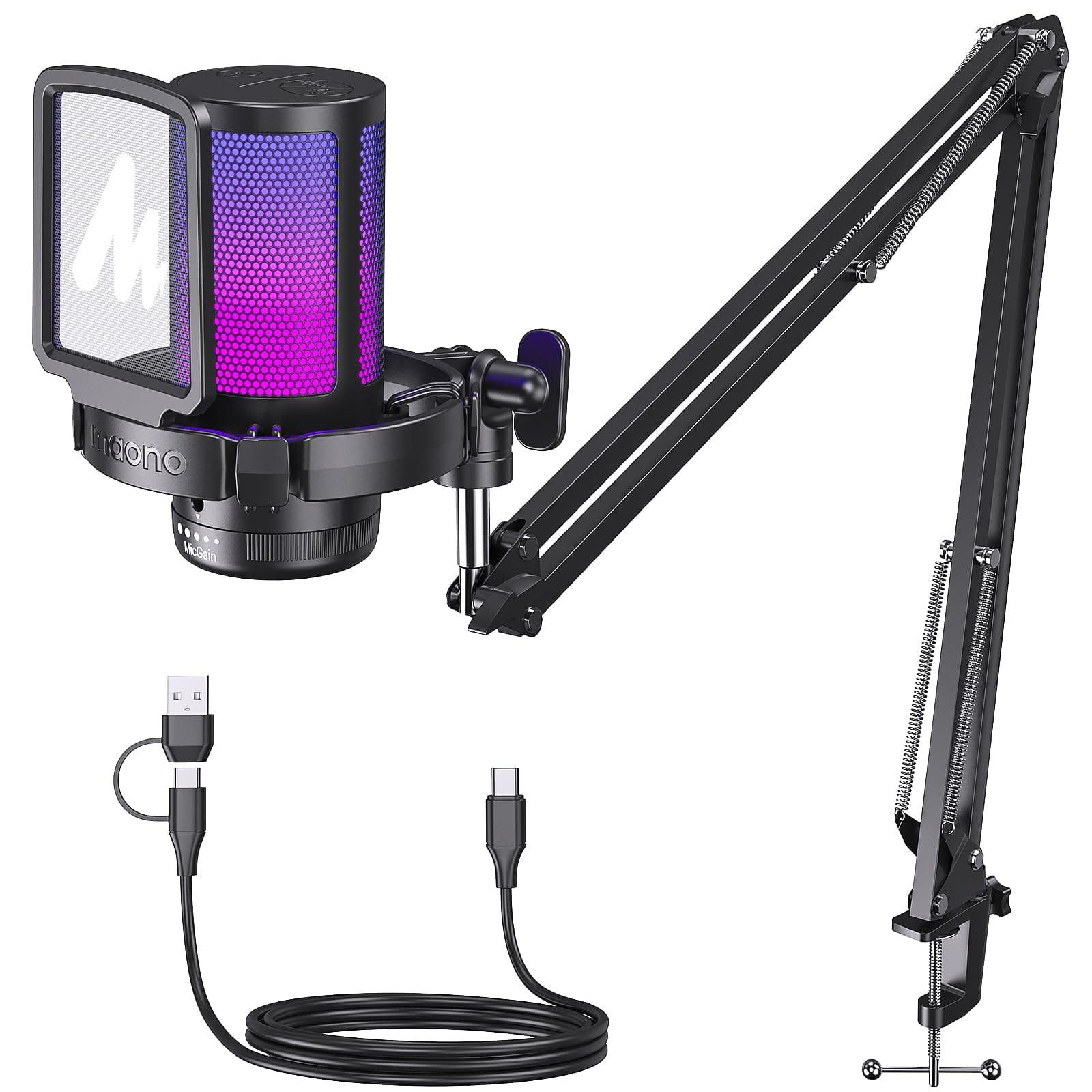
The FIFINE AmpliGame AM8W and Movo PC-M6 both offer cardioid polar patterns, ideal for capturing a single sound source and reducing background noise, and both record at a 48kHz sample rate. However, their real-world application diverges significantly based on their connectivity and integrated features. The FIFINE AM8W stands out with its dual USB and XLR connectivity. This means a new user can simply plug it into their computer via USB and immediately benefit from onboard gain control, a mute button, and crucial zero-latency headphone monitoring, which prevents distracting audio delays during recording or streaming. These onboard controls and monitoring capabilities are critical for a seamless user experience, especially for gamers, streamers, and podcasters starting out without complex audio setups. While its controls are USB-dependent, its versatility is unmatched by the Movo. Conversely, the Movo PC-M6 is an XLR-only microphone. This design choice means it inherently requires an external audio interface with phantom power to function. However, for those already invested in an XLR ecosystem, the PC-M6 integrates seamlessly. It offers 48kHz/16-bit audio recording and a broad 20Hz-20kHz frequency response, indicating solid audio capture capabilities, especially when paired with a quality interface. The Movo also sweetens its value proposition by including essential accessories like a shock mount and pop filter, which typically need to be purchased separately, enhancing its appeal for a more traditional, budget-conscious studio setup where an interface is a given.
Which to Pick for Your Situation
Concrete scenarios with a clear recommendation
For a beginner streamer needing an easy setup
FIFINEThe FIFINE AM8W offers plug-and-play USB connectivity, onboard gain control, and zero-latency monitoring, making it ready to use out of the box without extra gear.
For an established podcaster with an existing audio interface
MovoThe Movo PC-M6, with its XLR connection and 48kHz/16-bit audio, integrates well into an existing studio setup that already provides phantom power.
For real-time audio monitoring during recording
FIFINEThe FIFINE AM8W features zero-latency headphone monitoring, allowing users to hear their audio input without delay, a crucial feature for live applications.
Who Should Buy Which?
Find the right product for your needs

Buy FIFINE if...
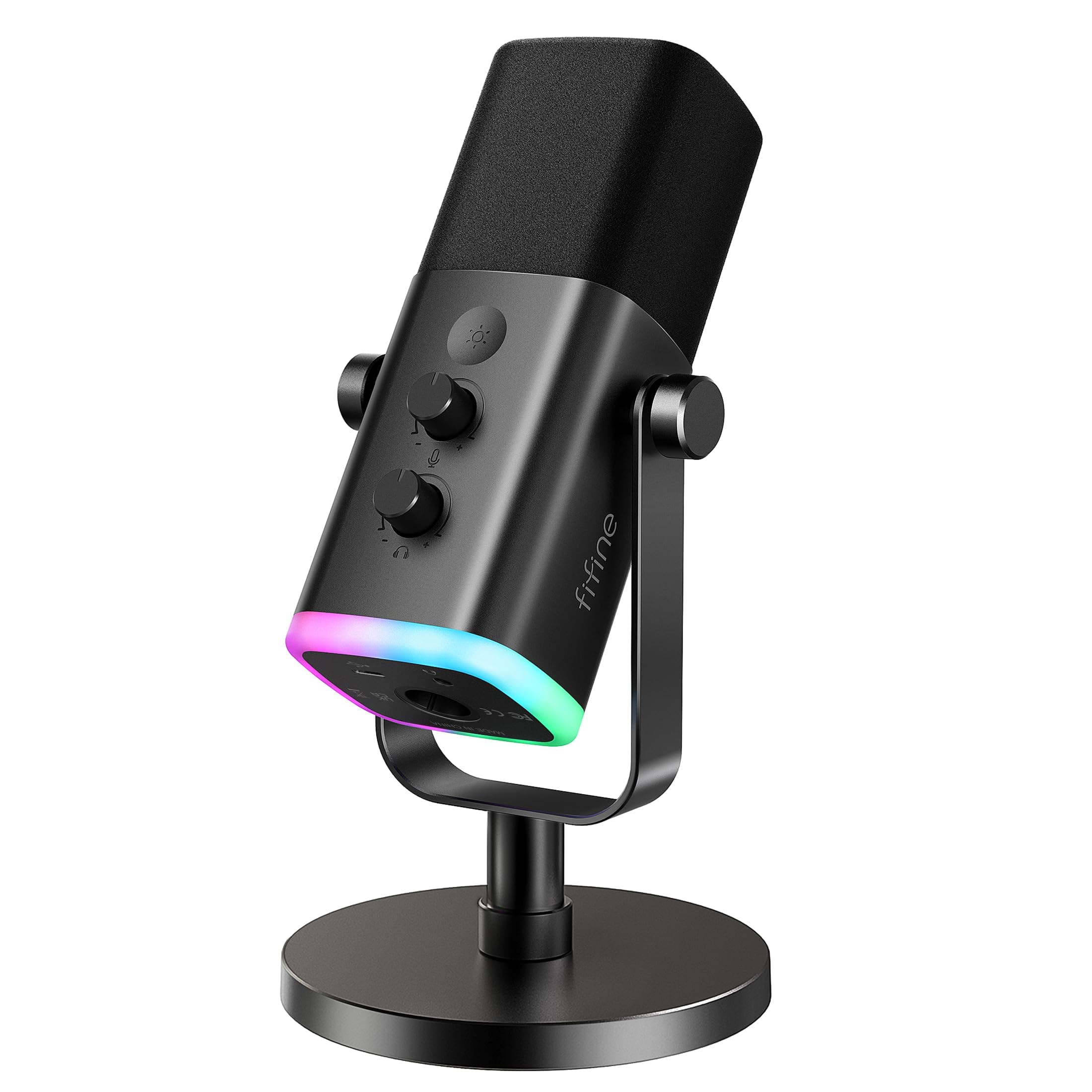
AmpliGame AM8W XLR/USB Gaming Microphone
The ideal buyer for the FIFINE AmpliGame AM8W is a content creator, gamer, or streamer who values convenience, flexibility, and a complete out-of-the-box experience. This user is likely new to advanced audio setups or prefers a streamlined workflow without needing to purchase an external audio interface immediately. They prioritize the dual USB and XLR connection type for versatile use, whether it's plugging directly into a PC via USB for streaming or connecting to an audio interface later. Crucially, the onboard gain control, integrated mute button, and zero-latency headphone output are significant features for them, providing immediate control and real-time monitoring of their audio without complex software or additional hardware.

Buy Movo if...
PC-M6
The Movo PC-M6 is perfectly suited for the audio enthusiast or content creator who is already invested in a professional audio setup or plans to build one around an XLR interface. This buyer likely already owns an audio interface capable of supplying phantom power and is comfortable with an XLR-based workflow. Their priorities lean towards raw audio performance and cost-effectiveness for the microphone unit itself, rather than integrated convenience features. The 48kHz/16-bit recording capability and 20Hz-20kHz frequency response are appealing for those who want detailed sound capture that can be further processed through their existing gear. This user doesn't need USB connectivity or onboard microphone controls, as they rely on their audio interface for gain adjustments, monitoring, and other functions, thereby leveraging their existing investment effectively.
Spec Comparison
10 specs compared
| Specification |  | 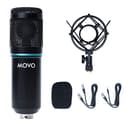 |
|---|---|---|
| Rating | 4.6(11.7k) | 4.0(112) |
| Sample Rate | 48 kHz | 48 kHz |
| Bit Depth | — | 16 |
| Connection | USB/XLR | XLR |
| Polar Pattern | Cardioid | Cardioid |
| Zero-Latency | Yes | — |
| Mute Button | Yes | — |
| Gain Control | Yes | — |
| Model Number | AM8W | PC-M6 |
| Headphone Out | Yes | — |
| Freq. Response | — | 20Hz - 20kHz |
Swipe horizontally to see all columns
Pros & Cons
Quick overview of strengths and weaknesses
FIFINE AmpliGame AM8W XLR/USB Gaming Microphone
- Dual USB and XLR connectivity options.
- Onboard gain and headphone volume controls.
- Integrated mute button for quick audio cuts.
- Cardioid polar pattern reduces background noise.
- Onboard controls only function when using USB.
- RGB lighting feature is limited to USB mode.
- Requires close proximity for optimal audio capture.
Movo PC-M6
- Records 48kHz/16-bit audio.
- 20Hz-20kHz frequency range.
- Cardioid polar pattern.
- Includes shock mount.
- Requires external audio interface.
- Needs phantom power.
- Lacks direct USB computer connection.
Frequently Asked Questions
Common questions about this comparison
What connection types do these microphones offer?
The FIFINE AM8W provides both USB and XLR connectivity, offering versatile plug-and-play or professional options. The Movo PC-M6 is exclusively an XLR microphone.
Does either microphone require additional equipment to function?
The FIFINE AM8W can be used directly via USB. The Movo PC-M6 requires an external audio interface with phantom power due to its XLR-only connection.
Which microphone is better for a simple gaming setup?
The FIFINE AM8W is generally better for simple gaming due to its direct USB connection, onboard controls like gain and mute, and zero-latency monitoring, all without needing an interface.
What is the recorded audio quality?
Both microphones feature a 48kHz sample rate. The Movo PC-M6 specifically highlights 16-bit depth and a 20Hz-20kHz frequency response for detailed audio capture.
Do these microphones include a mute button?
Yes, the FIFINE AM8W has an integrated mute button, which is convenient for quick audio cuts. The Movo PC-M6 does not feature an onboard mute button.
What accessories come with the Movo PC-M6?
The Movo PC-M6 includes a shock mount and a pop filter, providing essential accessories for improved sound quality and isolation right out of the box.
Related Comparisons
Similar products people compare
Explore Other Categories
Popular comparisons across the site


Ask AI
Get instant answers about specs
Get the Deets
Ask our AI assistant
Ask Deets anything!