Our Verdict
MAONO MAONO XLR/USB Dynamic Microphone Kit PD200XS Wins
Both mics share core priority specs like a 48kHz sample rate, USB/XLR connectivity, cardioid polar pattern, and zero-latency monitoring, making the MAONO's added features a clear differentiator. The FIFINE AM8W is the better pick for users on a strict budget who already own accessories or prioritize a simpler, standalone microphone setup.
Bottom Line: MAONO MAONO XLR/USB Dynamic Microphone Kit PD200XS is the better choice. Both mics share core priority specs like a 48kHz sample rate, USB/XLR connectivity, cardioid polar pattern, and zero-latency monitoring, making the MAONO's added features a clear differentiator.
In-Depth Analysis
How they compare in practice
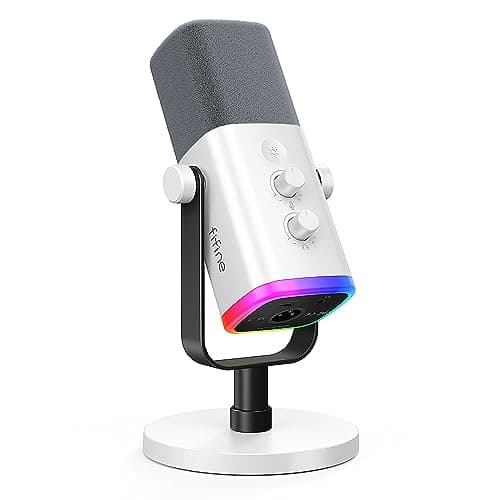
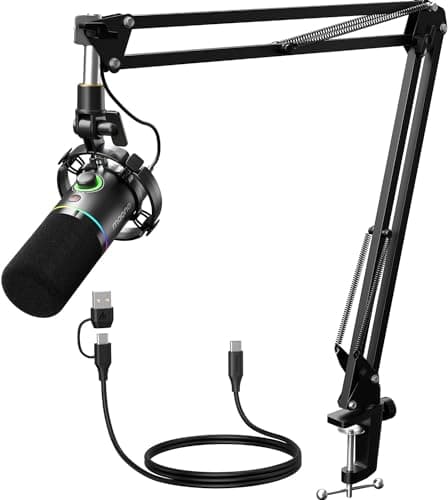
The FIFINE AmpliGame AM8W and MAONO PD200XS both aim to provide versatile USB/XLR microphone solutions for streamers and podcasters, yet they approach this with distinct value propositions. The most notable difference lies in their out-of-the-box utility and control. Beyond hardware, the MAONO introduces the MAONO Link software suite, offering granular control over EQ, limiter, and compressor settings—features entirely absent on the FIFINE. While the FIFINE AM8W provides convenient onboard gain and headphone volume controls, these are purely hardware-based and limited to basic adjustments. The MAONO's software, though only functional in USB mode like FIFINE's RGB, allows for a more polished and professional sound profile, a significant advantage for content creators serious about audio quality. Both microphones feature a cardioid polar pattern and zero-latency monitoring, crucial for clear vocal capture and real-time audio feedback, and both operate at a 48kHz sample rate, ensuring high-fidelity digital audio. However, the FIFINE's simplicity can be an advantage for users who prefer a plug-and-play experience without delving into software. Its primary drawbacks are the requirement for close proximity for optimal audio capture and the lack of an included stand or arm, potentially incurring additional costs. The MAONO's frequency response of 40-16000Hz is explicitly stated, indicating a solid range for voice, whereas FIFINE does not specify this, though typically gaming mics aim for similar performance. The MAONO’s main con is the absence of an XLR cable in the kit, which is a small oversight for its dual connectivity. Ultimately, the MAONO PD200XS offers a more comprehensive and feature-rich package for a slightly higher investment, providing greater flexibility and professional-grade audio customization.
Which to Pick for Your Situation
Concrete scenarios with a clear recommendation
For content creators desiring advanced audio customization
MAONOThe MAONO PD200XS features the MAONO Link software suite, enabling fine-tuning of EQ, limiter, and compressor settings for a professional sound.
For a complete streaming/podcast setup out of the box
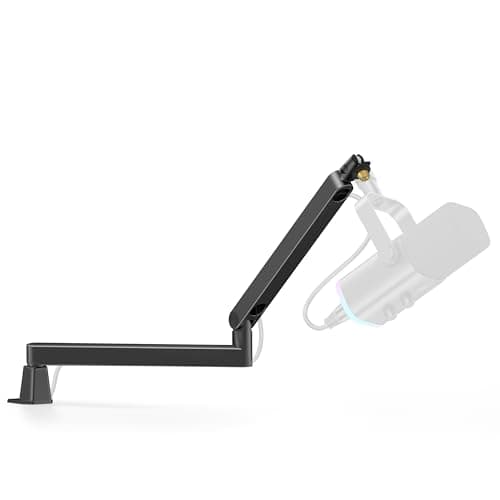
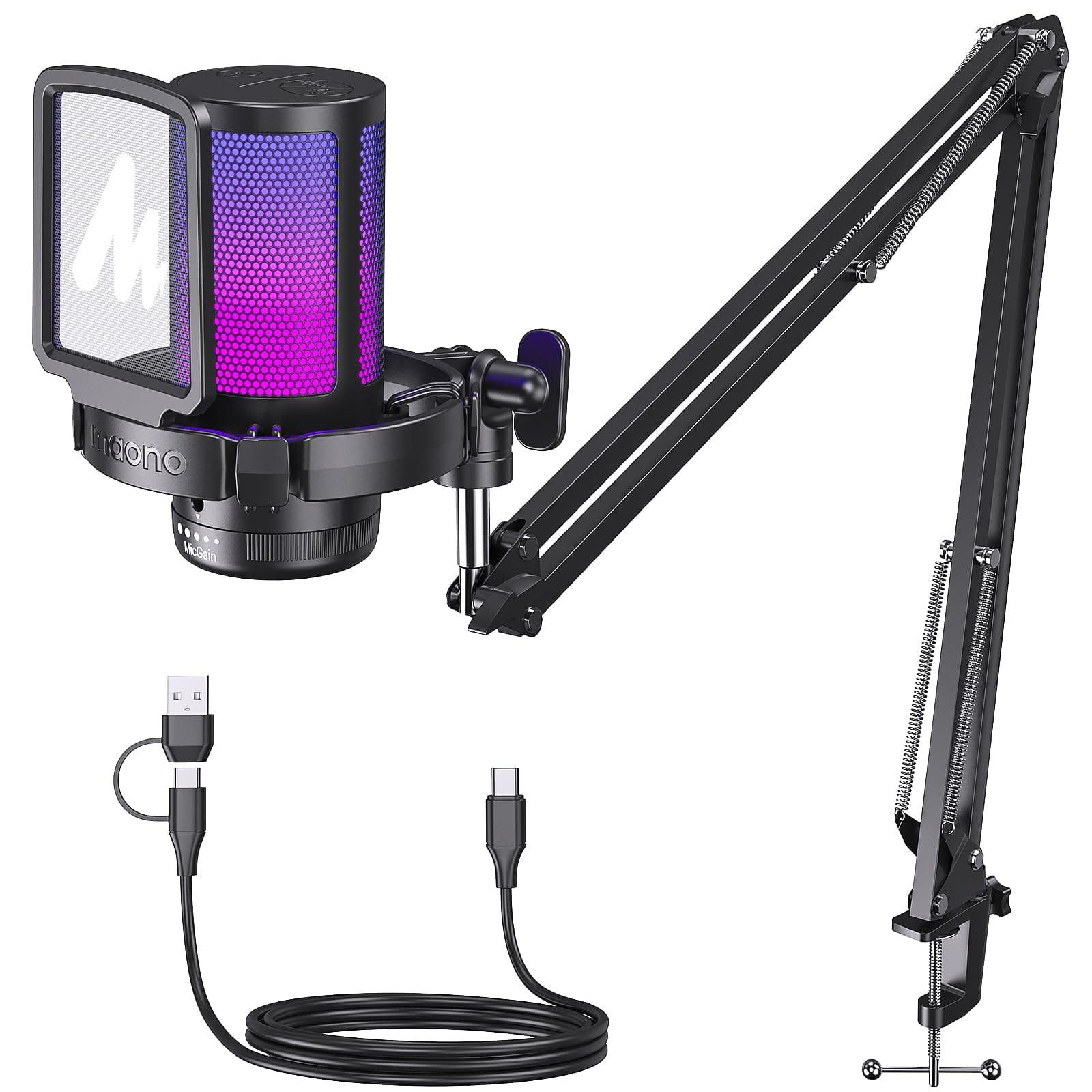
MAONOThe MAONO PD200XS includes a boom arm, shock mount, and USB cable, offering a comprehensive solution without needing separate accessory purchases.
For a simple, no-fuss plug-and-play experience
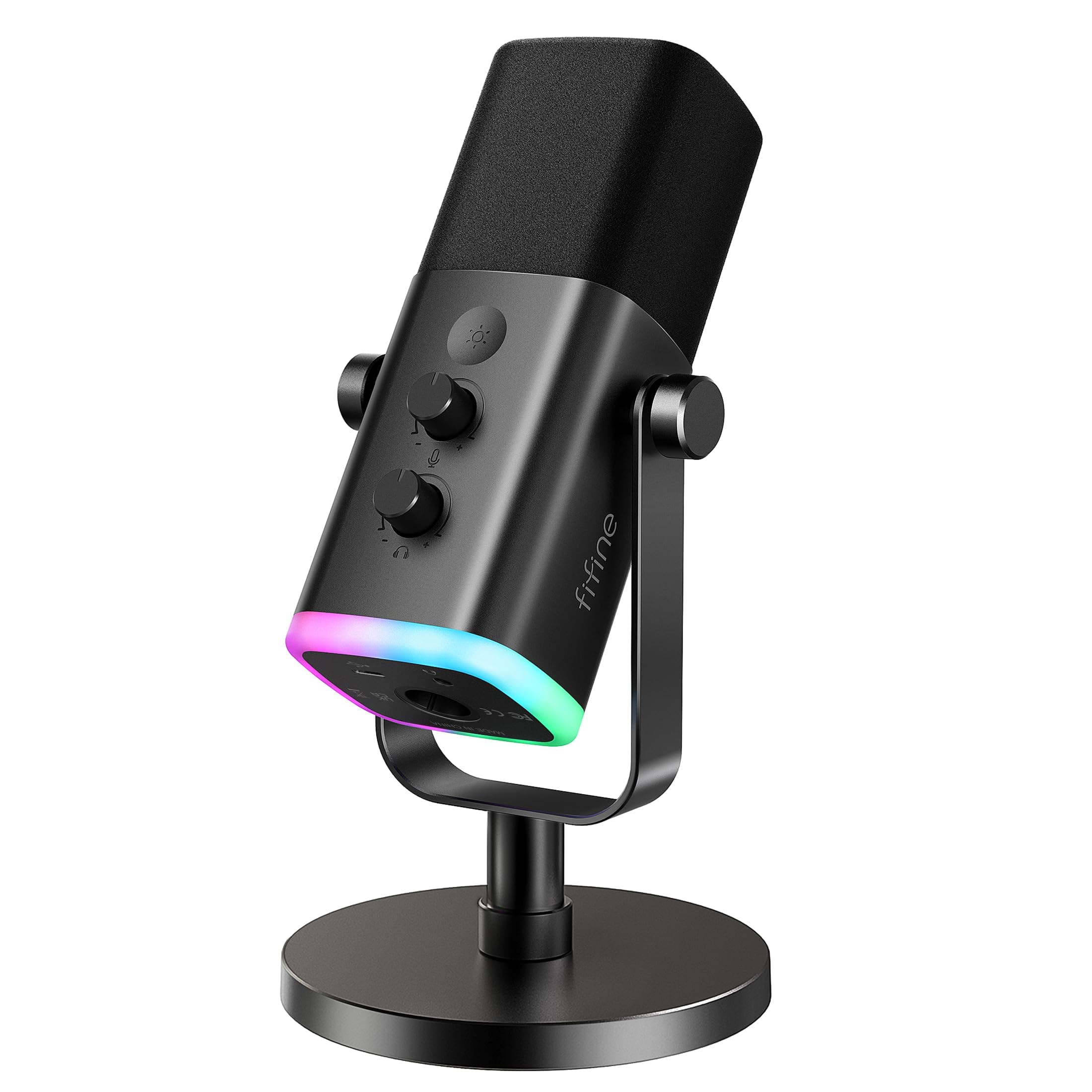
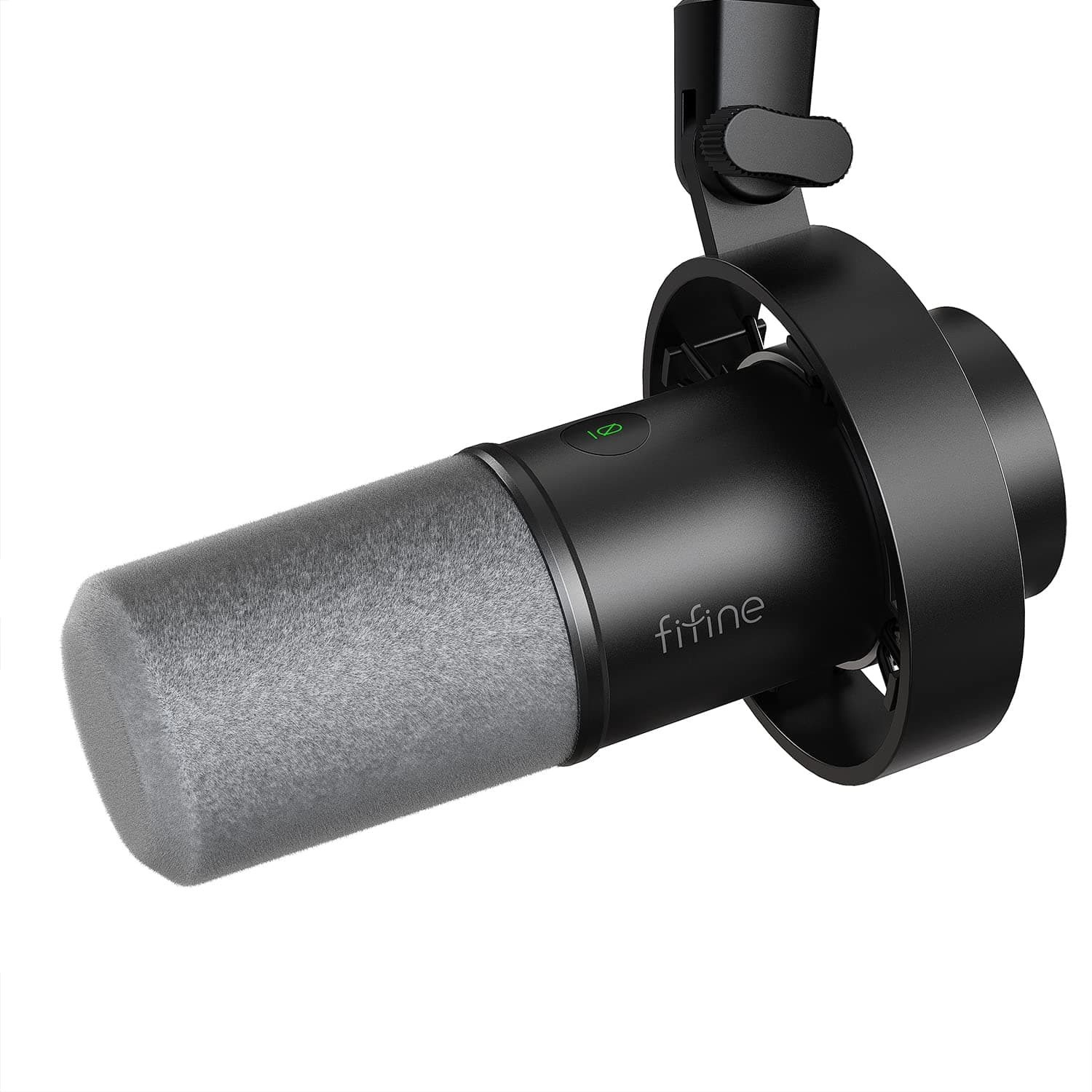
FIFINEThe FIFINE AM8W offers straightforward onboard gain and headphone volume controls, ideal for users who prefer minimal setup complexities.
Who Should Buy Which?
Find the right product for your needs

Buy FIFINE if...
AmpliGame AM8W XLR/USB Gaming Microphone
The FIFINE AmpliGame AM8W is the ideal choice for budget-conscious individuals taking their first steps into streaming, podcasting, or gaming commentary. This buyer prioritizes ease of use and immediate functionality; they value the plug-and-play nature of its USB connectivity and the convenience of onboard gain control and a mute button. While they might need to purchase a separate stand or boom arm, their primary goal is a reliable microphone with a cardioid polar pattern for clear vocal capture and zero-latency monitoring for accurate feedback. They aren't looking for extensive software customization or an all-inclusive kit, preferring to build their setup incrementally or utilize existing accessories. The FIFINE AM8W fits a minimalist setup perfectly, delivering quality audio for fundamental needs, without the added cost or complexity of advanced features they may not require.

Buy MAONO if...
XLR/USB Dynamic Microphone Kit
The MAONO MAONO XLR/USB Dynamic Microphone Kit PD200XS caters to aspiring and intermediate content creators, streamers, and podcasters who are ready to invest slightly more for a comprehensive, professional-grade setup. They prioritize value in a complete package, appreciating the included boom arm, shock mount, and USB cable that eliminate the need for additional purchases and ensure optimal mic placement. The MAONO Link software suite, with its EQ, limiter, and compressor functions, is a crucial draw, appealing to users who want to fine-tune their audio for a polished output. Its 40-16000Hz frequency response and the versatility of dual USB/XLR connections make it suitable for various recording environments, offering a robust foundation for growing their content creation journey while still being relatively accessible in price.
Spec Comparison
10 specs compared
| Specification |  | 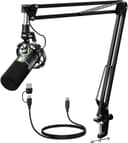 |
|---|---|---|
| Rating | 4.6(11.7k) | 4.6(1.9k) |
| Sample Rate | 48 kHz | 48 kHz |
| Connection | USB/XLR | USB/XLR |
| Polar Pattern | Cardioid | Cardioid |
| Zero-Latency | Yes | Yes |
| Mute Button | Yes | Yes |
| Gain Control | Yes | Yes |
| Model Number | AM8W | PD200XS |
| Headphone Out | Yes | Yes |
| Software | — | MAONO Link |
| Freq. Response | — | 40Hz - 16kHz |
Swipe horizontally to see all columns
Pros & Cons
Quick overview of strengths and weaknesses
FIFINE AmpliGame AM8W XLR/USB Gaming Microphone
- Dual USB and XLR connectivity options.
- Onboard gain and headphone volume controls.
- Integrated mute button for quick audio cuts.
- Cardioid polar pattern reduces background noise.
- Onboard controls only function when using USB.
- RGB lighting feature is limited to USB mode.
- Requires close proximity for optimal audio capture.
MAONO XLR/USB Dynamic Microphone Kit
- Dual USB/XLR outputs for varied setups.
- Software enables EQ, limiter, and compressor control.
- Cardioid pattern reduces ambient noise effectively.
- Integrated gain and headphone volume knob.
- Software audio features only work in USB mode.
- XLR connection cable is not included with purchase.
- Frequency response tops out at 16kHz.
Frequently Asked Questions
Common questions about this comparison
Do both microphones offer dual USB and XLR connectivity?
Yes, both the FIFINE AM8W and MAONO PD200XS provide dual USB and XLR connection options, offering flexibility for various setups, from direct computer connection to professional audio interfaces.
What is the primary benefit of the MAONO Link software suite?
The MAONO Link software, exclusive to the PD200XS, allows users to customize audio settings such as EQ, limiter, and compressor. This enables fine-tuning of your sound for a more polished and professional output, especially useful for content creation.
Is a boom arm included with either microphone?
Only the MAONO PD200XS kit includes a boom arm and shock mount. The FIFINE AM8W is sold as a standalone microphone, requiring separate purchases for mounting accessories to achieve optimal positioning.
What is zero-latency monitoring and do both mics have it?
Zero-latency monitoring allows you to hear your own voice in real-time through headphones, without any delay. Both the FIFINE AM8W and MAONO PD200XS feature this essential function for accurate recording and live performance.
What is the sample rate for these microphones?
Both the FIFINE AM8W and MAONO PD200XS operate at a sample rate of 48kHz. This is a standard professional sample rate suitable for high-quality voice recording, streaming, and podcasting.
Does the MAONO PD200XS come with an XLR cable?
No, while the MAONO PD200XS supports XLR connectivity, an XLR cable is not included in the purchase. It does come with a USB cable for direct computer connection.
Related Comparisons
Similar products people compare
Explore Other Categories
Popular comparisons across the site


Ask AI
Get instant answers about specs
Get the Deets
Ask our AI assistant
Ask Deets anything!