Our Verdict
ALLWEI Portable Power Station 300W Wins
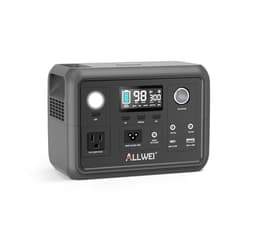
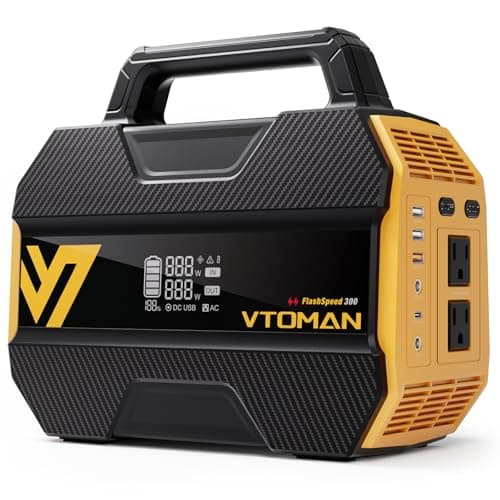
While both offer a robust LiFePO4 chemistry and identical 300W AC output, the ALLWEI provides a slightly larger 256Wh capacity compared to VTOMAN's 230Wh, at a lower price point of $129.0 versus $139.99. This makes ALLWEI a better value proposition for core power storage. VTOMAN is the better pick if you prioritize dual AC outlets and a more powerful 100W USB-C PD port for laptop charging over a small capacity difference and price.
Bottom Line: ALLWEI Portable Power Station 300W is the better choice. While both offer a robust LiFePO4 chemistry and identical 300W AC output, the ALLWEI provides a slightly larger 256Wh capacity compared to VTOMAN's 230Wh, at a lower price point of $129.
In-Depth Analysis
How they compare in practice
The ALLWEI Portable Power Station 300W and VTOMAN FlashSpeed 300 are closely matched entry-level power stations, both leveraging the durable LiFePO4 battery chemistry, promising an excellent 3000 life cycles. This longevity means both units are built for years of reliable service, whether for recreational camping or home backup, significantly outperforming older NMC chemistries in terms of lifespan. However, real-world utility hinges on their subtle differences in capacity and port configuration.
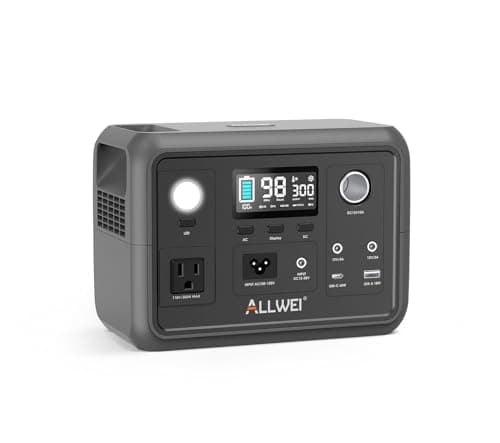
Capacity-wise, the ALLWEI edges out with 256Wh compared to VTOMAN's 230Wh. While seemingly minor, this 26Wh difference translates to slightly longer runtimes for low-power devices. For instance, powering a 5W LED light, the ALLWEI could last approximately 5 hours longer. Both units share a 300W AC output, making them suitable for small appliances like laptops, fans, or mini-fridges, but neither is designed for high-drain power tools or large kitchen appliances. The pure sine wave output on the ALLWEI is a critical benefit for sensitive electronics, ensuring stable and clean power delivery.
The most significant practical divergence lies in their output ports and charging speeds. The VTOMAN offers two AC outlets, a distinct advantage for users needing to power two AC-dependent devices simultaneously, while the ALLWEI has only one. Additionally, VTOMAN's 100W USB-C PD port is a major draw for modern laptop users, allowing faster charging for demanding devices compared to ALLWEI's 60W USB-C PD. Conversely, the ALLWEI offers three DC ports against VTOMAN's single, which could be beneficial for certain outdoor setups. Charging times are competitive; the VTOMAN recharges in 2.5 hours, matching ALLWEI's dual AC+solar input speed, though ALLWEI's standard AC charge is 4 hours.
Considering the price, the ALLWEI at $129.0 presents a slightly better cost-per-Wh value and retains all priority specs. The VTOMAN, at $139.99, justifies its higher price with enhanced connectivity and faster USB-C charging, appealing to users with more diverse device ecosystems. The choice ultimately comes down to whether the added AC outlet and powerful USB-C PD on the VTOMAN outweigh ALLWEI's minor capacity lead and lower entry cost.
Key Differences
The most significant spec differences at a glance
Battery Capacity
11% moreAC Outlets
50% lessCharge Time
60% moreDc Ports
200% moreUSB-A Ports
67% lessAdvantages
Where each product wins

ALLWEI
- Battery Capacity: 11% higher (256 vs 230.0)
- Dc Ports: 200% higher (3 vs 1)

VTOMAN
- AC Outlets: 50% higher (1 vs 2)
- Charge Time: 60% lower (4 vs 2.5)
- USB-A Ports: 67% higher (1 vs 3)
Which to Pick for Your Situation
Concrete scenarios with a clear recommendation
For a budget-conscious camper needing basic power
ALLWEIThe ALLWEI offers 256Wh capacity for $129.0, providing slightly more power for less money, ideal for essential devices.
For remote workers needing to charge a laptop efficiently
VTOMANThe VTOMAN features a 100W USB-C PD port, allowing for faster and more capable laptop charging compared to ALLWEI's 60W USB-C.
To power multiple small AC appliances simultaneously
VTOMANWith two AC outlets, the VTOMAN provides greater flexibility for running two low-power devices like a fan and a laptop charger at once, unlike ALLWEI's single AC port.
For backup power during short home blackouts
TieBoth units offer 300W AC output and durable LiFePO4 batteries, making them equally suitable for powering essential small devices during brief outages.
Who Should Buy Which?
Find the right product for your needs

Buy ALLWEI if...
ALLWEI Portable Power Station
The ALLWEI Portable Power Station 300W is the ideal choice for the practical, budget-conscious user who prioritizes core power delivery and long-term battery health over extensive port versatility. This buyer might be an occasional camper, someone looking for an emergency backup power source for essential electronics during short outages, or a student needing to power a laptop and phone for a few hours. They value the robust 3000 cycle life of the LiFePO4 battery, ensuring years of reliable use, and appreciate the slightly higher 256Wh capacity for extended runtimes on their devices. They don't typically need to power multiple AC devices simultaneously, as the single AC outlet suffices for their needs, and a 60W USB-C PD port adequately charges their phone or tablet. This user is looking for maximum value at the $129.0 price point, understanding that they're getting a durable, efficient power source without paying extra for features they won't fully utilize, like dual AC ports or a 100W USB-C PD output.

Buy VTOMAN if...
VTOMAN FlashSpeed 300 Portable
The VTOMAN FlashSpeed 300 is perfectly suited for the tech-savvy individual or small family who needs more flexible connectivity and faster charging for modern devices, even at a slightly higher price point. This buyer might be a digital nomad working remotely, a photographer in the field, or someone who frequently travels with multiple gadgets, including a laptop. They will significantly benefit from the two AC outlets, allowing them to power a laptop and a small fan simultaneously, a flexibility not offered by the ALLWEI. Crucially, the 100W USB-C PD port is a game-changer for fast-charging laptops, ensuring their productivity isn't hindered. While its 230Wh capacity is marginally less than ALLWEI's, the enhanced port functionality and the fast 2.5-hour recharge time make it highly practical for active use. This user is willing to pay $139.99 for the convenience of superior port options and rapid device charging, understanding that the slight compromise in raw capacity is well worth the increased utility for their diverse electronic needs.
Spec Comparison
14 specs compared
| Specification |  |  |
|---|---|---|
| Price | $129 | $140 |
| Rating | 4.4(2.3k) | 4.4(816) |
| Capacity Wh | 256W | 230W |
| Chemistry | LiFePO4 | LiFePO4 |
| AC Output Watts | 300W | 300W |
| Dc Ports | 3 | 1 |
| AC Outlets | 1 | 2 |
| Cycle Life | 3000 | 3000 |
| Expandable | No | — |
| USB A Ports | 1 | 3 |
| USB C Ports | 1 | 1 |
| Model Number | PPS300-4 | PB-82 |
| Charge Time Hours | 4 hrs | 2.5 hrs |
| Peak Output Watts | 600W | — |
| Solar Input Watts | 100W | — |
| Weight | — | 7.4 lbs |
Swipe horizontally to see all columns
Pros & Cons
Quick overview of strengths and weaknesses
ALLWEI Portable Power
- 3000 LiFePO4 cycles for extended battery longevity
- 6 output ports charge multiple devices simultaneously
- 60W USB-C PD port for rapid device charging
- Pure sine wave AC output protects sensitive electronics
- 256Wh capacity is limited for long-duration use
- Single AC outlet limits appliance connectivity
- Solar panel not included, adds to total cost
- 300W AC output insufficient for high-power tools
VTOMAN FlashSpeed 300
- LiFePO4 battery offers 3000 charge cycles
- 7.4 lbs unit weight ensures easy transport
- 100W USB-C PD input/output supports laptops
- 7 simultaneous outputs for multiple devices
- 300W AC output limits power for heavier loads
- 230Wh capacity offers limited runtime
- Only one 100W USB-C port
Frequently Asked Questions
Common questions about this comparison
What is the primary difference in battery capacity?
The ALLWEI has a slightly larger 256Wh capacity, while the VTOMAN offers 230Wh. This means the ALLWEI can theoretically power devices for a marginally longer duration.
Which power station charges faster?
The VTOMAN boasts a 2.5-hour recharge time. The ALLWEI charges in 4 hours via AC alone, but can match VTOMAN's 2.5 hours when using simultaneous AC+solar input.
How many AC outlets does each unit have?
The VTOMAN provides two AC outlets, offering more versatility for powering multiple standard devices. The ALLWEI includes a single AC outlet.
Can these power stations run a mini-fridge?
Both units have a 300W AC output, which is generally sufficient for most small mini-fridges. Always check your appliance's wattage requirements to confirm compatibility.
What is the expected lifespan of these batteries?
Both the ALLWEI and VTOMAN utilize LiFePO4 batteries, offering an impressive 3000 charge cycles. This chemistry ensures excellent longevity and durability over many years of use.
Related Comparisons
Similar products people compare
SinKeu vs VTOMAN
$103 vs $140
Anker vs VTOMAN
$250 vs $140
ALLWEI vs ZeroKor
$129 vs $130
ENOFLO vs VTOMAN
$120 vs $140
ALLWEI vs Jackery
$129 vs $229
Anker vs VTOMAN
$150 vs $140
ALLWEI vs EF ECOFLOW
$129 vs $147

Apowking vs VTOMAN
$100 vs $140
ALLWEI vs Anker
$129 vs $150
EnginStar vs VTOMAN
$130 vs $140
Jackery vs VTOMAN
$229 vs $140
ALLWEI vs EnginStar
$129 vs $130
ALLWEI vs ENOFLO
$129 vs $120
EF ECOFLOW vs VTOMAN
$147 vs $140
ALLWEI vs Tenergy
$129 vs $180
Explore Other Categories
Popular comparisons across the site







Ask AI
Get instant answers about specs
Get the Deets
Ask our AI assistant
Ask Deets anything!