Our Verdict
Breville Barista Express Wins
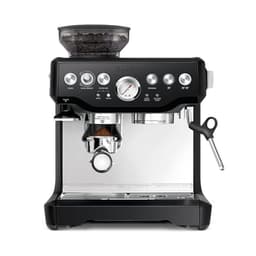
While both feature thermoblock boilers and 15-bar pumps, the Breville provides superior temperature stability with PID control and includes low-pressure pre-infusion for better extraction, justifying its $699.95 price point. The Philips Barista Brew, at $499.99, is the better pick for those prioritizing a standard 58mm portafilter and a lower entry cost, willing to accept less precise temperature management and a smaller bean container than the Breville's more generous 67oz water reservoir.
Bottom Line: Breville Barista Express is the better choice. While both feature thermoblock boilers and 15-bar pumps, the Breville provides superior temperature stability with PID control and includes low-pressure pre-infusion for better extraction, justifying its $699.
In-Depth Analysis
How they compare in practice
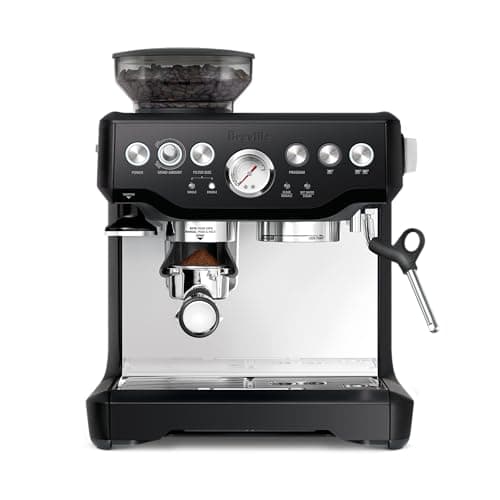
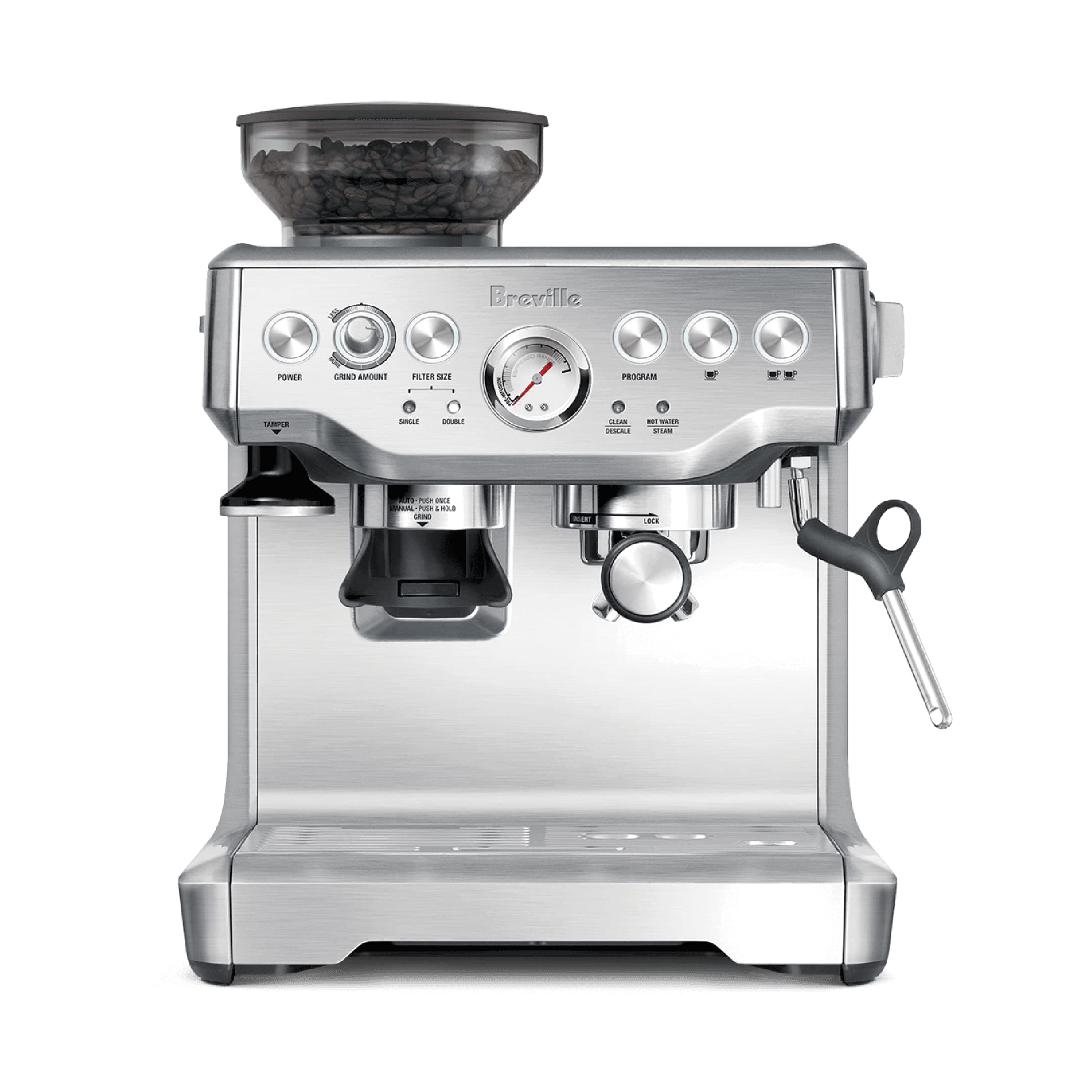
The Breville Barista Express and Philips Barista Brew both offer integrated grinder convenience and thermoblock heating, yet their approaches to espresso preparation differ significantly. The Breville (A) positions itself as a prosumer choice by incorporating PID temperature control and low-pressure pre-infusion. In real-world use, PID ensures water temperature remains consistently optimal throughout the extraction, preventing common bitterness or sourness from temperature fluctuations, a potential issue with thermoblocks lacking such control. The pre-infusion gently saturates the coffee puck before full pressure, reducing channeling and leading to a more balanced shot.
Conversely, the Philips Barista Brew (B) emphasizes accessibility and standard sizing. Its 58mm portafilter is an industry standard, meaning users have a broader choice of third-party accessories like baskets, tampers, and distribution tools, unlike the Breville's proprietary 54mm size. This makes the Philips more appealing for those who might want to upgrade components over time or are already familiar with standard commercial equipment. The inclusion of a calibrated tamper also helps beginners achieve consistent puck preparation, a critical skill.
Value proposition also separates these machines. The Philips, at $499.99, offers a solid entry point into semi-automatic espresso with an integrated grinder, making it a strong contender for budget-conscious buyers or those new to the hobby. Its dedicated Americano button adds convenience for specific drink preferences. The Breville, at $699.95, commands a higher price but delivers a more refined and controlled brewing experience, with faster heat-up times (0.5 minutes) and a significantly larger 67oz water reservoir reducing refill frequency. The integrated grinder on both saves counter space, but Breville's dose control, combined with its advanced temperature and pressure features, creates a more cohesive system for consistent high-quality espresso. The trade-off for Philips users might be slightly less temperature stability and the higher pump pressure without pre-infusion could lead to less optimal extractions if not dialed in carefully.
Key Differences
The most significant spec differences at a glance
Portafilter Size
7% lessAdvantages
Where each product wins

Philips
- Portafilter Size: 7% higher (54.0 vs 58)
Which to Pick for Your Situation
Concrete scenarios with a clear recommendation
For the aspiring home barista focused on learning and consistency
BrevilleBreville's PID temperature control and low-pressure pre-infusion offer superior consistency and a better platform for honing espresso skills.
For budget-conscious users wanting standard components
PhilipsPhilips provides a standard 58mm portafilter and a calibrated tamper at a significantly lower price point of $499.99.
For quick, diverse coffee drinks
PhilipsPhilips features a dedicated Americano button, making it easier and quicker to prepare specific drink types beyond just espresso.
For minimal fuss and maintenance regarding refills
BrevilleBreville has a larger 67oz water reservoir, reducing the frequency of refills compared to the Philips, which has an unknown but likely smaller capacity.
Who Should Buy Which?
Find the right product for your needs

Buy Breville if...
Breville Barista Express Espresso
The ideal buyer for the Breville Barista Express BES870BTR is an enthusiastic home barista seeking precise control and consistency in their espresso-making journey. This individual prioritizes shot quality and is willing to invest more for features that directly impact taste and extraction. They appreciate the ability to fine-tune their brew, making them perfect candidates for the machine's PID temperature control, which ensures stable brew water temperature for optimal extraction. The integrated grinder with dose control and low-pressure pre-infusion are crucial for them, providing a consistent foundation for each shot and preventing channeling. While the $699.95 price point is higher, they see it as an investment in a robust, user-friendly system that produces cafe-quality espresso. They also value the larger 67oz water reservoir for fewer refills. They don't mind the non-standard 54mm portafilter, trusting Breville's integrated system. They are giving up the wider accessory compatibility of a 58mm portafilter and the lower price of the Philips for enhanced brewing control and performance.

Buy Philips if...
Philips Barista Brew Semi
The Philips Barista Brew PSA3218/01 is best suited for the entry-level or casual espresso drinker who desires a semi-automatic machine with an integrated grinder without breaking the bank. This buyer is budget-conscious, with the $499.99 price being a major draw, and values convenience and standard components. They appreciate the simplicity of a dedicated Americano button for quick drinks and the aid of a calibrated tamper for consistent puck preparation, easing the learning curve of manual espresso. The standard 58mm portafilter is a significant advantage for them, as it ensures broad compatibility with a wide range of aftermarket accessories, offering future expandability. They might not be as focused on micro-level temperature stability or advanced pre-infusion techniques, instead prioritizing ease of use and value. They are comfortable with a 15-bar pump and understand that perfecting espresso requires practice. They are giving up the more advanced temperature management of PID and the low-pressure pre-infusion found in the Breville, but gain a more accessible price and standard parts, making it an excellent starting point.
Spec Comparison
9 specs compared
| Specification |  | 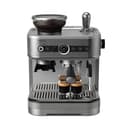 |
|---|---|---|
| Price | $700 | $500 |
| Rating | 4.5(27.5k) | 4.0(279) |
| Boiler Type | thermoblock | thermoblock |
| Pump Pressure Bars | 15 | 15 |
| Portafilter Size mm | 54 | 58 |
| Steam Wand | Yes | Yes |
| Model Number | BES870BTR | PSA3218/01 |
| Grinder Included | Yes | Yes |
| Heat Up Time Mins | 0.5 | — |
| Water Reservoir oz | 67 | — |
| PID Temperature Control | Yes | — |
Swipe horizontally to see all columns
Pros & Cons
Quick overview of strengths and weaknesses
Breville Barista Express
- PID ensures stable brew water temperature.
- Integrated grinder with dose control.
- Manual steam wand for milk texturing.
- Low pressure pre-infusion for even extraction.
- Non-standard 54mm portafilter limits accessory choice.
- Integrated grinder may lack precision of dedicated unit.
Philips Barista Brew
- 58mm portafilter for standard accessories
- Integrated grinder saves counter space
- Calibrated tamper aids consistent puck prep
- Steam wand included for milk frothing
- Requires manual espresso preparation skills
- Thermoblock design may have temperature swings
- 15-bar pump often too high for optimal extraction
- 250g bean container needs frequent refilling
Frequently Asked Questions
Common questions about this comparison
Which machine offers more control over espresso quality?
The Breville Barista Express (A) provides PID temperature control and low-pressure pre-infusion, ensuring more stable water temperature and even extraction compared to the Philips.
Is the portafilter size important for accessories?
Yes, the Philips Barista Brew (B) uses a standard 58mm portafilter, offering broader compatibility with aftermarket accessories than the Breville's 54mm portafilter.
What is the benefit of the Breville's PID control?
PID temperature control in the Breville Barista Express (A) maintains water temperature within a precise range, critical for extracting the best flavors from your coffee grounds consistently.
How do their prices compare?
The Philips Barista Brew (B) is more budget-friendly at $499.99, while the Breville Barista Express (A) is priced higher at $699.95, reflecting its advanced brewing features.
Do both machines include a grinder?
Yes, both the Breville Barista Express (A) and the Philips Barista Brew (B) come with integrated grinders, saving counter space and providing an all-in-one solution.
Related Comparisons
Similar products people compare
Breville vs Philips
$800 vs $500
Ninja vs Philips
$600 vs $500
Mr. Coffee vs Philips
$210 vs $500
Chefman vs Philips
$300 vs $500
Breville vs Koolatron
$700 vs $952
Electactic vs Philips
$292 vs $500
Breville vs Philips
$690 vs $500
Gaggia vs Philips
$452 vs $500
Calphalon vs Philips
$350 vs $500
De'Longhi vs Philips
$500 vs $500
Gaggia vs Philips
$530 vs $500
De'Longhi vs Philips
$230 vs $500
Ninja vs Philips
$430 vs $500
Ninja vs Philips
$499 vs $500
Electactic vs Philips
$95 vs $500
Explore Other Categories
Popular comparisons across the site


Ask AI
Get instant answers about specs
Get the Deets
Ask our AI assistant
Ask Deets anything!