Our Verdict
Breville Barista Express Impress Wins
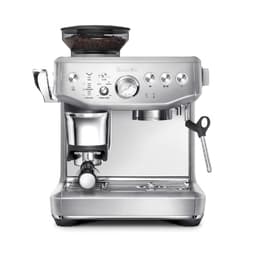
Its optimal 9-bar pump pressure and integrated PID temperature control provide significantly more consistent and higher-quality espresso extraction than the Philips' 15-bar pump, justifying its $759.99 price. The Breville's assisted dosing and tamping also simplify the brewing process for aspiring home baristas. The Philips Barista Brew is the better pick for budget-conscious buyers at $479.99 who prioritize a standard 58mm portafilter and are comfortable with a more manual, less temperature-stable brewing experience.
Bottom Line: Breville Barista Express Impress is the better choice. Its optimal 9-bar pump pressure and integrated PID temperature control provide significantly more consistent and higher-quality espresso extraction than the Philips' 15-bar pump, justifying its $759.
In-Depth Analysis
How they compare in practice
Comparing the Breville Barista Express Impress and the Philips Barista Brew reveals distinct philosophies in home espresso machine design, primarily impacting consistency and user experience. Both machines feature integrated grinders and thermoblock heating systems, yet their execution leads to different outcomes in the cup. The Breville, priced at $759.99, stands out with its crucial PID temperature control and a pump pressure calibrated at an ideal 9 bars. In real-world use, this translates to significantly more stable brew temperatures and optimal extraction pressure, reducing the chances of bitter or sour shots, even for beginners. Its automated dosing and assisted tamping system further streamline puck preparation, guiding users towards consistent results without extensive prior knowledge.
Conversely, the Philips Barista Brew, at a more accessible $479.99, offers a 15-bar pump pressure, which while powerful, is generally considered too high for optimal espresso extraction, often leading to over-extraction and a thinner crema. Without explicit PID control, temperature stability can also be a challenge, requiring more skill and experimentation from the user to dial in good shots. However, the Philips boasts a standard 58mm portafilter, which is a significant advantage for those who enjoy customizing their setup with a wider array of aftermarket accessories like tampers and distribution tools, unlike the Breville's proprietary 54mm size.
The trade-offs are clear: the Breville prioritizes guided consistency and superior shot quality with its precise pressure and temperature management, offering a more forgiving learning curve. The Philips, while more budget-friendly, demands more manual skill and experimentation to overcome its higher pump pressure and potential temperature fluctuations. Its value proposition lies in its lower entry cost and the flexibility of its 58mm portafilter, appealing to those who prefer a more hands-on approach and wider accessory compatibility, even if it means sacrificing some brew consistency out of the box. Ultimately, the choice hinges on budget, desired level of control, and priority for consistent output versus accessory freedom.
Key Differences
The most significant spec differences at a glance
Pump Pressure
40% lessPortafilter Size
7% lessAdvantages
Where each product wins

Philips
- Pump Pressure: 40% higher (9 vs 15)
- Portafilter Size: 7% higher (54 vs 58)
Which to Pick for Your Situation
Concrete scenarios with a clear recommendation
For the aspiring home barista seeking consistent quality
BrevilleThe Breville's 9-bar pump pressure and PID temperature control ensure optimal extraction and stable temperatures for superior espresso consistency.
For a tight budget and standard accessory compatibility
PhilipsThe Philips is significantly more affordable at $479.99 and features a standard 58mm portafilter, allowing for a wider range of aftermarket accessories.
For quick and easy, guided espresso preparation
BrevilleBreville's automated dosing and assisted tamping simplify puck prep, reducing the learning curve for consistent shots.
For those who prefer a more manual, hands-on brewing experience
PhilipsThe Philips requires more manual skill in espresso preparation, appealing to users who enjoy dialing in their shots themselves.
Who Should Buy Which?
Find the right product for your needs

Buy Breville if...
Breville Barista Express Impress
The ideal buyer for the Breville Barista Express Impress (A) is an aspiring home barista who prioritizes consistent, high-quality espresso shots and appreciates a guided brewing experience. This individual values precision and ease of use, even if it comes at a higher price point of $759.99. They might be relatively new to home espresso or simply want to minimize the variables involved in pulling a great shot. Key features for this buyer are the integrated PID temperature control, which ensures brew stability, and the optimal 9-bar pump pressure, leading to balanced extraction. The automated dosing and assisted tamping system are also crucial for them, providing a forgiving learning curve and reducing waste from inconsistent puck preparation. While they might give up the broad accessory compatibility of a 58mm portafilter, the consistent results delivered by the Breville's intelligent features far outweigh this for their needs. This buyer seeks a reliable, intuitive machine that consistently produces delicious coffee with minimal fuss.

Buy Philips if...
Philips Barista Brew Semi
The Philips Barista Brew (B) is perfectly suited for the budget-conscious espresso enthusiast who enjoys a more hands-on approach and values the flexibility of standard accessories. Priced at a more accessible $479.99, this buyer is willing to invest time in learning the nuances of manual espresso preparation. They appreciate the widely compatible 58mm portafilter, which opens up a vast world of third-party tampers, baskets, and distribution tools for customization. While the machine's 15-bar pump pressure and lack of dedicated PID might mean a steeper learning curve to achieve consistently optimal shots, this user sees it as part of the challenge and reward of home brewing. They likely don't require the same level of automation as the Breville and are happy to fine-tune grind, dose, and tamp manually. The integrated grinder and dedicated Americano button are convenient additions for their daily routine. This buyer is looking for a solid foundation to explore espresso making, prioritizing value and the potential for personalization over out-of-the-box consistency.
Spec Comparison
8 specs compared
| Specification |  | 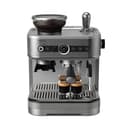 |
|---|---|---|
| Price | $790 | $480 |
| Rating | 4.3(1.3k) | 4.0(279) |
| Boiler Type | thermoblock | thermoblock |
| Pump Pressure Bars | 9 | 15 |
| Portafilter Size mm | 54 | 58 |
| Steam Wand | Yes | Yes |
| Model Number | BES876BSS1BNA1 | PSA3218/01 |
| Grinder Included | Yes | Yes |
| Water Reservoir oz | 67.63 | — |
| PID Temperature Control | Yes | — |
Swipe horizontally to see all columns
Pros & Cons
Quick overview of strengths and weaknesses
Breville Barista Express
- Integrated grinder offers 25 grind settings
- Automated dosing and assisted tamping for puck prep
- PID ensures stable brew temperature for extraction
- Large 2L water tank and 250g bean hopper
- 54mm portafilter limits puck size and accessories
- Thermocoil system may limit simultaneous steam/brew
- Assisted puck system reduces full manual control
- Requires frequent cleaning of multiple components
Philips Barista Brew
- 58mm portafilter for standard accessories
- Integrated grinder saves counter space
- Calibrated tamper aids consistent puck prep
- Steam wand included for milk frothing
- Requires manual espresso preparation skills
- Thermoblock design may have temperature swings
- 15-bar pump often too high for optimal extraction
- 250g bean container needs frequent refilling
Frequently Asked Questions
Common questions about this comparison
Which machine offers better temperature control for espresso?
The Breville Barista Express Impress (Product A) includes PID temperature control, ensuring more stable and precise brewing temperatures than the Philips Barista Brew.
What is the practical difference between the 54mm and 58mm portafilters?
The Philips (B) uses a standard 58mm portafilter, offering broader compatibility with third-party accessories. The Breville (A)'s 54mm portafilter has fewer aftermarket options.
Is the Philips' 15-bar pump pressure an advantage or disadvantage?
A 15-bar pump is generally considered too high for optimal espresso extraction, often leading to over-extraction. The Breville's 9-bar pump is ideal for best results.
Which machine is easier for a beginner to use for consistent shots?
The Breville Barista Express Impress (A) is easier for beginners due to its assisted dosing, tamping, and PID for consistent temperature and pressure.
Can I make Americanos easily with both machines?
Yes, both machines have steam wands for hot water, but the Philips (B) specifically features a dedicated Americano button for quicker preparation.
Do both machines include an integrated coffee grinder?
Yes, both the Breville Barista Express Impress (A) and the Philips Barista Brew (B) come with integrated grinders, saving counter space.
Related Comparisons
Similar products people compare
Breville vs De'Longhi
$790 vs $600
Breville vs De'Longhi
$790 vs $500
Breville vs Rancilio
$790 vs $995
Ninja vs Philips
$600 vs $480
Mr. Coffee vs Philips
$178 vs $480
Chefman vs Philips
$299 vs $480
Electactic vs Philips
$291 vs $480
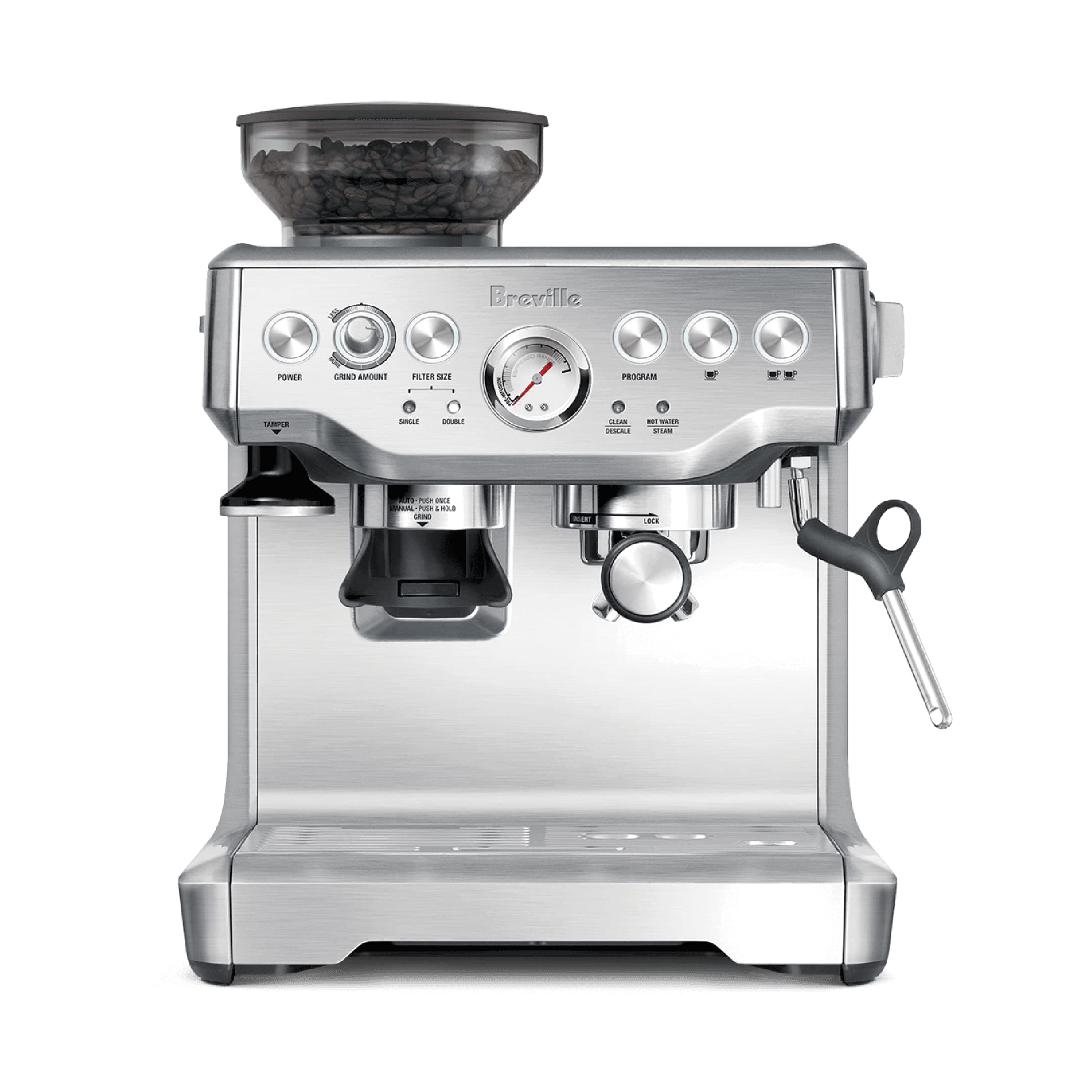
Breville vs Philips
$690 vs $480
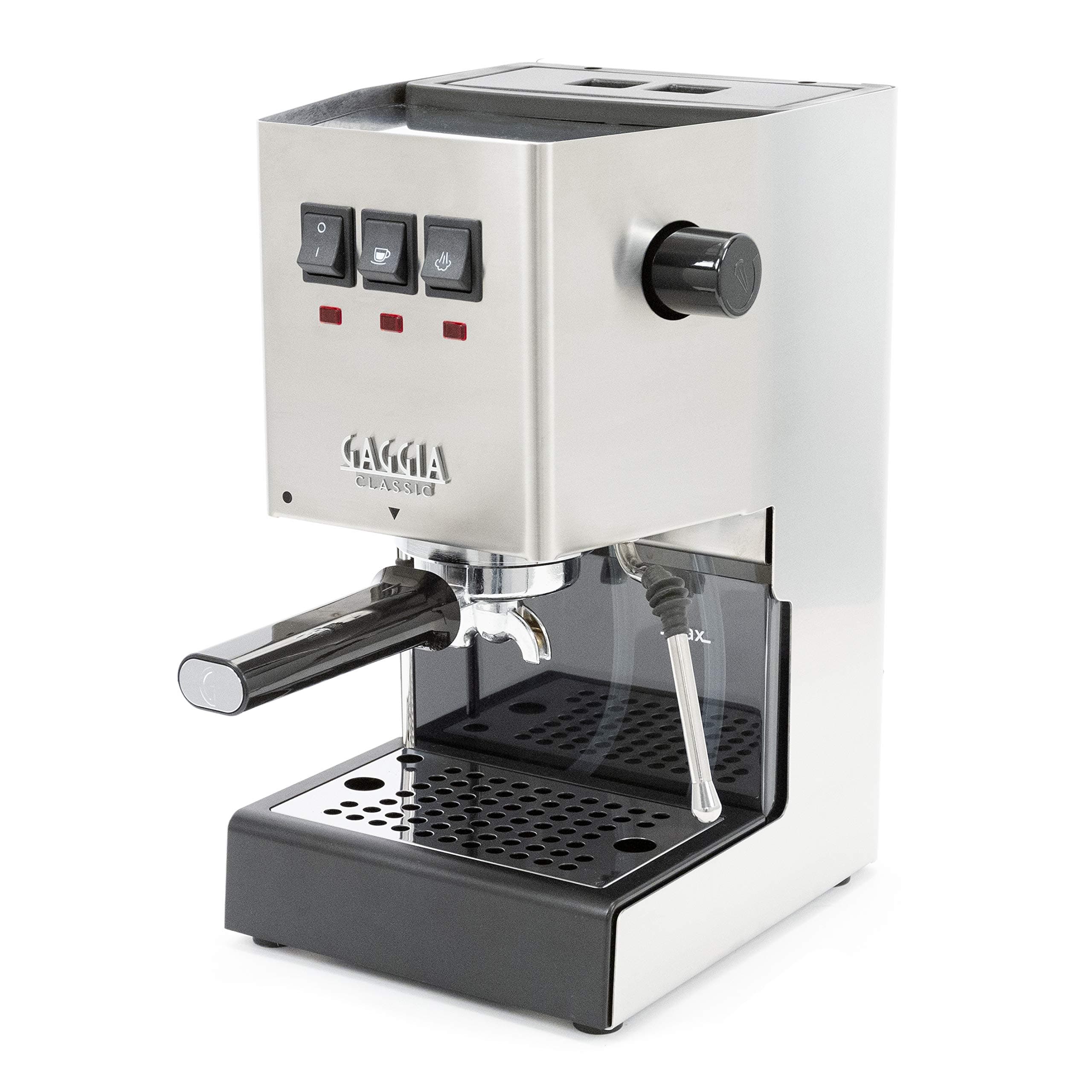
Gaggia vs Philips
$452 vs $480
Breville vs Koolatron
$790 vs $650
Breville vs De'Longhi
$790 vs $500
Calphalon vs Philips
$350 vs $480
De'Longhi vs Philips
$500 vs $480
Gaggia vs Philips
$530 vs $480
De'Longhi vs Philips
$230 vs $480
Explore Other Categories
Popular comparisons across the site


Ask AI
Get instant answers about specs
Get the Deets
Ask our AI assistant
Ask Deets anything!