Our Verdict
Tie, based on use case Wins
The Creality K1C is superior for speed and material versatility with a max print speed of 600mm/s and support for carbon fiber filaments. The ELEGOO Saturn 4 excels in detail with its 12K HD Mono LCD for intricate models. Choose the K1C for functional, fast prints, or the Saturn 4 for high-resolution aesthetic objects, considering their comparable prices of $399.0 and $379.99 respectively and similar auto-leveling features.
Bottom Line: Tie, based on use case is the better choice. The Creality K1C is superior for speed and material versatility with a max print speed of 600mm/s and support for carbon fiber filaments.
In-Depth Analysis
How they compare in practice
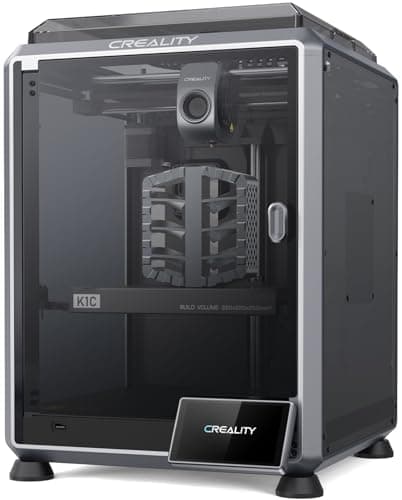
The Creality K1C and ELEGOO Saturn 4 represent two distinct philosophies in 3D printing: fused deposition modeling (FDM) versus stereolithography (SLA/MSLA) resin printing. This fundamental difference dictates their real-world performance, applications, and user experience. The K1C, an FDM printer, prioritizes speed and material flexibility, boasting an impressive 600mm/s max print speed. This translates to significantly reduced print times for functional prototypes, larger parts, and everyday objects made from various thermoplastics, including robust carbon fiber filaments thanks to its 300°C nozzle and robust direct extruder. Its enclosed build volume of 220x220x250mm is well-suited for a wide array of FDM projects. It also features an AI camera for print monitoring, adding a layer of convenience and failure detection.
In contrast, the ELEGOO Saturn 4, a resin printer, is all about intricate detail and smooth surface finishes. Its 10-inch 12K HD Mono LCD is a game-changer for miniatures, highly detailed models, and artistic creations where precision is paramount, offering a much finer resolution than any FDM machine. While it doesn't have a 'print speed' comparable to FDM (as resin printers cure layers rather than extrude), its 92% light uniformity ensures consistent curing across the entire build plate. The Saturn 4's build volume of 218.948x122.936x219.964mm is substantial for a resin printer, allowing for larger resin prints. Both printers offer smart automatic leveling, simplifying the setup process for beginners and seasoned users alike. However, resin printing involves more post-processing (washing and curing) and typically messier workflows due to the liquid resin and fumes, which the Saturn 4 lacks integrated air filtration for.
The trade-off is clear: the K1C offers speed, material strength, and easier post-processing for functional parts, albeit with visible layer lines inherent to FDM. The Saturn 4 provides unparalleled detail and smooth finishes, ideal for aesthetic models, but demands more intensive post-processing and has higher material costs per print. The value proposition for each is tied directly to the user's primary printing goals. The K1C's $399 price is excellent for its FDM capabilities, while the Saturn 4's $379.99 price offers exceptional resolution for a resin printer at this tier.
Key Differences
The most significant spec differences at a glance
Max Print Speed Mm S
100% moreAdvantages
Where each product wins

Creality
- Max Print Speed Mm S: 100% higher (600.0 vs 0)
Which to Pick for Your Situation
Concrete scenarios with a clear recommendation
For high-detail miniatures or artistic models
ELEGOOThe ELEGOO Saturn 4's 12K HD Mono LCD delivers ultra-fine detail and smooth surfaces, perfect for intricate aesthetic prints that resin excels at.
For functional prototypes or robust parts
CrealityThe Creality K1C, with its 600mm/s print speed and support for carbon fiber filaments, is ideal for quickly producing strong, functional FDM parts.
When printing speed is the top priority
CrealityThe Creality K1C's max print speed of 600mm/s significantly reduces production time compared to the layer-by-layer curing process of a resin printer.
For a cleaner, less hands-on post-processing experience
CrealityFDM prints from the K1C generally require less messy post-processing compared to resin prints, which involve washing and curing chemicals.
Who Should Buy Which?
Find the right product for your needs

Buy Creality if...
Creality K1C 3D Printer,
The Creality K1C is the ideal choice for makers and engineers who prioritize speed, material versatility, and functional prototyping. This printer is perfect for users needing to quickly iterate on designs, produce durable parts for mechanical applications, or create large-format objects without sacrificing too much time. Its impressive 600mm/s print speed dramatically reduces lead times, while the ability to print robust carbon fiber filaments with its 300°C nozzle temperature allows for creation of strong, lightweight components. Buyers focused on lower material costs per print and less messy post-processing will find the FDM technology appealing. An ideal buyer might be a small business developing products, a hobbyist creating tools and gadgets, or an educator introducing students to practical 3D printing. They're willing to accept the inherent layer lines of FDM in exchange for speed and material strength, and may even appreciate the open-source firmware for customization, foregoing the ultra-fine detail of resin for utility.

Buy ELEGOO if...
ELEGOO Saturn 4 Resin
The ELEGOO Saturn 4 is tailored for users whose primary focus is on extreme detail, smooth surface finishes, and aesthetic quality. This includes miniature painters, tabletop gamers, jewelry designers, artists, and anyone creating intricate models where precision and fidelity to the original design are paramount. The 10-inch 12K HD Mono LCD is the star feature, enabling unbelievably fine details that FDM printers simply cannot match, perfect for delicate figurines or complex sculptures. Users will appreciate the smart automatic leveling that simplifies setup, allowing them to dive into printing high-resolution models faster. While they must contend with the messier post-processing of liquid resin and the lack of integrated air filtration, the stunning output quality is a worthwhile trade-off. This buyer values visual perfection and intricate craftsmanship over raw speed or the ability to print super-strong functional parts with exotic filaments, acknowledging the higher per-print material cost for resin.
Spec Comparison
8 specs compared
| Specification | 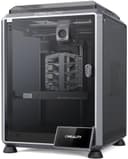 |  |
|---|---|---|
| Price | $399 | $380 |
| Rating | 4.2(345) | 4.4(1.5k) |
| Build Volume mm | 220x220x250 | 218.948x122.936x219.964 |
| Max Print Speed mm S | 600 | 0 |
| Leveling Type | Auto | Auto |
| Enclosed | Yes | Yes |
| Model Number | K1C | SATURN 4 |
| Printer Type | FDM | Resin (SLA/MSLA) |
| Nozzle Temp Max C | 300 | — |
| Resume Print | — | Yes |
Swipe horizontally to see all columns
Pros & Cons
Quick overview of strengths and weaknesses
Creality K1C 3D
- Prints at 600mm/s; reduces print time.
- Supports carbon fiber and high-temp filaments.
- Direct extruder resists clogging; reliable feeding.
- AI camera monitors prints; detects failures.
- Requires replacement of activated carbon filters.
- Open-source firmware may require technical knowledge.
- Build volume 220x220x250mm limits part size.
ELEGOO Saturn 4
- 12K LCD for ultra-fine model detail
- Auto-leveling simplifies initial setup
- 92% light uniformity ensures consistent prints
- Large 219x123x220mm build volume
- Large prints consume significant resin volume
- 12K resolution may lead to longer print times
- No integrated air filtration for fumes
Frequently Asked Questions
Common questions about this comparison
What is the main difference between these two 3D printers?
The Creality K1C is an FDM (filament) printer, best for strong functional parts and speed. The ELEGOO Saturn 4 is a resin printer, excelling in high-detail, smooth aesthetic models. They use different printing technologies and materials.
Which printer offers faster print times?
The Creality K1C is significantly faster for most applications, boasting a max print speed of 600mm/s. Resin printers like the Saturn 4 cure layer by layer, leading to longer overall print durations for comparable object heights.
Can I print very detailed models like miniatures on either?
For ultra-fine detail and smooth surfaces, the ELEGOO Saturn 4 with its 12K HD Mono LCD is the superior choice. The Creality K1C, while fast, will show FDM layer lines.
What types of filaments or resins do these printers use?
The Creality K1C uses various FDM filaments, including advanced options like carbon fiber, with its 300°C nozzle. The ELEGOO Saturn 4 uses UV-curable liquid resins for printing.
Do either of these printers require manual bed leveling?
No, both the Creality K1C and the ELEGOO Saturn 4 feature smart automatic leveling, simplifying the initial setup and ensuring consistent first layers without manual intervention.
Is the build volume comparable between the two?
Yes, their build volumes are quite similar: the K1C has 220x220x250mm, and the Saturn 4 has 218.948x122.936x219.964mm. Both offer ample space for their respective print technologies.
Related Comparisons
Similar products people compare
ELEGOO vs ELEGOO
$380 vs $520
BAMBULAB vs Creality
$419 vs $399
ELEGOO vs ELEGOO
$340 vs $380
BAMBULAB vs ELEGOO
$419 vs $380
ELEGOO vs FLASHFORGE
$380 vs $339

Comgrow vs ELEGOO
$399 vs $380
Creality vs FLASHFORGE
$399 vs $339
ELEGOO vs ELEGOO
$380 vs $520
ELEGOO vs FLASHFORGE
$380 vs $379
Creality vs FLASHFORGE
$399 vs $379
Creality vs ELEGOO
$399 vs $340
ELEGOO vs FLASHFORGE
$380 vs $339
Creality vs FLASHFORGE
$399 vs $379
Comgrow vs Creality
$399 vs $399
ELEGOO vs ELEGOO
$300 vs $380
Explore Other Categories
Popular comparisons across the site






Ask AI
Get instant answers about specs
Get the Deets
Ask our AI assistant
Ask Deets anything!