Our Verdict
Creality K1C Wins
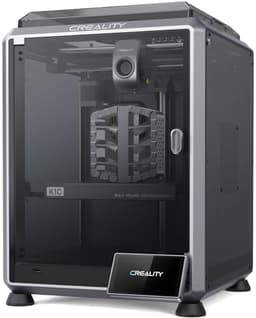
Despite being slightly more expensive at $399 versus the Adventurer 5M Pro's $379, the K1C offers a higher maximum nozzle temperature of 300°C, enabling printing with advanced carbon fiber filaments. Its slightly larger build volume of 220x220x250mm provides a minor advantage for taller prints, and the AI camera adds a crucial layer of print monitoring. Both printers offer identical 600mm/s max print speed and auto-leveling. The Flashforge Adventurer 5M Pro is the better pick for users prioritizing integrated WiFi and filament run-out detection for a slightly lower initial cost.
Bottom Line: Creality K1C is the better choice. Despite being slightly more expensive at $399 versus the Adventurer 5M Pro's $379, the K1C offers a higher maximum nozzle temperature of 300°C, enabling printing with advanced carbon fiber filaments.
In-Depth Analysis
How they compare in practice
Both the Creality K1C and Flashforge Adventurer 5M Pro are high-speed FDM printers, delivering an impressive 600mm/s max print speed and featuring automated bed leveling, ensuring rapid production and reliable first layers right out of the box. However, their specific feature sets cater to distinct user priorities in real-world application.
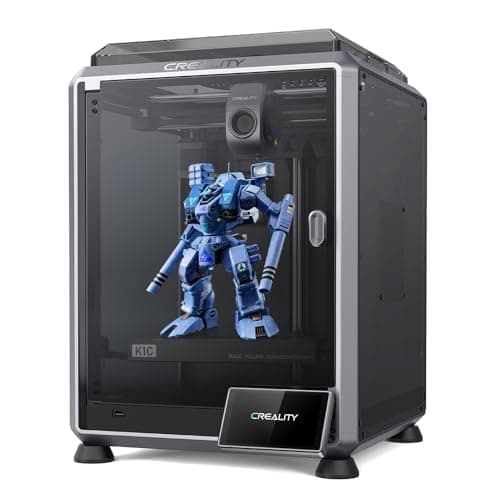
The Creality K1C distinguishes itself with a superior 300°C maximum nozzle temperature, explicitly supporting demanding materials like carbon fiber filaments. This makes it an excellent choice for users focused on creating stronger, more functional parts. The robust direct extruder design further enhances reliability by minimizing clogging, a frequent pain point for many 3D printing enthusiasts. Crucially, the K1C includes an AI camera for intelligent print monitoring, capable of detecting failures early, which saves both time and expensive filament.
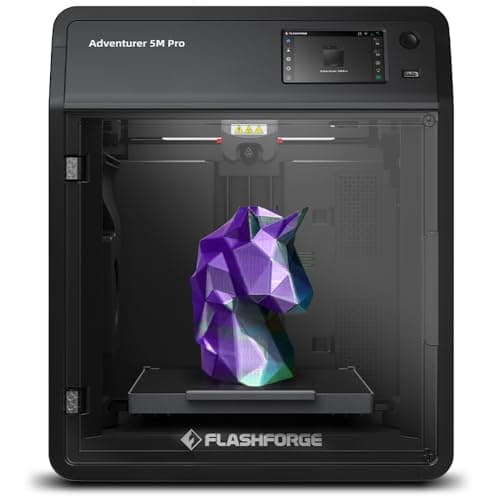
Conversely, the Flashforge Adventurer 5M Pro, while also enclosed and capable of high speeds, offers a 280°C max nozzle temp, which is sufficient for most standard and engineering filaments but less specialized for extreme materials. Its value proposition lies in enhanced user convenience and reliability features: integrated WiFi enables seamless remote management, and a filament run-out sensor prevents failed prints due to material depletion. The 'resume print' function provides resilience against power outages, and its quick-detachable nozzle simplifies maintenance. The Adventurer 5M Pro is priced slightly lower at $379 compared to the K1C's $399.
Regarding build volume, the K1C offers a slightly taller Z-axis at 250mm compared to the Adventurer 5M Pro's 220mm, a minor but potentially useful difference for specific projects. The K1C's open-source firmware appeals to tinkerers, while Flashforge's proprietary ecosystem aims for simplicity. The K1C suits those pushing material boundaries and needing intelligent monitoring, while the Adventurer 5M Pro is ideal for users prioritizing ease of use, connectivity, and consistent, trouble-free operation.
Key Differences
The most significant spec differences at a glance
Nozzle Temp Max C
7% moreAdvantages
Where each product wins

Creality
- Nozzle Temp Max C: 7% higher (300.0 vs 280)
Which to Pick for Your Situation
Concrete scenarios with a clear recommendation
For printing engineering prototypes with high-strength materials
CrealityThe Creality K1C's 300°C max nozzle temperature and explicit support for carbon fiber filaments enable printing with advanced, durable materials.
For a beginner prioritizing ease of use and error prevention
FLASHFORGEThe Flashforge Adventurer 5M Pro offers features like filament run-out detection, WiFi, and resume print for a simpler, more reliable user experience.
For users who frequently print taller objects
CrealityThe K1C provides a build volume of 220x220x250mm, offering a 30mm height advantage over the Adventurer 5M Pro's 220x220x220mm.
For a maker wanting to experiment with firmware and advanced settings
CrealityThe Creality K1C's open-source firmware provides greater flexibility for customization and advanced technical tinkering.
Who Should Buy Which?
Find the right product for your needs
Buy Creality if...
Creality K1C 3D Printer,
The ideal buyer for the Creality K1C is an intermediate to advanced 3D printing enthusiast, a small business owner prototyping robust parts, or an educator focused on material science and engineering applications. They prioritize advanced material compatibility and precise print monitoring. This user seeks the ability to print with demanding filaments like carbon fiber, enabled by the K1C's robust direct extruder and 300°C max nozzle temperature. They appreciate the added security and efficiency of the integrated AI camera, which actively monitors prints for failures, saving time and expensive filament. While the open-source firmware might mean a steeper learning curve for some, this buyer embraces the flexibility and customization potential it offers. They might occasionally print taller objects, valuing the 220x220x250mm build volume. This buyer is willing to spend $399 for superior material versatility and intelligent monitoring, accepting the need for occasional activated carbon filter replacements in exchange for cutting-edge capabilities not offered by competitors in this price range. They don't mind missing out on features like filament run-out detection or proprietary remote apps, preferring hands-on control and robust performance for specialized tasks.

Buy FLASHFORGE if...
FLASHFORGE Adventurer 5M Pro
The Flashforge Adventurer 5M Pro is perfectly suited for beginners stepping into high-speed 3D printing, educators in entry-level STEM programs, or hobbyists seeking a highly reliable and user-friendly experience. This buyer values convenience, reliability, and minimal intervention during printing. They are drawn to features like the filament run-out detection and resume print function, which significantly reduce the chances of failed prints and frustration, making 3D printing more accessible. The Adventurer 5M Pro's integrated WiFi connectivity, paired with its proprietary mobile app, appeals to users who want to easily manage and monitor their prints remotely without extensive technical knowledge. While its 280°C max nozzle temperature is excellent for common materials, this user primarily prints with standard filaments like PLA, PETG, and ABS, and doesn't foresee needing extreme high-temperature or abrasive materials like carbon fiber. Priced at $379, it offers exceptional value for its suite of convenience features and consistent performance, even with a slightly smaller 220x220x220mm build volume. They are happy to forego the AI camera or open-source firmware flexibility of other models for a more streamlined, "it just works" experience.
Spec Comparison
10 specs compared
| Specification |  |  |
|---|---|---|
| Price | $399 | $379 |
| Rating | 4.2(345) | 4.0(3.4k) |
| Build Volume mm | 220x220x250 | 220x220x220 |
| Max Print Speed mm S | 600 | 600 |
| Leveling Type | Auto | Auto |
| Enclosed | Yes | Yes |
| Model Number | K1C | Adventurer 5M Pro |
| Printer Type | FDM | FDM |
| Nozzle Temp Max C | 300 | 280 |
| Resume Print | — | Yes |
| WiFi | — | Yes |
| Filament Sensor | — | Yes |
Swipe horizontally to see all columns
Pros & Cons
Quick overview of strengths and weaknesses
Creality K1C 3D
- Prints at 600mm/s; reduces print time.
- Supports carbon fiber and high-temp filaments.
- Direct extruder resists clogging; reliable feeding.
- AI camera monitors prints; detects failures.
- Requires replacement of activated carbon filters.
- Open-source firmware may require technical knowledge.
- Build volume 220x220x250mm limits part size.
FLASHFORGE Adventurer 5M
- 600mm/s max print speed for rapid production.
- Automatic bed leveling ensures reliable first layers.
- 280C max nozzle temp supports diverse filaments.
- Enclosed build chamber maintains consistent temps.
- 220x220x220mm build volume limits large parts.
- Proprietary mobile app is required for remote use.
Frequently Asked Questions
Common questions about this comparison
Can these printers handle carbon fiber filaments?
The Creality K1C can, supporting carbon fiber with its 300°C nozzle. The Flashforge Adventurer 5M Pro's 280°C nozzle handles many common filaments but isn't explicitly rated for carbon fiber.
What is the maximum print speed for both models?
Both the Creality K1C and Flashforge Adventurer 5M Pro boast an impressive maximum print speed of 600mm/s, ensuring rapid production times for your projects.
Which printer offers a larger build volume?
The Creality K1C has a build volume of 220x220x250mm. The Flashforge Adventurer 5M Pro has 220x220x220mm, meaning the K1C offers slightly more height for vertical prints.
Do either of these printers include an AI camera for monitoring?
Yes, the Creality K1C comes equipped with an integrated AI camera for real-time print monitoring and failure detection, a feature not present in the Flashforge model.
Is automatic bed leveling included with both printers?
Yes, both the Creality K1C and the Flashforge Adventurer 5M Pro feature automatic bed leveling, simplifying the setup process and ensuring reliable first layers.
Does the Flashforge Adventurer 5M Pro have Wi-Fi connectivity?
Yes, the Flashforge Adventurer 5M Pro is WiFi-enabled, allowing for remote print management and monitoring via its proprietary mobile app, enhancing user convenience.
Related Comparisons
Similar products people compare
FLASHFORGE vs FLASHFORGE
$379 vs $379
Comgrow vs FLASHFORGE
$399 vs $379
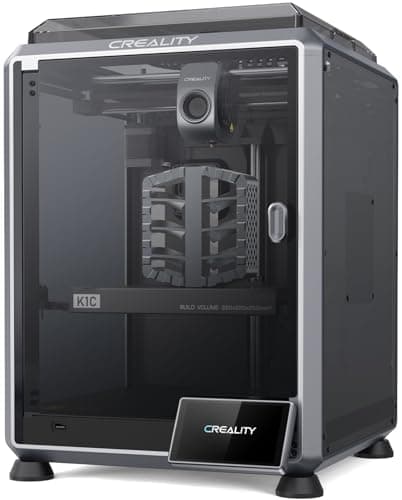
BAMBULAB vs Creality
$419 vs $399
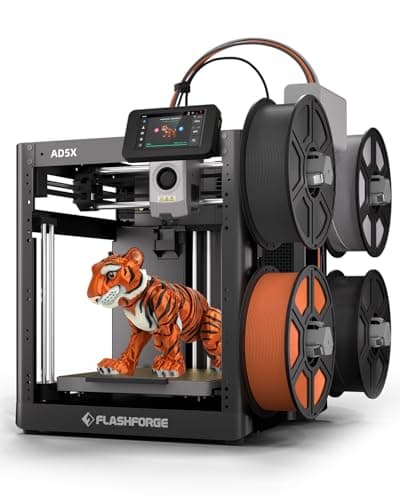
FLASHFORGE vs FLASHFORGE
$339 vs $379
ELEGOO vs FLASHFORGE
$285 vs $379
ELEGOO vs FLASHFORGE
$520 vs $379
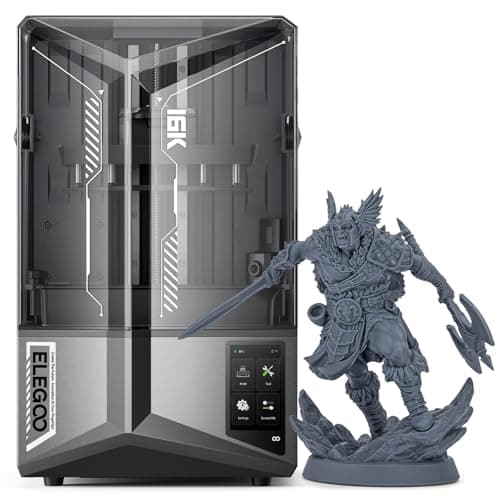
ELEGOO vs FLASHFORGE
$520 vs $379
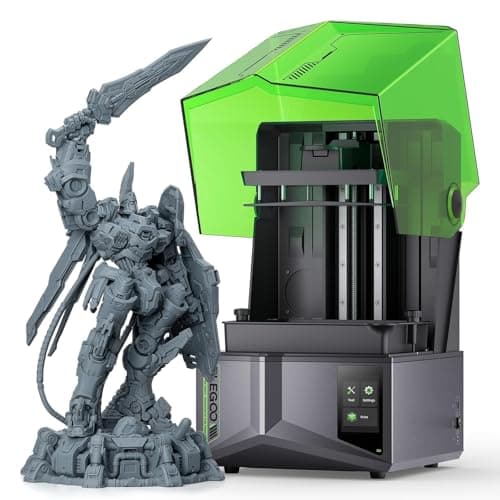
Creality vs ELEGOO
$399 vs $380
Creality vs FLASHFORGE
$399 vs $339
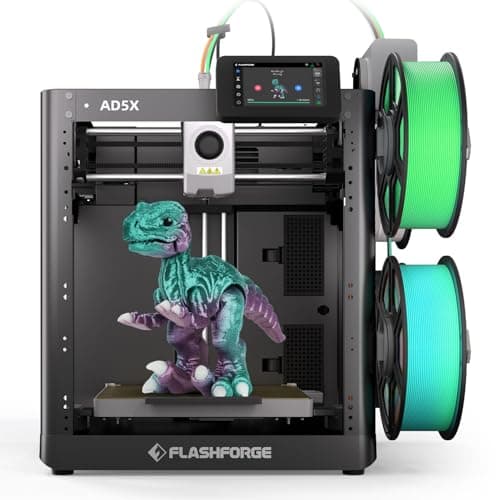
FLASHFORGE vs FLASHFORGE
$339 vs $379
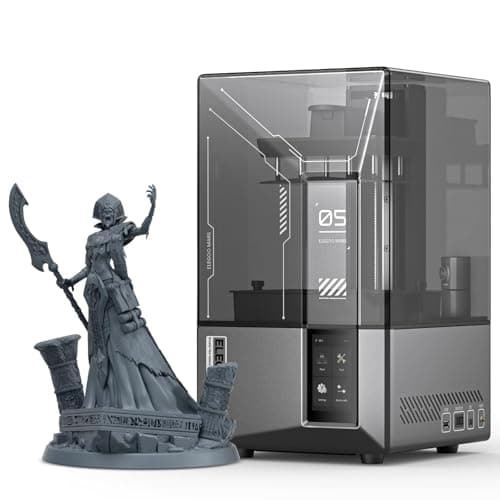
ELEGOO vs FLASHFORGE
$340 vs $379
BAMBULAB vs FLASHFORGE
$419 vs $379
ELEGOO vs FLASHFORGE
$380 vs $379
Creality vs ELEGOO
$399 vs $340
Creality vs FLASHFORGE
$399 vs $379
Explore Other Categories
Popular comparisons across the site


Ask AI
Get instant answers about specs
Get the Deets
Ask our AI assistant
Ask Deets anything!