Our Verdict
Breville Barista Express Wins
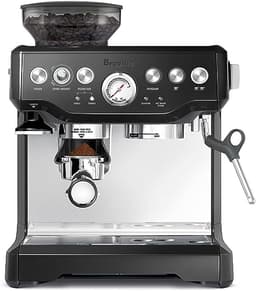
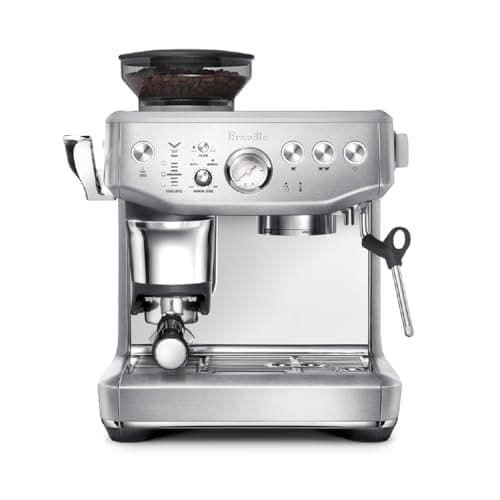
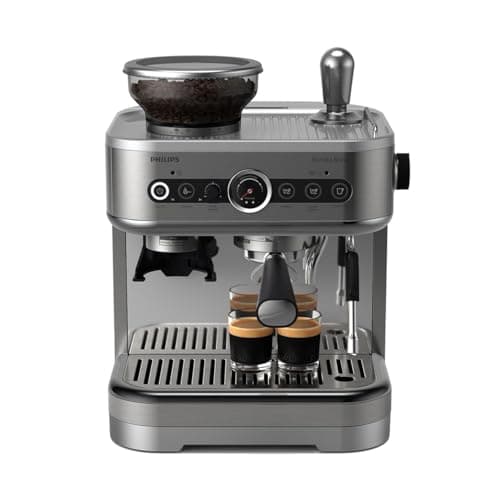
While more expensive at $699.95 compared to Philips' $499.99, the Breville offers superior temperature control via PID and advanced low-pressure pre-infusion, ensuring more consistent and quality espresso shots, which are critical for an integrated machine. Both units share a thermoblock boiler and 15-bar pump pressure, but Breville's refinements make a tangible difference in the cup. The Philips Barista Brew is the better pick for those on a tighter budget seeking a standard 58mm portafilter for broader accessory compatibility, willing to accept less precise temperature management.
Bottom Line: Breville Barista Express is the better choice. While more expensive at $699.
In-Depth Analysis
How they compare in practice
The Breville Barista Express and Philips Barista Brew both aim to deliver an integrated espresso experience with a built-in grinder, appealing to home baristas. However, their approaches and target users differ notably, reflected in their price points of $699.95 for the Breville and $499.99 for the Philips. A critical distinction lies in temperature management; the Breville boasts PID temperature control, a feature absent in the Philips, which explicitly notes potential "thermoblock design temperature swings." This means the Breville offers significantly more stability in brew water temperature, translating directly to more consistent and often superior extraction, especially for delicate coffee flavors.
Both machines utilize a thermoblock heating system and a 15-bar pump. While the 15-bar pressure is a common marketing point, the Breville mitigates its potential harshness with "low-pressure pre-infusion," gently soaking the coffee puck before applying full pressure. This feature, not mentioned for the Philips, helps achieve a more even extraction and reduces channeling. The Philips, however, offers a standard 58mm portafilter, a significant advantage for users looking to experiment with aftermarket accessories like precision baskets or bottomless portafilters, something typically harder to find for Breville's proprietary portafilter size (commonly 54mm).
In practical terms, the Breville aims for a more refined, "bean-to-cup in under 60 seconds" automated efficiency. Its integrated conical burr grinder, while noted for potential consistency issues, benefits from the overall system's optimization. The Philips, despite its integrated grinder and calibrated tamper, leans more towards a manual skill-building experience, as its cons highlight the "manual espresso preparation skills" required. Its dedicated Americano button adds convenience for certain drink preferences, but the smaller 250g bean container compared to Breville's (likely larger, though unspecified) suggests more frequent refilling for the Philips.
Ultimately, the Breville justifies its higher price with features that directly impact shot quality and consistency, making it a stronger contender for those prioritizing extraction precision. The Philips provides a more budget-friendly entry into semi-automatic espresso, offering a standard portafilter size and basic integrated convenience, but asking users to accept less control over crucial brewing variables like temperature stability and pre-infusion.
Which to Pick for Your Situation
Concrete scenarios with a clear recommendation
For the aspiring home barista focused on shot consistency
BrevilleThe Breville Barista Express features PID temperature control, ensuring stable brew water temperature for more consistent and high-quality espresso extraction.
For a budget-conscious buyer seeking integrated convenience
PhilipsPriced at $499.99, the Philips Barista Brew offers an integrated grinder and steam wand at a significantly lower cost than the Breville, providing great value.
For users who want to customize their portafilter accessories
PhilipsThe Philips uses a standard 58mm portafilter, allowing for broader compatibility with aftermarket baskets and other barista tools for enhanced customization.
For quick, consistent espresso daily with minimal fuss
BrevilleThe Breville's "bean to cup in under 60s" combined with PID control offers a faster, more reliable path to a good espresso shot.
Who Should Buy Which?
Find the right product for your needs
Buy Breville if...
Breville Barista Express Espresso
The Breville Barista Express is ideal for the enthusiastic home barista who prioritizes consistent, high-quality espresso shots and appreciates intelligent design that streamlines the brewing process. This buyer is likely upgrading from a simpler machine or is new to semi-automatic espresso but demands reliability and precision. They value features like PID temperature control, which ensures the brew water is maintained at an optimal temperature, leading to more repeatable and delicious extractions. They also benefit from the low-pressure pre-infusion, which gently expands the coffee puck for an even extraction, minimizing the risk of channeling. While the $699.95 price tag is an investment, this user understands it pays for an integrated system that delivers a "bean to cup in under 60s" experience without sacrificing fundamental quality. They might not be looking to extensively customize their portafilter setup with third-party accessories, content with Breville's ecosystem, and prefer a machine that handles many variables for them, allowing them to focus on technique rather than fighting inconsistent machine performance. They are willing to accept the slight noise during grinding and brewing for the convenience and quality it provides.

Buy Philips if...
Philips Barista Brew Semi
The Philips Barista Brew is perfect for the value-conscious coffee lover or aspiring home barista seeking an integrated semi-automatic espresso experience without breaking the bank. With a price point of $499.99, this buyer is looking for an accessible entry into grinding fresh beans and pulling shots at home. They appreciate the convenience of an integrated grinder and a calibrated tamper for consistent puck preparation, even if they understand that the overall consistency might not match higher-end machines. This user is eager to learn manual espresso preparation skills and isn't intimidated by a more hands-on approach to brewing, even if it means potential "thermoblock design temperature swings." The inclusion of a standard 58mm portafilter is a key draw, as it opens up a world of aftermarket accessories for future experimentation and customization as their skills grow. While they might need to refill the 250g bean container more frequently, they prioritize the lower initial cost and the flexibility offered by the standard portafilter. They're willing to trade some of the Breville's advanced temperature stability for a more affordable and customizable platform to begin their espresso journey.
Spec Comparison
7 specs compared
| Specification |  |  |
|---|---|---|
| Price | $700 | $500 |
| Rating | 4.4(27.2k) | 4.0(279) |
| Boiler Type | thermoblock | thermoblock |
| Pump Pressure Bars | 15 | 15 |
| Portafilter Size mm | — | 58 |
| Grinder Included | Yes | Yes |
| PID Temperature Control | Yes | — |
| Steam Wand | — | Yes |
| Model Number | — | PSA3218/01 |
Swipe horizontally to see all columns
Pros & Cons
Quick overview of strengths and weaknesses
Breville Barista Express
- Integrated conical burr grinder for fresh grounds
- PID temperature control ensures stable brewing
- Low-pressure pre-infusion enhances extraction
- Espresso ready from bean to cup in under 60s
- Thermoblock design may impact steam consistency
- Integrated grinder might limit grind consistency
- Can be noisy during grinding and brewing cycles
Philips Barista Brew
- 58mm portafilter for standard accessories
- Integrated grinder saves counter space
- Calibrated tamper aids consistent puck prep
- Steam wand included for milk frothing
- Requires manual espresso preparation skills
- Thermoblock design may have temperature swings
- 15-bar pump often too high for optimal extraction
- 250g bean container needs frequent refilling
Frequently Asked Questions
Common questions about this comparison
Does the Breville Barista Express offer precise temperature control?
Yes, the Breville Barista Express includes PID temperature control, which ensures consistent water temperature during extraction for optimal espresso quality.
What is the pump pressure for both espresso machines?
Both the Breville Barista Express and the Philips Barista Brew feature a 15-bar pump pressure, a standard for many semi-automatic machines.
Is the Philips Barista Brew compatible with standard barista tools?
Yes, the Philips Barista Brew comes with a 58mm portafilter, which is a standard size, allowing compatibility with a wider range of accessories.
Which machine is faster from bean to cup?
The Breville Barista Express is designed for speed, promising espresso "from bean to cup in under 60s" thanks to its efficient heating and grinding.
What is the price difference between the two machines?
The Breville Barista Express is priced at $699.95, while the Philips Barista Brew is more affordable at $499.99, a difference of about $200.
How often will I need to refill beans on the Philips machine?
The Philips Barista Brew has a 250g bean container, which might require more frequent refilling compared to machines with larger hoppers, especially with heavy daily use.
Related Comparisons
Similar products people compare
Breville vs Philips
$800 vs $500
Ninja vs Philips
$600 vs $500
Mr. Coffee vs Philips
$210 vs $500
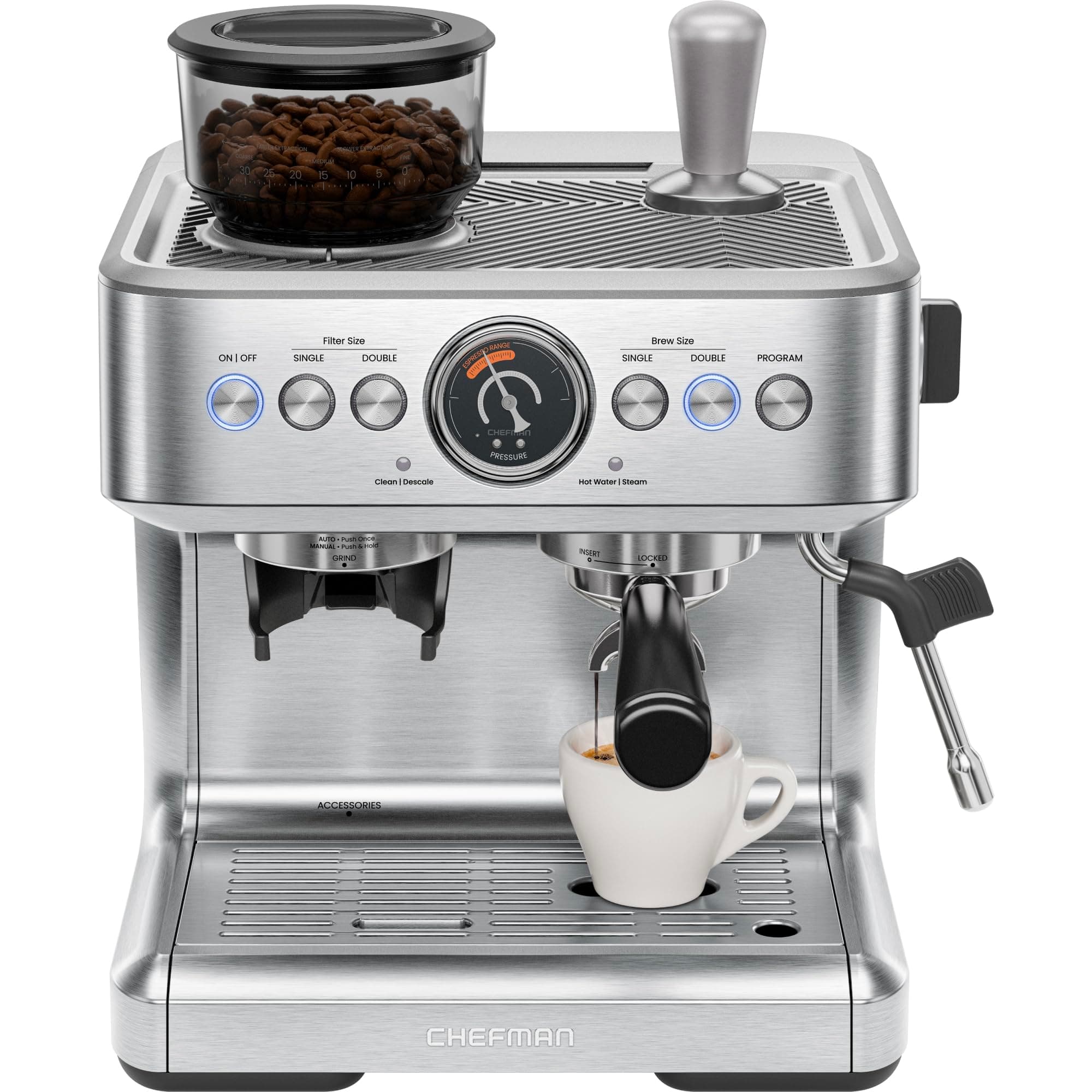
Chefman vs Philips
$300 vs $500
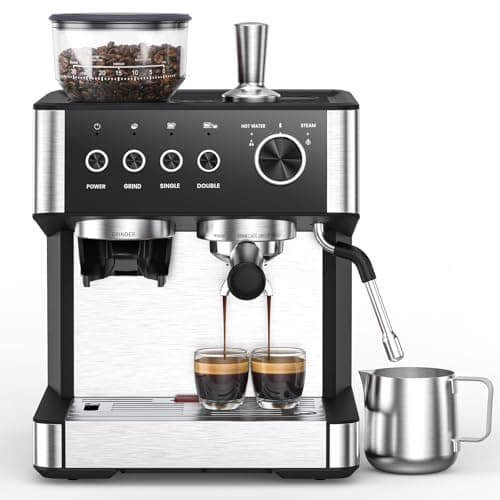
Electactic vs Philips
$292 vs $500
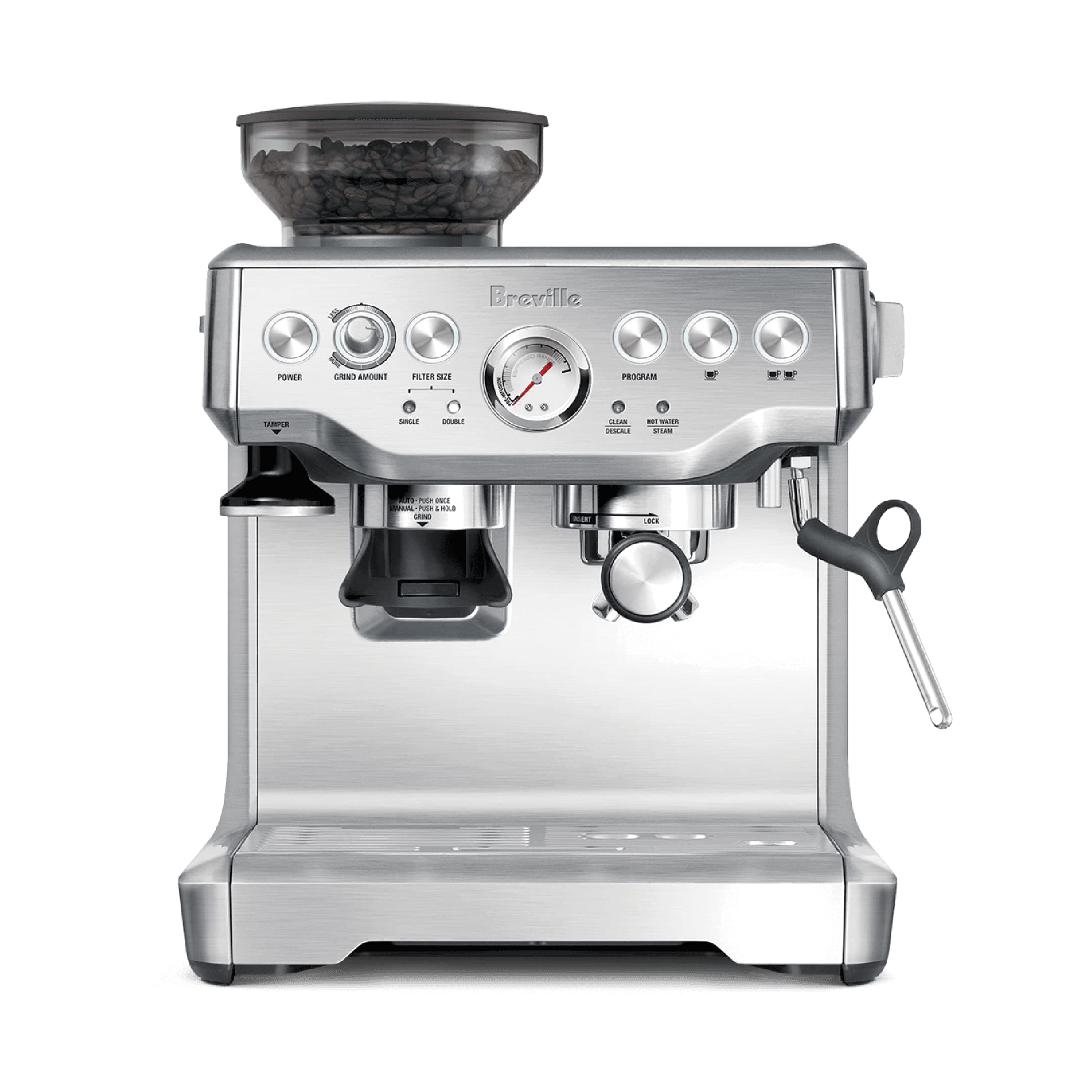
Breville vs Philips
$690 vs $500
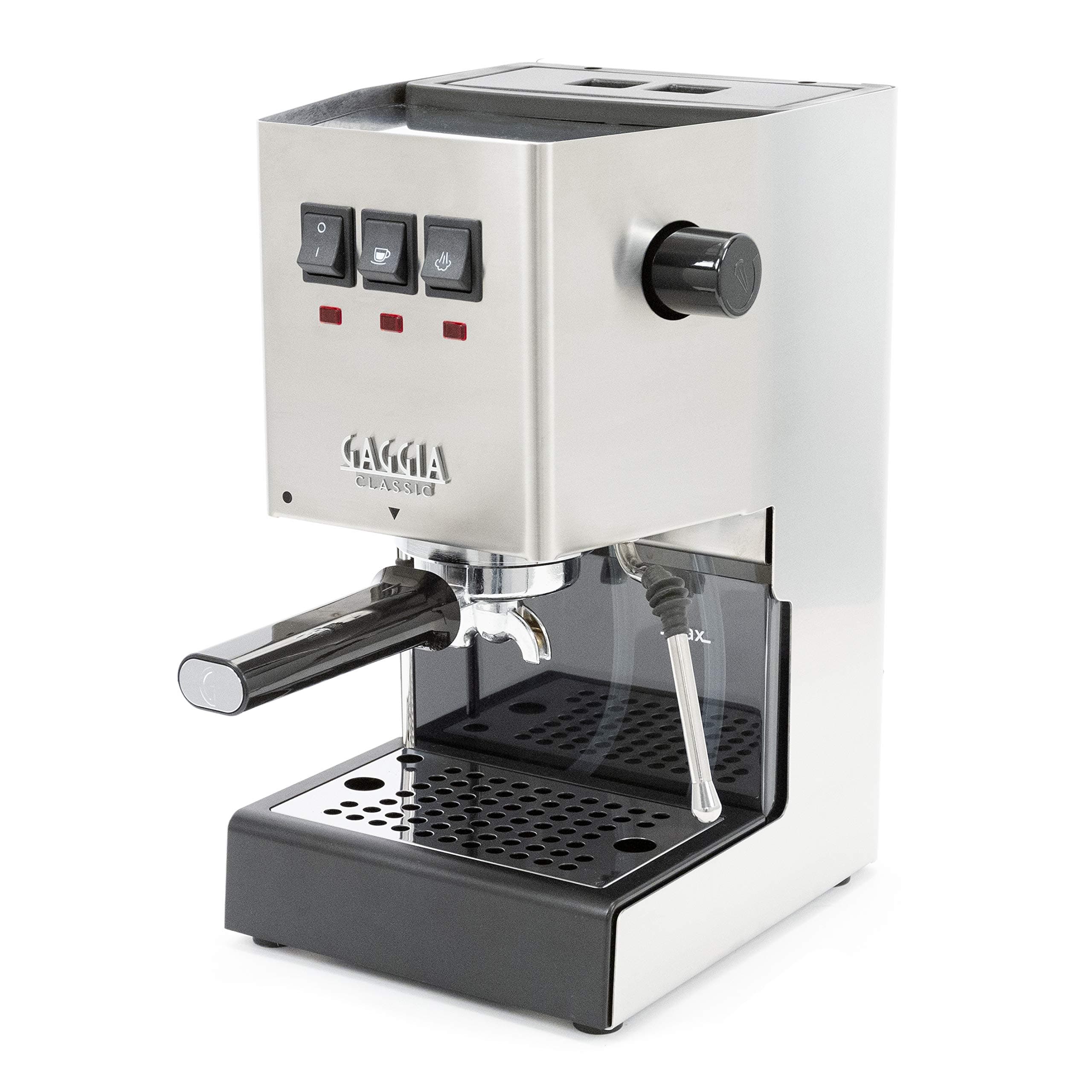
Gaggia vs Philips
$452 vs $500
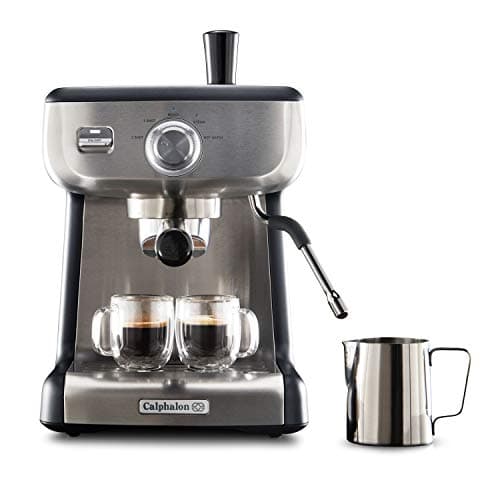
Calphalon vs Philips
$350 vs $500
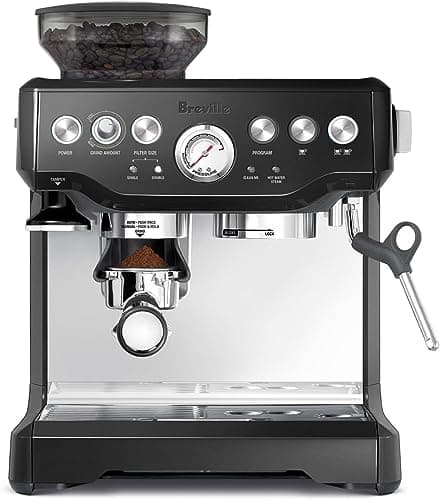
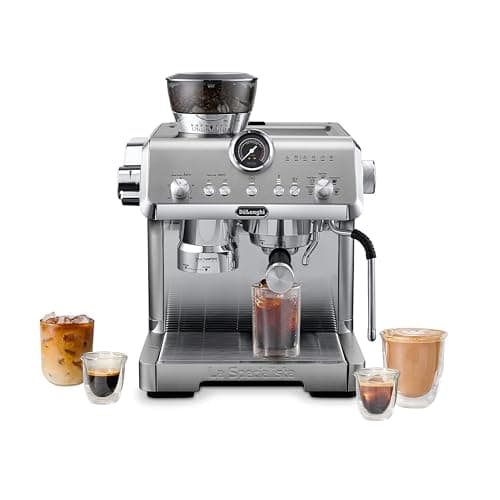
Breville vs De'Longhi
$700 vs $649
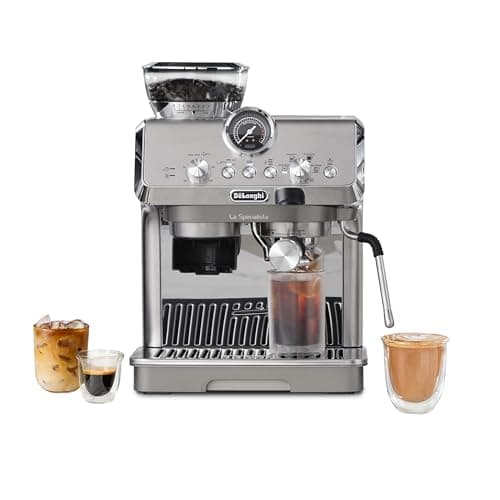
De'Longhi vs Philips
$500 vs $500
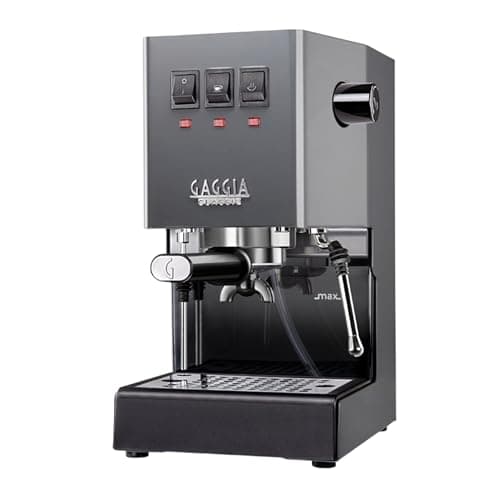
Gaggia vs Philips
$530 vs $500
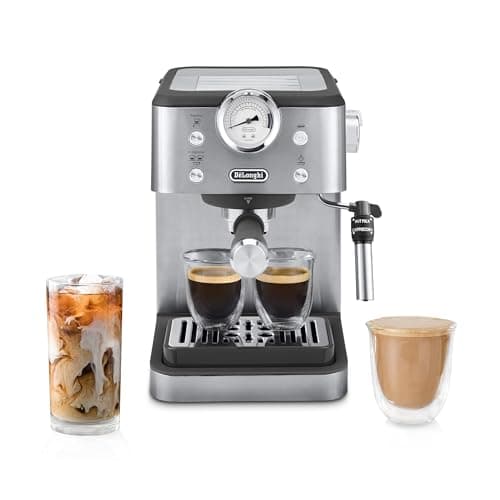
De'Longhi vs Philips
$230 vs $500
Ninja vs Philips
$430 vs $500
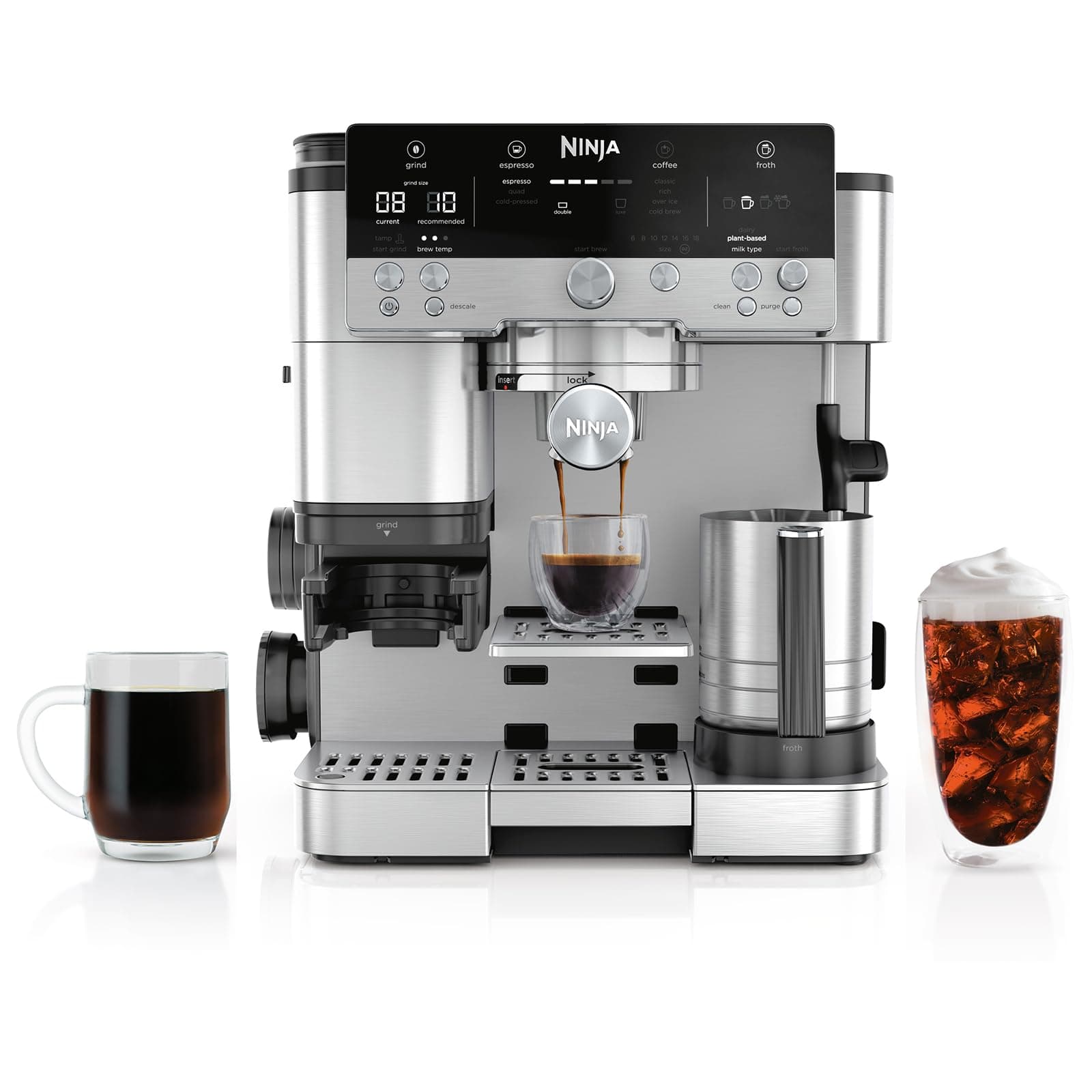
Ninja vs Philips
$499 vs $500
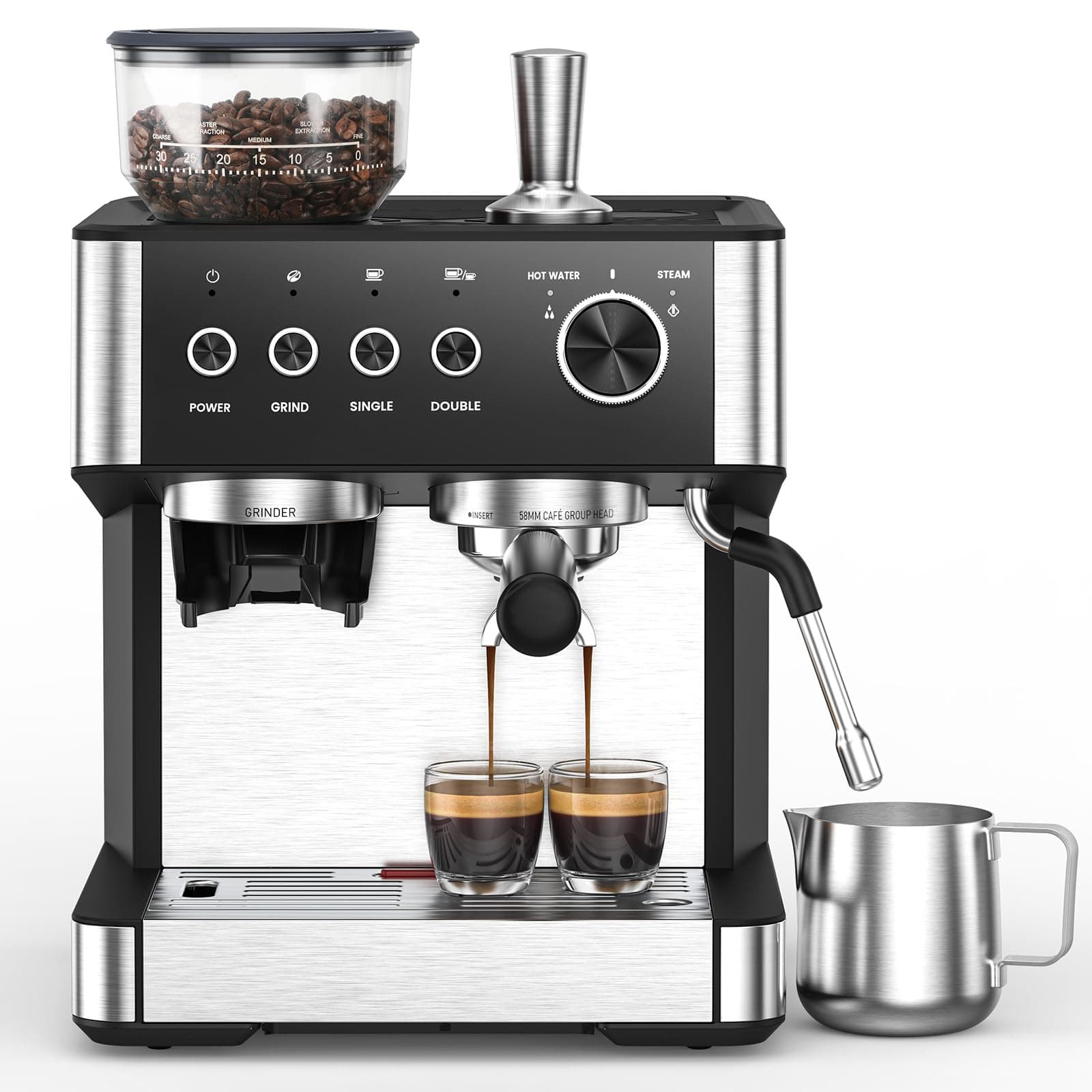
Electactic vs Philips
$95 vs $500
Explore Other Categories
Popular comparisons across the site


Ask AI
Get instant answers about specs
Get the Deets
Ask our AI assistant
Ask Deets anything!