Our Verdict
MAONO PD200XS Black Wins
This microphone offers significantly more versatility and control with its dual USB/XLR connection and dedicated MAONO Link software for EQ, limiter, and compressor, alongside a clear 48.0 kHz sample rate, justifying its $79.99 price. The PD200XS's professional-grade features and upgrade path give it a decisive edge for serious creators. The MAONO DGM20S Black is a better pick for budget-conscious users prioritizing simplicity and quick setup, especially with its one-click noise cancellation at $42.49, if advanced audio shaping isn't a primary concern and USB-only connectivity suffices for basic gaming or calls.
Bottom Line: MAONO PD200XS Black is the better choice. This microphone offers significantly more versatility and control with its dual USB/XLR connection and dedicated MAONO Link software for EQ, limiter, and compressor, alongside a clear 48.
In-Depth Analysis
How they compare in practice
The MAONO DGM20S and PD200XS present two distinct propositions for audio recording, primarily differing in their flexibility and advanced feature sets. The DGM20S, priced at a highly accessible $42.49, focuses on immediate plug-and-play convenience with its USB-only connection and a standout one-click noise cancellation feature. This makes it incredibly user-friendly for gamers or casual streamers operating in potentially noisy environments, where quickly muting background distractions is paramount. It delivers clear audio for basic communication, backed by its cardioid polar pattern and zero-latency monitoring.
In contrast, the MAONO PD200XS, at $79.99, is built for content creators seeking more control and future-proofing. Its crucial advantage lies in the dual USB/XLR connectivity. While USB offers direct plug-and-play like the DGM20S, the XLR output opens doors to professional audio interfaces and mixers, allowing for higher fidelity preamps and extensive sound shaping options down the line. Furthermore, the PD200XS integrates with the MAONO Link software, providing software-level control over EQ, limiter, and compressor settings, which are essential tools for fine-tuning vocal presence in podcasts, streams, or voice-overs. The explicit 48.0 kHz sample rate further underscores its commitment to recording quality, offering a more robust audio foundation compared to the DGM20S's unspecified sample rate.
While both mics feature essential elements like a cardioid pattern, mute button, gain control, and zero-latency monitoring, the PD200XS’s inclusion of a comprehensive software suite and XLR output fundamentally changes its value proposition. It’s an investment in a scalable audio setup, allowing users to grow their recording capabilities without immediately needing a new microphone. The DGM20S, conversely, excels as a straightforward, affordable solution where simplicity and immediate noise reduction take precedence over intricate audio customization or professional integration. For users who value the ability to sculpt their sound and integrate into a more advanced audio ecosystem, the PD200XS offers a significantly richer experience.
Key Differences
The most significant spec differences at a glance
Sample Rate
100% lessAdvantages
Where each product wins

MAONO
- Sample Rate: 100% higher (0.0 vs 48.0)
Which to Pick for Your Situation
Concrete scenarios with a clear recommendation
For serious streamers or podcasters wanting audio flexibility
MAONOThe MAONO PD200XS offers dual USB/XLR connectivity and MAONO Link software for EQ, limiter, and compressor, enabling professional-grade sound customization.
For budget-conscious gamers needing clear communication
MAONOThe MAONO DGM20S, priced at $42.49, provides essential features like one-click noise cancellation and zero-latency monitoring for effective in-game chat.
For users in noisy home environments
MAONOThe DGM20S features a convenient one-click noise cancellation button, ideal for quickly reducing background sounds during calls or streams.
For future-proofing a home studio setup
MAONOThe PD200XS's XLR output allows connection to professional audio interfaces, providing an upgrade path for higher quality sound and advanced processing.
Who Should Buy Which?
Find the right product for your needs

Buy MAONO if...
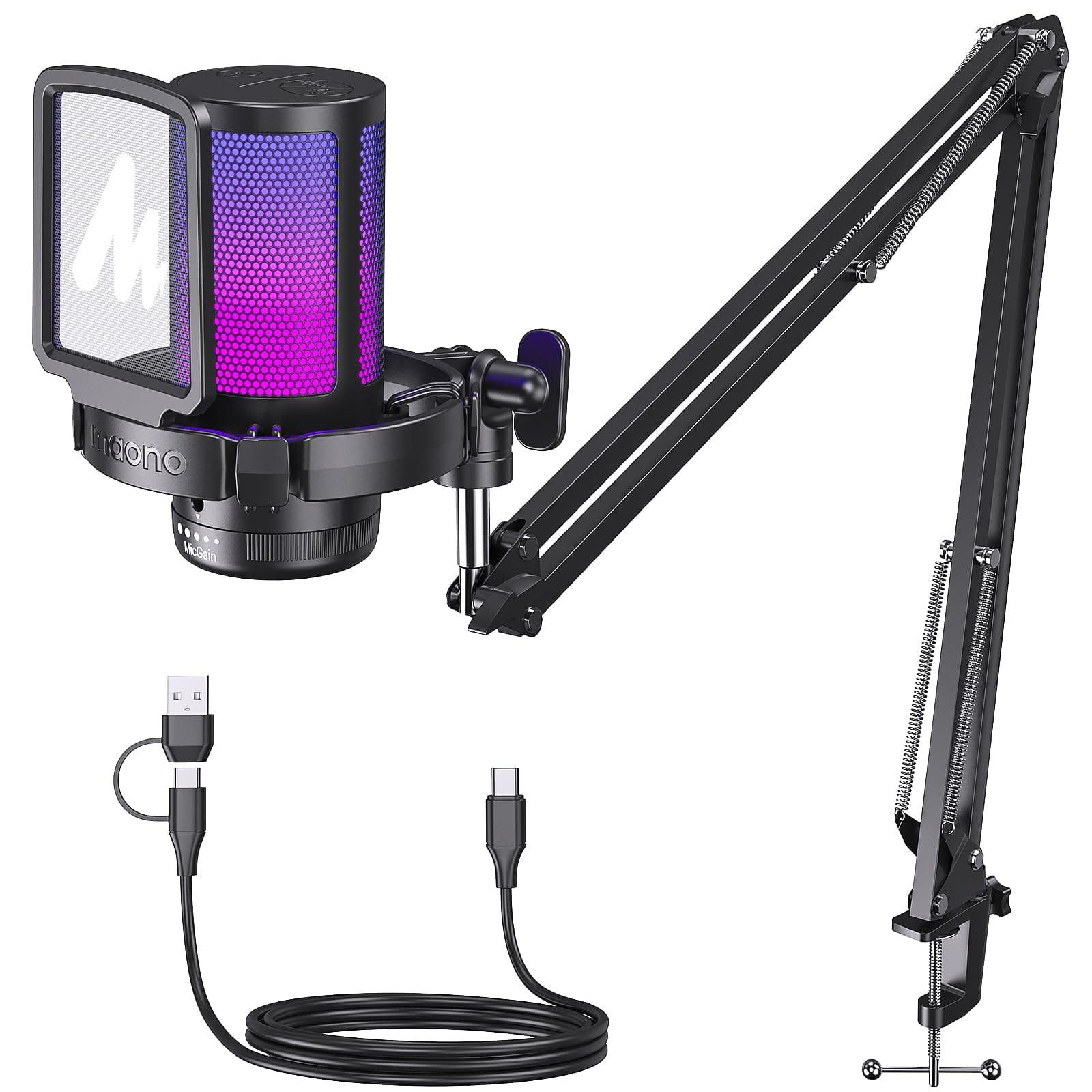
MAONO Gaming USB Microphone,
The MAONO DGM20S Black is perfectly suited for the casual gamer, entry-level streamer, or anyone needing a reliable and affordable microphone for online calls and basic content creation. This user prioritizes simplicity, ease of use, and immediate noise reduction without needing extensive audio customization. They appreciate the plug-and-play nature of its USB connection and the convenience of a physical mute button and gain control. The standout one-click noise cancellation is a significant draw, allowing them to participate in calls or streams from potentially imperfect acoustic environments without worrying about distracting background sounds. Priced at just $42.49, it fits a tight budget, offering essential functionality without overwhelming features. They aren't looking to delve into complex audio mixing or connect to external interfaces, making the lack of a software suite and XLR output non-issues. For quick setup, clear voice capture, and effective noise handling in a budget-friendly package, the DGM20S is an excellent choice.

Buy MAONO if...
MAONO XLR/USB Dynamic Microphone
The MAONO PD200XS Black is the ideal microphone for aspiring and intermediate content creators, including podcasters, serious streamers, musicians recording vocals, and voice-over artists, who demand greater control over their audio and desire an upgrade path. This buyer is willing to invest $79.99 for a microphone that offers both immediate high-quality USB functionality and the long-term flexibility of an XLR connection. They value the ability to fine-tune their sound using the MAONO Link software suite, which provides essential tools like EQ, a limiter, and a compressor to achieve a polished, professional audio output. The explicit 48.0 kHz sample rate and dynamic capsule appeal to those focused on capturing rich, detailed vocal performance. This user understands the trade-off of a slightly higher price for significantly enhanced versatility and sound-shaping capabilities. They are actively building or expanding a home studio and appreciate a mic that can integrate with more advanced audio equipment as their skills and needs evolve, making the lack of an included XLR cable a minor inconvenience for the benefits gained.
Spec Comparison
11 specs compared
| Specification | 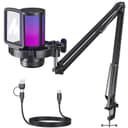 | 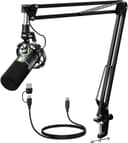 |
|---|---|---|
| Price | $42 | $80 |
| Rating | 4.5(4.8k) | 4.6(1.9k) |
| Sample Rate | 0 kHz | 48 kHz |
| Connection | USB | USB/XLR |
| Polar Pattern | Cardioid | Cardioid |
| Zero-Latency | Yes | Yes |
| Weight | 0.77 lbs | — |
| Mute Button | Yes | Yes |
| Gain Control | Yes | Yes |
| Software | None | MAONO Link |
| Headphone Out | Yes | Yes |
| Freq. Response | {"high":20000} | 40Hz - 16kHz |
| Model Number | — | PD200XS |
Swipe horizontally to see all columns
Pros & Cons
Quick overview of strengths and weaknesses
MAONO Gaming USB
- One-click noise cancellation reduces background sound.
- Cardioid polar pattern focuses voice capture.
- Integrated mute button and gain control knob.
- Zero-latency monitoring with dedicated headphone port.
- Not compatible with XBOX consoles.
- Lacks dedicated software suite for advanced control.
- RGB lighting adds no functional utility.
MAONO XLR/USB Dynamic
- Dual USB/XLR outputs for varied setups.
- Software enables EQ, limiter, and compressor control.
- Cardioid pattern reduces ambient noise effectively.
- Integrated gain and headphone volume knob.
- Software audio features only work in USB mode.
- XLR connection cable is not included with purchase.
- Frequency response tops out at 16kHz.
Frequently Asked Questions
Common questions about this comparison
Does the MAONO DGM20S Black work with Xbox consoles?
No, the MAONO DGM20S Black is specifically noted as not compatible with Xbox consoles, but it works with PC, Mac, PS4, and PS5.
What is the primary advantage of the MAONO PD200XS's dual connection?
The dual USB/XLR outputs of the PD200XS provide superior versatility. USB offers plug-and-play ease, while XLR allows connection to professional audio interfaces for enhanced sound quality and control.
Which microphone offers better control over audio settings like EQ?
The MAONO PD200XS offers superior audio control through its MAONO Link software suite, which includes features like EQ, a limiter, and a compressor for fine-tuning your sound.
Does the MAONO DGM20S have a dedicated software for sound customization?
No, the MAONO DGM20S lacks a dedicated software suite for advanced control. It relies on its integrated hardware features like the one-click noise cancellation button.
What sample rate does the MAONO PD200XS use?
The MAONO PD200XS utilizes a 48.0 kHz sample rate, ensuring high-quality audio capture suitable for streaming, podcasting, and voice-over work.
Related Comparisons
Similar products people compare
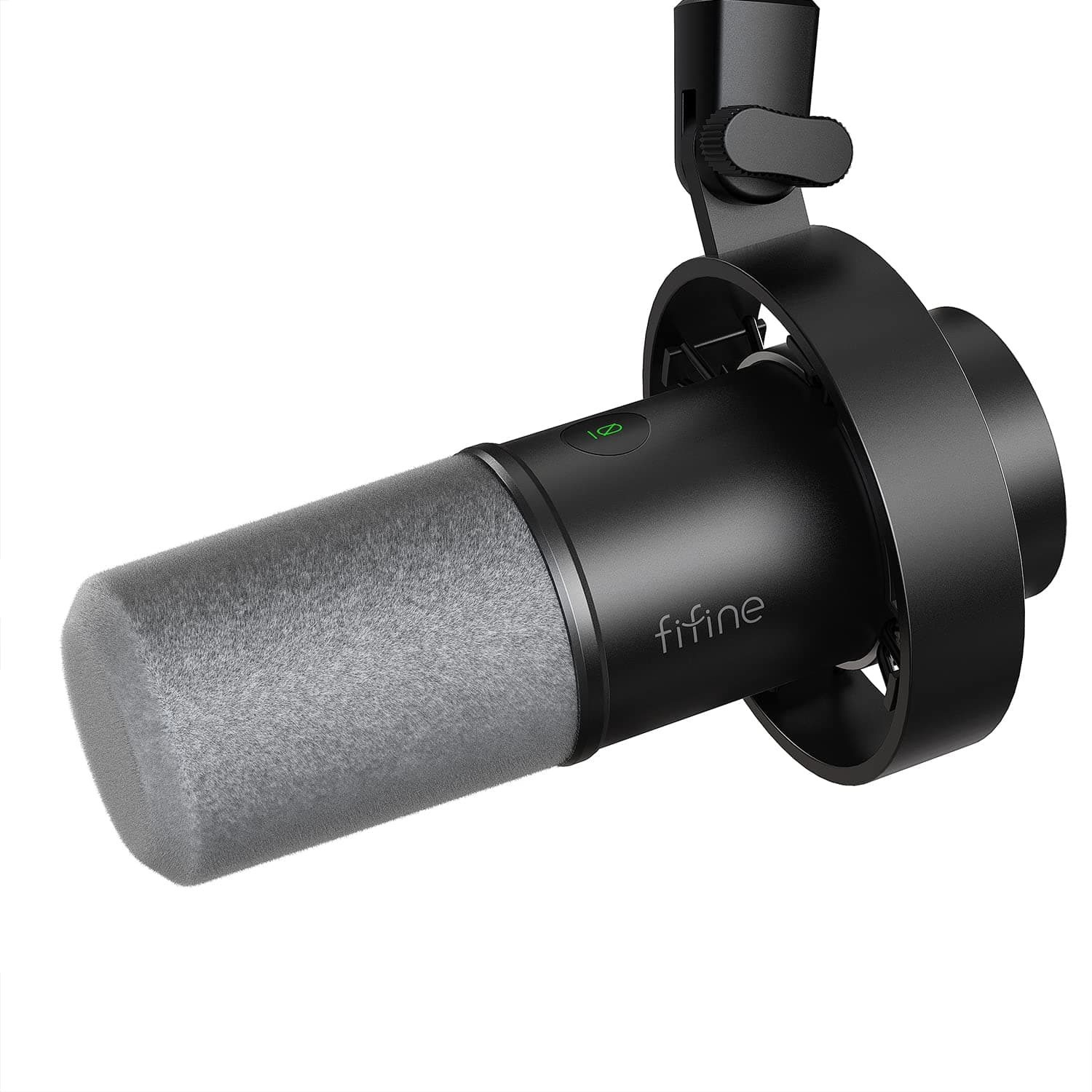
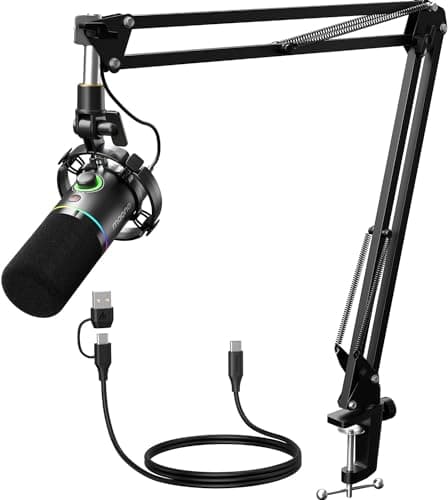
FIFINE vs MAONO
$58 vs $80
Logitech for Creators vs MAONO
$92 vs $80
FIFINE vs MAONO
$57 vs $80
FIFINE vs MAONO
$58 vs $42
MAONO vs Movo
$42 vs $40
FIFINE vs MAONO
$57 vs $42
Amazon Basics vs MAONO
$25 vs $42
MAONO vs TONOR
$42 vs $32
MAONO vs Razer
$42 vs $40
HyperX vs MAONO
$115 vs $80
MAONO vs MAONO
$80 vs $46
MAONO vs ZealSound
$42 vs $35
AKG vs MAONO
$40 vs $42
Explore Other Categories
Popular comparisons across the site




Ask AI
Get instant answers about specs
Get the Deets
Ask our AI assistant
Ask Deets anything!