Our Verdict
Nuwave Whole House Air Purifier Wins
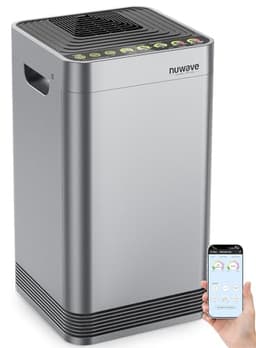
Its CADR smoke rating of 390.87 is over five times higher than Dyson's 76, allowing it to purify larger spaces of 610.73 sq ft more effectively than Dyson's 400 sq ft. Despite being priced higher at $629.99 compared to Dyson's $453.86, Nuwave also boasts zero filter replacement costs for the first five years, offering significant long-term savings. The Dyson Purifier Cool PC1 is a better pick for those prioritizing its integrated cooling fan functionality and a lower initial investment, especially for smaller rooms with less demanding purification needs.
Bottom Line: Nuwave Whole House Air Purifier is the better choice. Its CADR smoke rating of 390.
In-Depth Analysis
How they compare in practice
When comparing the Dyson Purifier Cool PC1 and the Nuwave Whole House Air Purifier, the most striking difference lies in their core purification capabilities. The Nuwave boasts a CADR smoke rating of 390.87 and covers 610.73 sq ft, making it a powerhouse for rapidly cleaning larger environments. In contrast, the Dyson offers a significantly lower CADR smoke of 76 for 400 sq ft, meaning it will take considerably longer to purify a room, especially if air quality is severely compromised by smoke, allergens, or pollutants.
Beyond raw power, the Nuwave also achieves a finer level of filtration, claiming to remove 99.99% of 0.09-micron particles and actively eliminating ozone to less than 1 ppb. While the Dyson's HEPA H13 filter captures 99.97% down to 0.3 microns, the Nuwave provides an extra layer of protection against ultrafine particles and harmful ozone. A significant value proposition for the Nuwave is its zero filter replacement cost for the first five years, a substantial saving that offsets its higher initial price of $629.99 compared to Dyson's $453.86.
The Dyson, however, distinguishes itself with its dual functionality as a powerful tower fan, projecting 76 gallons/sec of airflow for cooling, a feature entirely absent in the Nuwave. This makes the Dyson a more versatile appliance for those needing both air purification and air circulation/cooling from a single unit. Both units offer smart sensors, WiFi connectivity, and app control, ensuring modern convenience.
In terms of real-world use, the Nuwave is the clear choice for comprehensive, rapid whole-home air purification where air quality is a primary concern. Its robust performance means less waiting for clean air, ideal for allergy sufferers or homes with pets. The Dyson excels in a scenario where stylish design, quiet operation (though not specified for min dB, Dyson often prioritizes this), and the added benefit of a cooling fan are as important as basic air purification, fitting well into smaller, less demanding spaces where its lower CADR is less of a bottleneck.
Key Differences
The most significant spec differences at a glance
Cadr Smoke
81% lessCoverage Sq Ft
35% lessAdvantages
Where each product wins

Nuwave
- Cadr Smoke: 81% higher (76 vs 390.87)
- Coverage Sq Ft: 35% higher (400 vs 610.73)
Which to Pick for Your Situation
Concrete scenarios with a clear recommendation
For a large living area with frequent cooking or pet odors
NuwaveThe Nuwave's superior CADR smoke of 390.87 and coverage of 610.73 sq ft will purify the air much faster and more effectively than the Dyson.
For a hot climate where cooling is also desired
DysonThe Dyson uniquely provides a powerful cooling fan, projecting 76 gallons/sec airflow, a feature the Nuwave lacks.
For long-term cost-effectiveness on filters
NuwaveThe Nuwave offers zero filter replacement costs for the first five years, a significant saving compared to recurring filter purchases.
For a bedroom where minimal noise is preferred
NuwaveThe Nuwave specifies a minimum noise level of 31.4 dB, providing a clear benchmark for quiet operation that the Dyson does not.
Who Should Buy Which?
Find the right product for your needs

Buy Dyson if...
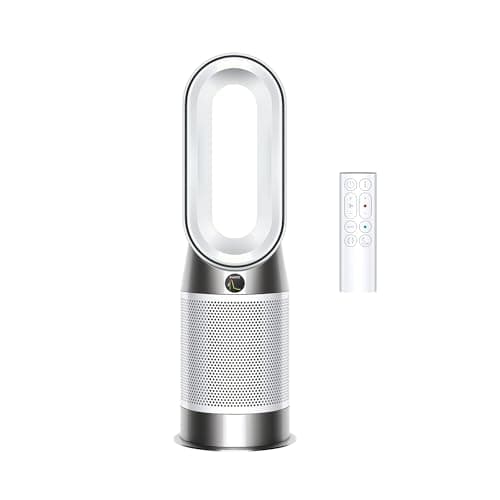
Dyson Purifier Cool PC1,
The Dyson Purifier Cool PC1 is ideal for an individual or small family living in a compact apartment or a single room (up to 400 sq ft) who prioritizes a multi-functional device. This buyer appreciates modern design and smart home integration, valuing the Dyson's app and voice control capabilities. Their budget is around $450-$500, and they don't have extremely severe air quality issues, but rather seek general purification combined with a cooling solution during warmer months. The Dyson's ability to project 76 gallons/sec of airflow for cooling, alongside its HEPA H13 filtration for 99.97% particle capture, makes it a convenient two-in-one appliance. They're willing to accept a lower CADR smoke rating of 76, as their space or air quality demands aren't as high, and they enjoy the brand's reputation for innovative engineering and aesthetics. They are not as concerned with aggressive, rapid air purification for very large spaces or eliminating ultrafine 0.09 micron particles, nor do they prioritize five years of free filters.
Buy Nuwave if...
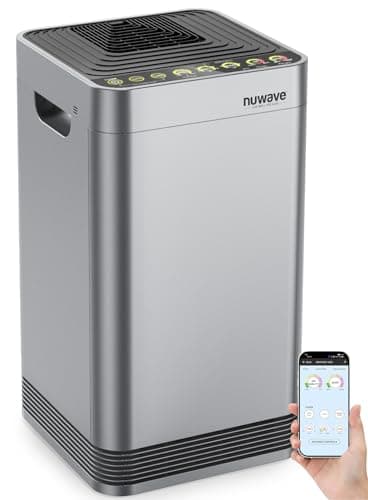
Nuwave Whole House Air
The Nuwave Whole House Air Purifier is best suited for homeowners or those with larger living spaces (up to 610.73 sq ft) who are serious about comprehensive air purification. This buyer likely faces significant air quality challenges, such as chronic allergies, asthma, pet dander, or concerns about wildfire smoke, making the Nuwave's impressive CADR smoke rating of 390.87 essential for rapid air cleaning. Their budget is higher, around $600-$650, but they appreciate the long-term value, especially the zero filter replacement costs for the first five years, which significantly reduces the total cost of ownership. They value superior filtration, capturing 99.99% of particles down to 0.09 microns and the elimination of ozone. While the unit consumes 125W-128W, its purification power and quiet operation at 31.4 dB minimum are key priorities. This buyer doesn't need an integrated cooling fan, preferring a dedicated, high-performance air purification solution above all else.
Spec Comparison
9 specs compared
| Specification | 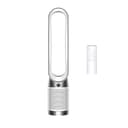 |  |
|---|---|---|
| Price | $454 | $630 |
| Rating | 4.4(141) | 4.5(2.8k) |
| Cadr Smoke | 76 | 390.87 |
| Coverage Sq Ft | 400 | 610.73 |
| Noise Level db Min | — | 31.4 dB |
| Filter Type | HEPA H13 | True HEPA and Carbon |
| Model Number | TP11 | — |
| Smart Sensor | Yes | Yes |
| WiFi | Yes | Yes |
| Filter Cost Yearly | — | Free |
| Filter Life Months | — | 12 |
Swipe horizontally to see all columns
Pros & Cons
Quick overview of strengths and weaknesses
Dyson Purifier Cool
- Captures 99.97% particles down to 0.3 microns.
- Activated carbon filter removes gases and odors.
- HEPA H13 fully sealed filtration system.
- Projects 76 gallons/sec airflow for cooling.
- Low smoke CADR of 76 for 400 sq ft coverage.
- Requires extended operation for full room purification.
Nuwave Whole House
- Purifies 2934 sq ft in 60 mins (CADR 664.6 m 3/h).
- Removes 100% of 0.09-micron airborne particles.
- Eliminates ozone to less than 1 ppb.
- Zero filter replacement cost for first 5 years.
- High power consumption at 125W-128W.
- Normal operating noise level not specified.
- True HEPA/Carbon filter requires annual replacement.
Frequently Asked Questions
Common questions about this comparison
How do the purification capacities compare between the Dyson and Nuwave?
The Nuwave offers a CADR smoke of 390.87 and covers 610.73 sq ft, significantly outperforming the Dyson's CADR smoke of 76 and 400 sq ft coverage.
Does either air purifier offer a cooling function?
Yes, the Dyson Purifier Cool PC1 functions as a tower fan, projecting 76 gallons/sec of airflow for cooling. The Nuwave does not have this feature.
What are the long-term costs associated with filters for these purifiers?
The Nuwave has zero filter replacement cost for the first five years, making it highly cost-effective long-term. Dyson's filter costs are not specified but would be an ongoing expense.
Which unit is better for capturing the smallest airborne particles?
The Nuwave is superior, removing 99.99% of particles down to 0.09 microns. The Dyson captures 99.97% down to 0.3 microns.
What is the minimum noise level for these devices?
The Nuwave specifies a minimum noise level of 31.4 dB. The Dyson's minimum noise level is not provided in its specifications.
Related Comparisons
Similar products people compare
Alen vs Dyson
$479 vs $454
Alen vs Dyson
$464 vs $454
Coway vs Dyson
$749 vs $454
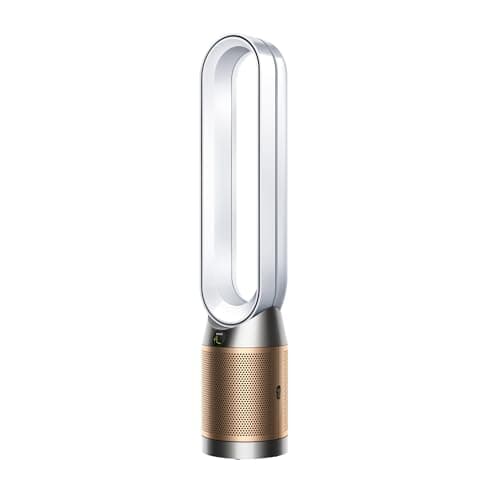
Dyson vs Dyson
$500 vs $454
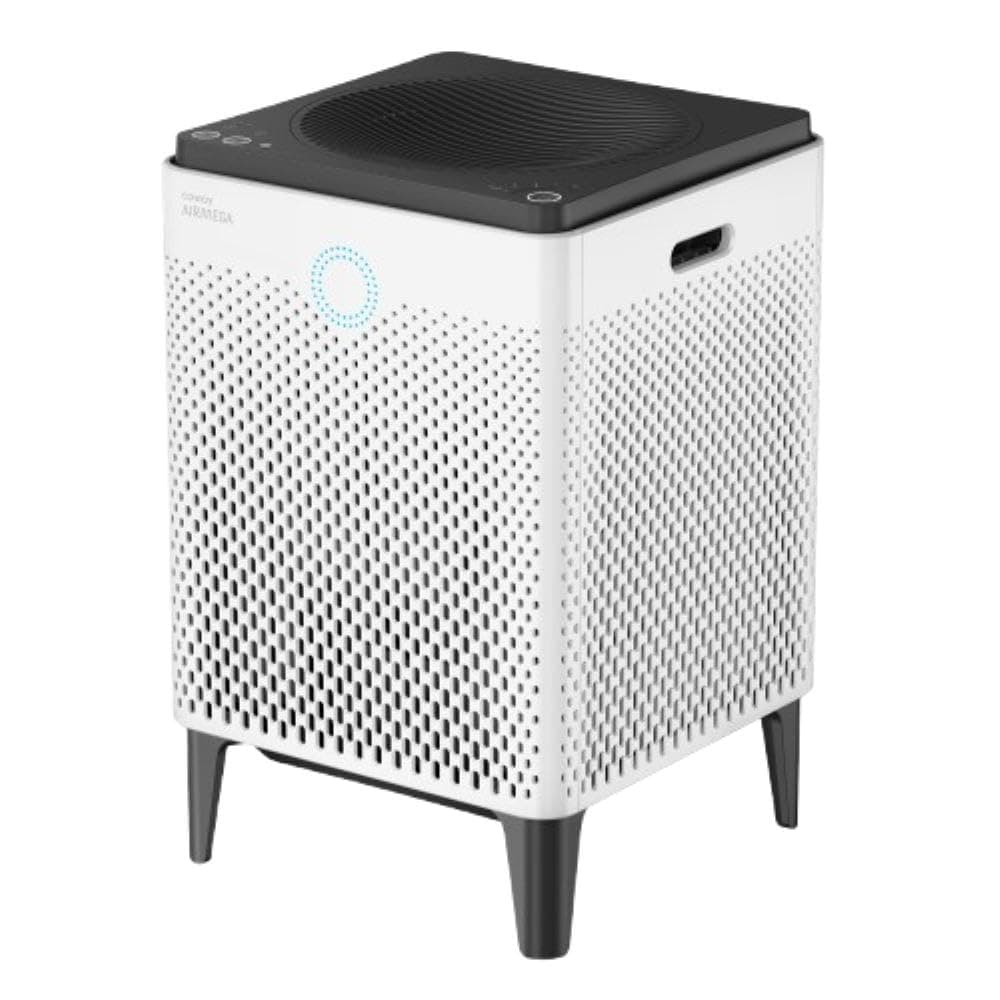
Coway vs Dyson
$649 vs $454
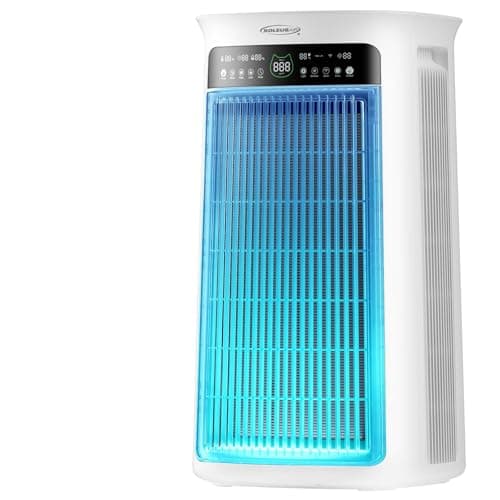
Soleus Air vs Dyson
$500 vs $454
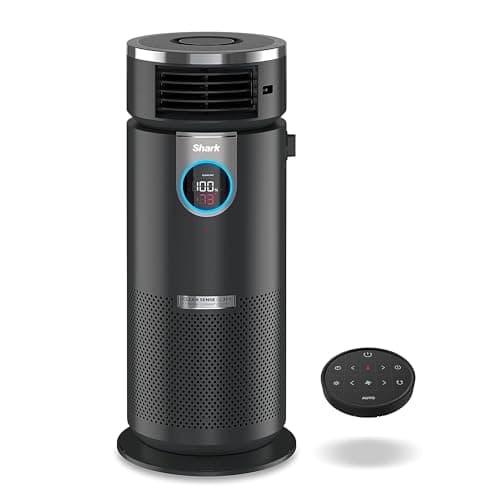
Dyson vs Shark
$454 vs $327
Dyson vs Dyson
$454 vs $412
BLUEAIR vs Dyson
$320 vs $454
BLUEAIR vs Dyson
$345 vs $454
Alen vs Dyson
$404 vs $454
Coway vs Nuwave
$649 vs $630
BLUEAIR vs Dyson
$430 vs $454
Dyson vs Nuwave
$579 vs $630
Alen vs Nuwave
$404 vs $630
Explore Other Categories
Popular comparisons across the site



Ask AI
Get instant answers about specs
Get the Deets
Ask our AI assistant
Ask Deets anything!