Our Verdict
Dyson Purifier Cool PC1 Wins
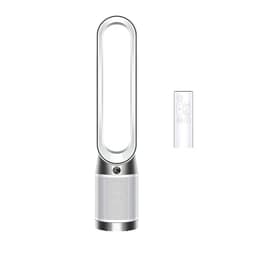
This model offers explicit performance metrics with a stated CADR smoke of 76 and coverage of 400 sq ft, providing clear expectations for purification. It also comes at a more accessible price point of $453.86. The Dyson Purifier Cool TP07 lacks crucial CADR and coverage specifications, making its purification effectiveness an unknown for a higher price of $526.06. The TP07 might be the better pick for those prioritizing perceived advanced sensing and sleek design over transparent performance data and a lower cost.
Bottom Line: Dyson Purifier Cool PC1 is the better choice. This model offers explicit performance metrics with a stated CADR smoke of 76 and coverage of 400 sq ft, providing clear expectations for purification.
In-Depth Analysis
How they compare in practice
The core distinction between the Dyson Purifier Cool PC1 (Product A) and the Dyson Purifier Cool TP07 (Product B) lies in the transparency of their performance specifications, which has significant real-world implications. Product A, the PC1, explicitly states a CADR smoke rating of 76 and a room coverage of 400 sq ft. While these numbers for smoke CADR are modest, they provide a concrete baseline for buyers. In contrast, Product B, the TP07, provides no CADR or coverage specifications whatsoever. This means a buyer of the TP07 is relying solely on Dyson's brand reputation that it "projects purified air throughout the room" without any measurable benchmarks of its actual purification speed or effective area. This lack of data makes evaluating its value proposition at $526.06 significantly harder compared to the PC1's $453.86.
Both models feature HEPA H13 sealed filtration systems, ensuring 99.97% particle capture down to 0.3 microns and activated carbon for gas and odor removal. However, beyond filtration type, the PC1 offers more specific fan performance, projecting "76 gallons/sec airflow for cooling" with 350° oscillation, suggesting robust air circulation for temperature regulation. The TP07 broadly mentions "dual function: air purification and cooling" but without specifics on airflow, which leaves some ambiguity about its cooling efficiency. For a buyer, this means the PC1 offers a more predictable experience both in purification and airflow.
In terms of smart features, both units boast app control for air quality monitoring. The PC1 specifically adds "voice control" capability, enhancing its integration into smart home ecosystems, a feature not explicitly listed for the TP07, which instead highlights real-time air quality data via its LCD display and app. Given the PC1's lower price of $453.86 and its clearer performance data, it presents a more straightforward and accountable value proposition. The TP07, while undoubtedly a premium Dyson product with "Automated pollutant sensing and capture," asks for a higher investment without substantiating its core purification and cooling performance with comparable metrics, placing the onus of trust entirely on the brand.
Ultimately, the PC1 offers a more transparent and cost-effective entry into Dyson's purifier-fan lineup for buyers who appreciate knowing what they're getting for their money. The TP07 appeals more to those who prioritize the latest model, perceived advanced sensing, and Dyson's aesthetic, and are comfortable with a less quantified performance profile at a higher price.
Key Differences
The most significant spec differences at a glance
Cadr Smoke
100% moreCoverage Sq Ft
100% moreAdvantages
Where each product wins

Dyson
- Cadr Smoke: 100% higher (76 vs 0)
- Coverage Sq Ft: 100% higher (400 vs 0)
Which to Pick for Your Situation
Concrete scenarios with a clear recommendation
For a clear performance expectation
DysonProduct A provides specific CADR smoke (76) and coverage (400 sq ft) figures, offering clear performance metrics unlike Product B.
For budget-conscious Dyson buyers
DysonProduct A is more affordable at $453.86, making it a better choice for those prioritizing cost without sacrificing stated performance.
For smart home voice control
DysonProduct A explicitly supports voice control for enhanced smart home integration, a feature not specified for Product B.
For small to medium rooms requiring defined coverage
DysonProduct A specifies a 400 sq ft coverage area, providing a precise understanding of its purification capacity for typical living spaces.
Who Should Buy Which?
Find the right product for your needs

Buy Dyson if...
Dyson Purifier Cool PC1,
The ideal buyer for the Dyson Purifier Cool PC1 (Product A) is someone who values transparency in product performance and is working with a defined budget. This individual wants to invest in a Dyson air purifier and fan but needs clear, measurable specifications to justify their purchase. They appreciate knowing the device offers a 400 sq ft coverage and a CADR smoke rating of 76, even if it's modest, because it provides a baseline expectation. They're likely setting it up in a primary living area or bedroom where consistent air purification and effective cooling airflow (76 gallons/sec) are daily priorities. The buyer also values the convenience of app and voice control for seamless smart home integration, making their investment feel modern and practical without overspending. They understand they're getting a reliable Dyson product with a fully sealed HEPA H13 filtration system and are not willing to pay a premium for features that lack explicit performance data, preferring tangible benefits and a lower price point of $453.86.

Buy Dyson if...
Dyson Purifier Cool TP07
The ideal buyer for the Dyson Purifier Cool TP07 (Product B) is a brand-loyal consumer who trusts Dyson's engineering implicitly, even when specific performance metrics are not fully disclosed. This buyer is likely prioritizing the latest design, advanced automated pollutant sensing, and real-time air quality data displayed on an LCD and via an app, which they perceive as superior technology. They are less concerned with explicit CADR smoke ratings or square footage coverage, assuming Dyson's purification will be effective simply because it's a Dyson. This individual is willing to pay a premium price of $526.06 for a device that offers a sleek aesthetic and the promise of automated, intelligent air purification and cooling. Their use case might involve a modern home or office where design and perceived cutting-edge features are paramount, and they're comfortable foregoing the concrete performance numbers of competitors or even other Dyson models. They value the 'full machine sealed filtration' and dual function but are not deterred by the absence of specific coverage or CADR data, putting their faith in the brand's reputation for innovation and quality.
Spec Comparison
8 specs compared
| Specification |  |  |
|---|---|---|
| Price | $454 | $526 |
| Rating | 4.4(141) | 4.3(938) |
| Cadr Smoke | 76 | 0 |
| Coverage Sq Ft | 400 | 0 |
| Filter Type | HEPA H13 | HEPA H13 |
| Model Number | TP11 | — |
| Smart Sensor | Yes | — |
| WiFi | Yes | — |
| Energy Star | — | No |
| Filter Life Months | — | 0 |
Swipe horizontally to see all columns
Pros & Cons
Quick overview of strengths and weaknesses
Dyson Purifier Cool
- Captures 99.97% particles down to 0.3 microns.
- Activated carbon filter removes gases and odors.
- HEPA H13 fully sealed filtration system.
- Projects 76 gallons/sec airflow for cooling.
- Low smoke CADR of 76 for 400 sq ft coverage.
- Requires extended operation for full room purification.
Dyson Purifier Cool
- Automated pollutant sensing and capture
- HEPA H13 full machine sealed filtration
- Projects purified air throughout the room
- Real-time air quality data via LCD and app
- No CADR smoke rating provided
- No room coverage specified
- Filter life duration not listed
- Not Energy Star certified
Frequently Asked Questions
Common questions about this comparison
What is the stated room coverage for each Dyson purifier?
Product A (PC1) covers up to 400 sq ft with a CADR smoke rating of 76. Product B (TP07) does not provide specific room coverage or CADR ratings in its specifications.
Do both models use the same type of filtration?
Yes, both the Dyson Purifier Cool PC1 and TP07 feature a HEPA H13 fully sealed filtration system, capturing 99.97% of particles down to 0.3 microns and removing gases/odors.
Which purifier offers better value for money?
Product A (PC1), priced at $453.86, offers better stated value due to its explicit CADR smoke (76) and coverage (400 sq ft) specifications, unlike the higher-priced Product B.
Can these purifiers be controlled remotely or with voice commands?
Both models are app-controlled for monitoring and operation. Product A (PC1) additionally supports voice control, enhancing smart home integration capabilities.
What are the cooling capabilities of these units?
Product A (PC1) projects 76 gallons/sec airflow for cooling with 350° oscillation. Product B (TP07) also offers dual purification and cooling functionality.
Is Product B (TP07) Energy Star certified?
No, Product B (TP07) is not Energy Star certified. Product A (PC1) does not list Energy Star certification either in its provided specifications.
Related Comparisons
Similar products people compare
Dyson vs Dyson
$526 vs $412
Dyson vs Dyson
$526 vs $550
Dyson vs Dyson
$526 vs $364
Alen vs Dyson
$479 vs $454
Alen vs Dyson
$464 vs $454
Coway vs Dyson
$749 vs $454
Dyson vs Dyson
$500 vs $454
Coway vs Dyson
$649 vs $454
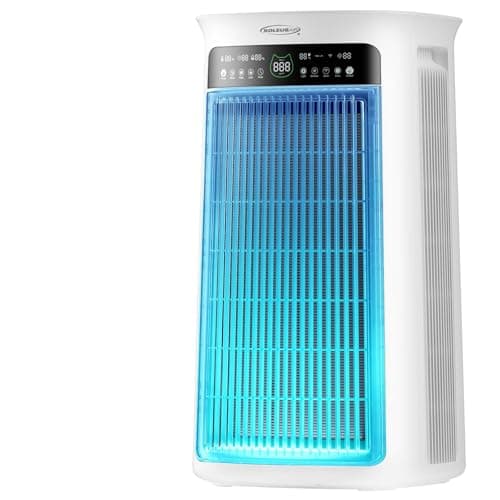
Soleus Air vs Dyson
$500 vs $454
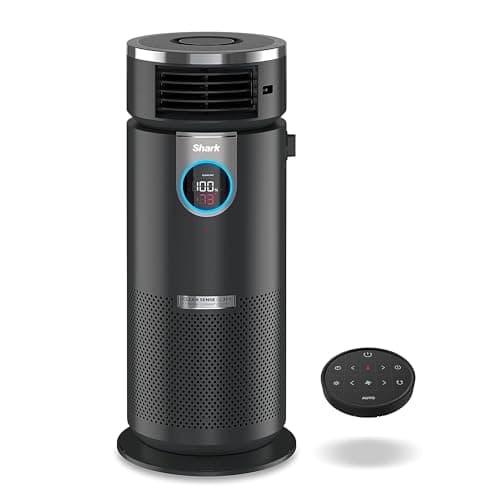
Dyson vs Shark
$454 vs $327
Dyson vs Dyson
$454 vs $412
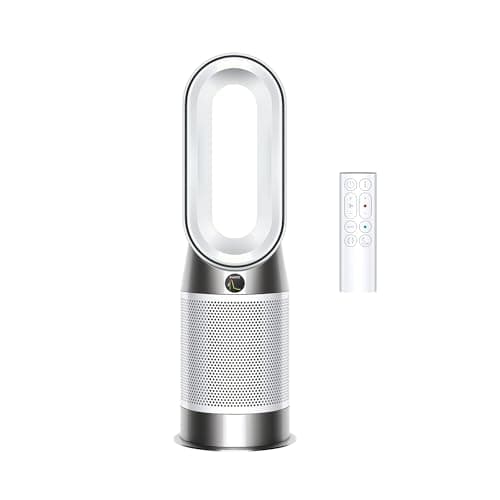
Dyson vs Dyson
$526 vs $579
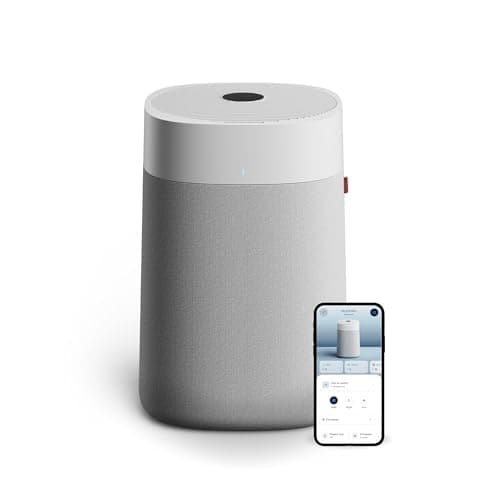
BLUEAIR vs Dyson
$320 vs $454
BLUEAIR vs Dyson
$345 vs $454
Coway vs Dyson
$649 vs $526
Explore Other Categories
Popular comparisons across the site



Ask AI
Get instant answers about specs
Get the Deets
Ask our AI assistant
Ask Deets anything!