Our Verdict
EnginStar Portable Power Station 300W Wins
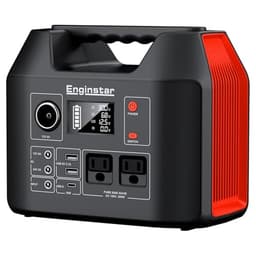
This unit provides a higher continuous AC output of 300W compared to Tenergy's 200W, making it more versatile for demanding appliances, all at a considerably lower price of $111.1 versus $179.99. Tenergy T320 is the better pick for users prioritizing long-term durability with its 2000+ charge cycles and superior USB-C Power Delivery, justifying its higher cost.
Bottom Line: EnginStar Portable Power Station 300W is the better choice. This unit provides a higher continuous AC output of 300W compared to Tenergy's 200W, making it more versatile for demanding appliances, all at a considerably lower price of $111.
In-Depth Analysis
How they compare in practice
The EnginStar R300 and Tenergy T320 offer similar core capacities at around 300Wh, but diverge significantly in their practical application and value proposition. The EnginStar R300, priced at a compelling $111.1, offers a robust 300W continuous pure sine wave AC output, which is a crucial differentiator. This higher wattage allows it to power a broader range of small appliances like some portable refrigerators, blenders, or even certain medical devices such as CPAP machines more reliably than the Tenergy T320, which is limited to 200W continuous output. While the Tenergy T320 boasts a 400W surge capacity, its continuous limitation can be a bottleneck for sustained use of many common outdoor or emergency devices.
In terms of longevity, the Tenergy T320 makes a strong case for its higher $179.99 price point with an impressive 2000+ charge cycle life, doubling the EnginStar's 1000 cycles. This means the Tenergy unit is designed to maintain its capacity for twice as long under regular use, offering superior long-term value and reliability for frequent users. For someone who plans to cycle their power station regularly over many years, the Tenergy’s durability could outweigh its higher initial cost. However, for casual users or those on a tighter budget, the EnginStar's 1000 cycles are still substantial.
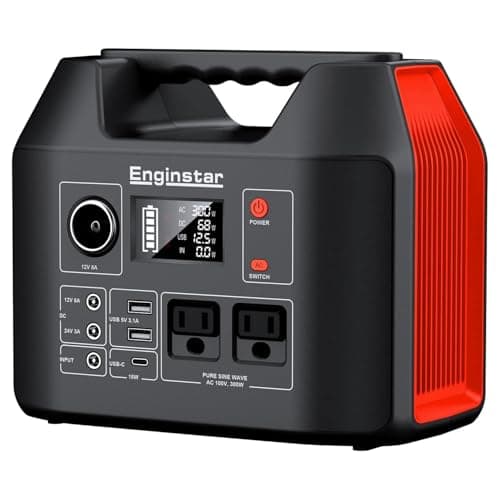
Portability is another point of divergence. The EnginStar R300 is noticeably lighter at 6.5 lbs compared to the Tenergy T320's 8.4 lbs. For backpackers, hikers, or anyone needing to carry the unit for extended periods, the EnginStar's reduced weight is a clear advantage. Conversely, the Tenergy T320 offers a more versatile array of DC outputs, including two USB-A ports and a 45W USB-C Power Delivery port, which is excellent for rapidly charging modern laptops and tablets. The EnginStar, with its single USB-A and standard USB-C, is less equipped for high-speed multi-device charging. Essentially, the EnginStar excels in raw AC power and budget-friendliness, while the Tenergy prioritizes durability and modern device charging capabilities.
Key Differences
The most significant spec differences at a glance
Battery Capacity
1% lessAC Output
50% moreCycle Life
50% lessDc Ports
33% lessUSB-A Ports
50% lessAdvantages
Where each product wins

EnginStar
- AC Output: 50% higher (300 vs 200)
- Weight: 23% lower (6.5 vs 8.4)

Tenergy
- Battery Capacity: 1% higher (296 vs 300)
- Cycle Life: 50% higher (1000 vs 2000)
- Dc Ports: 33% higher (2 vs 3)
- USB-A Ports: 50% higher (1 vs 2)
Which to Pick for Your Situation
Concrete scenarios with a clear recommendation
For powering a CPAP machine during camping or emergencies
EnginStarEnginStar R300 provides 300W pure sine wave AC output, ensuring stable power for sensitive medical devices, where the Tenergy's 200W continuous output might be insufficient.
For frequent outdoor adventures and long-term use
TenergyTenergy T320 boasts a 2000+ charge cycle life, offering twice the longevity of EnginStar R300's 1000 cycles for more robust, sustained use over many years.
For a budget-conscious user needing basic AC power
EnginStarPriced at $111.1, the EnginStar R300 offers a strong 300W AC output at a significantly lower cost than the Tenergy T320's $179.99.
For charging multiple modern portable devices quickly
TenergyTenergy T320 features 2 USB-A ports and a 45W USB-C PD port for faster and more versatile charging of laptops, tablets, and smartphones.
Who Should Buy Which?
Find the right product for your needs

Buy EnginStar if...
EnginStar Portable Power Station
The ideal buyer for the EnginStar Portable Power Station 300W is the budget-conscious adventurer or emergency preparer who needs reliable, higher continuous AC power without overspending. This user values immediate utility for mid-power appliances and appreciates a lighter carry for ease of transport. Their needs might include powering a CPAP machine overnight during camping, running a small fan or string of lights, or charging a laptop or drone for a few hours. A primary use could be operating a portable TV or small cooler during tailgates or short outages. The EnginStar's 300W AC output is crucial for them, ensuring compatibility with a wider range of standard household electronics and small appliances than many competitors in its price range. Its $111.1 price point is a major draw for maximizing power per dollar, and the 6.5 lbs weight makes it easy to grab and go for impromptu trips. They are giving up the extended cycle life and advanced USB-C PD charging capabilities of the Tenergy, but their usage frequency doesn't demand 2000 cycles, and their devices don't require 45W USB-C PD.

Buy Tenergy if...
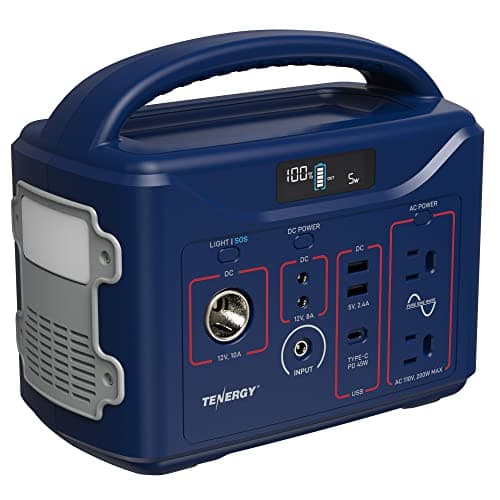
Tenergy T320 Portable Power
The Tenergy T320 Portable Power Station is best suited for the frequent outdoor enthusiast, long-term camper, or tech-savvy individual who prioritizes durability, modern device charging, and robust build quality over initial cost. This user anticipates heavy, consistent use over many years and relies on their power station for critical functions. Their needs include a long-lasting power source for extended off-grid trips, reliable and fast charging for multiple smartphones, tablets, and a USB-C powered laptop, and backup for devices that might need a surge of power. The 2000+ cycle life is paramount, offering double the lifespan of many alternatives and ensuring it's a worthwhile long-term investment. The USB-C PD 45W port is essential for keeping their modern electronics powered efficiently. While its continuous AC output is 200W, the 400W peak output can handle initial power spikes from some tools or appliances. They are willing to pay the higher $179.99 price and accept a slightly heavier unit at 8.4 lbs and a lower continuous AC output compared to the EnginStar, understanding that these trade-offs result in superior long-term value and device compatibility for their tech ecosystem.
Spec Comparison
11 specs compared
| Specification |  |  |
|---|---|---|
| Price | $130 | $180 |
| Rating | 4.3(1.4k) | 4.3(217) |
| Capacity Wh | 296W | 300W |
| Chemistry | Li-ion | — |
| AC Output Watts | 300W | 200W |
| Dc Ports | 2 | 3 |
| AC Outlets | 2 | 2 |
| Cycle Life | 1000 | 2000 |
| Weight | 6.5 lbs | 8.4 lbs |
| USB A Ports | 1 | 2 |
| USB C Ports | 1 | 1 |
| Model Number | R300 | T320 |
| Peak Output Watts | — | 400W |
Swipe horizontally to see all columns
Pros & Cons
Quick overview of strengths and weaknesses
EnginStar Portable Power
- Lightweight 6.5 lbs for easy portability
- 300W pure sine wave AC output protects devices
- 8 output ports charge multiple items concurrently
- Three recharge methods: wall, car, solar panel
- Solar panel not included; separate purchase required
- Max 65W input speed; slower full recharge
- Requires charging every 2-3 months for upkeep
Tenergy T320 Portable
- Provides 300Wh power for extended use.
- 2 AC outlets deliver 200W continuous, 400W surge.
- Pure Sine Wave AC output protects sensitive electronics.
- Multiple DC outputs: USB-C PD 45W, 2 USB-A, 12V car.
- 200W continuous AC output limits appliance compatibility.
- Combined AC/DC output limited to 398W total.
- Solar panel not included for solar recharging option.
Frequently Asked Questions
Common questions about this comparison
What is the primary difference in AC output between these two power stations?
The EnginStar R300 provides a higher continuous AC output of 300W. The Tenergy T320 offers 200W continuous AC output, though it can handle a 400W surge for brief periods.
Which power station offers better long-term durability?
The Tenergy T320 is rated for 2000+ charge cycles, which is double the 1000+ cycles of the EnginStar R300, indicating superior longevity.
Is one of these power stations lighter for portability?
Yes, the EnginStar R300 is lighter at 6.5 lbs compared to the Tenergy T320, which weighs 8.4 lbs, making it more portable for hiking or transport.
Can either unit fast-charge a laptop via USB-C?
The Tenergy T320 has a USB-C PD 45W port, making it suitable for fast-charging many laptops. The EnginStar R300 has a standard USB-C port, which is generally slower.
How do the prices compare for these two power stations?
The EnginStar R300 is priced at $111.1, while the Tenergy T320 costs $179.99. The EnginStar is considerably more budget-friendly.
Related Comparisons
Similar products people compare
EnginStar vs GRECELL
$130 vs $100
EnginStar vs ZeroKor
$130 vs $130
Anker vs EnginStar
$300 vs $130
Anker vs Tenergy
$250 vs $180
Jackery vs Tenergy
$229 vs $180
GRECELL vs Tenergy
$190 vs $180
ALLWEI vs Tenergy
$269 vs $180
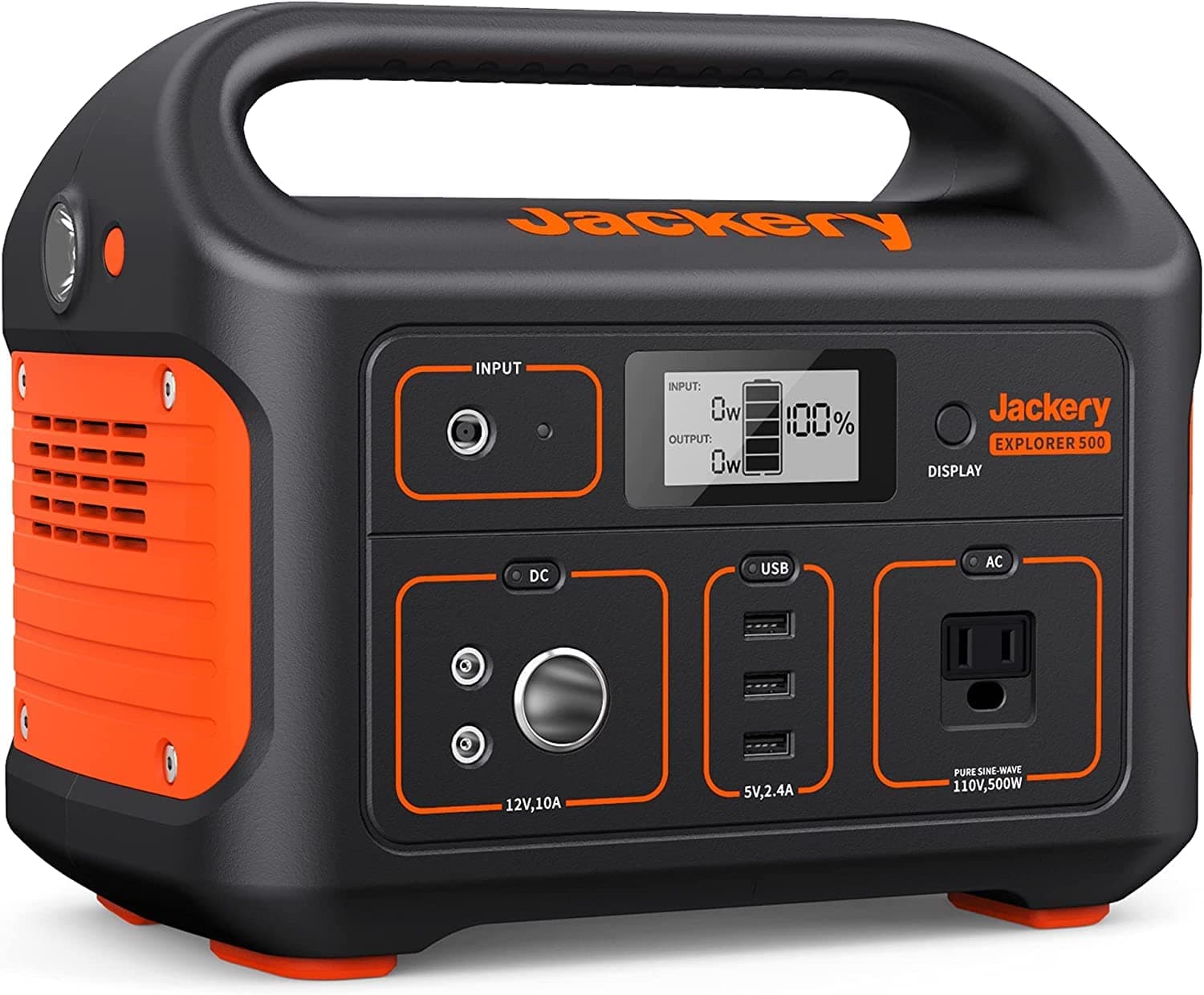
Jackery vs Tenergy
$299 vs $180
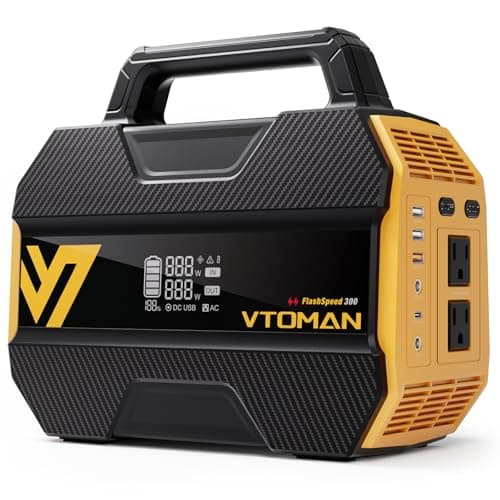
EnginStar vs VTOMAN
$130 vs $140
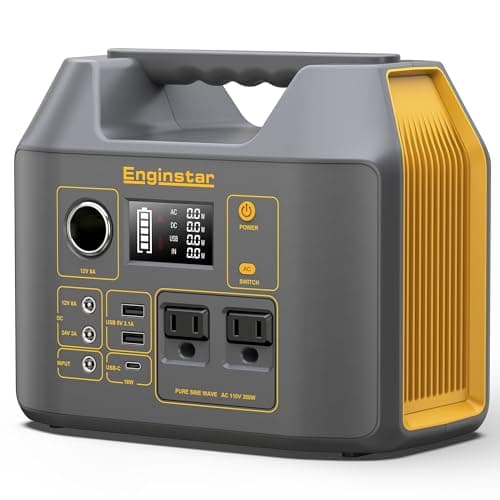
EnginStar vs EnginStar
$130 vs $111
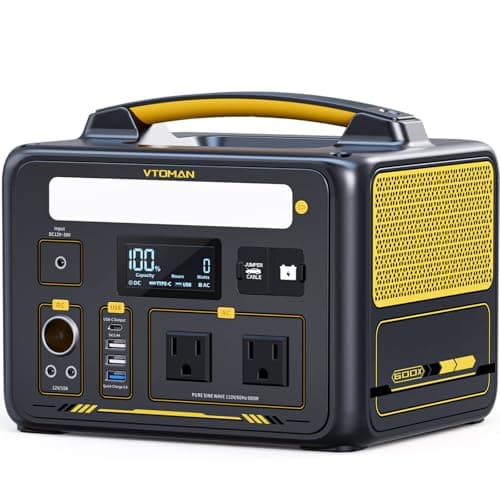
EnginStar vs VTOMAN
$130 vs $240
Tenergy vs VTOMAN
$180 vs $240
ALLWEI vs EnginStar
$129 vs $130
ALLWEI vs Tenergy
$129 vs $180
Tenergy vs VTOMAN
$180 vs $140
Explore Other Categories
Popular comparisons across the site


Ask AI
Get instant answers about specs
Get the Deets
Ask our AI assistant
Ask Deets anything!