Our Verdict
NexiGo Aurora Pro MKII Wins
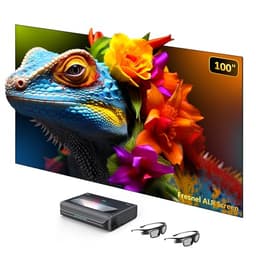
This projector offers a compelling package with native 4K resolution and a highly convenient 0.21:1 ultra-short throw ratio, coupled with a slightly lower price of $3099. It also includes a 100-inch ALR screen, providing excellent value. While the Epson LS11000 boasts a significantly higher 1,200,000:1 contrast ratio and 2,500 lumens, the NexiGo's true 4K clarity and flexible placement make it generally superior for modern home setups. The Epson is the better pick for traditional projector installations in dedicated dark rooms where its exceptional dynamic contrast, motorized lens, and standard throw setup are preferred over native 4K clarity or UST convenience.
Bottom Line: NexiGo Aurora Pro MKII is the better choice. This projector offers a compelling package with native 4K resolution and a highly convenient 0.
In-Depth Analysis
How they compare in practice
The Epson LS11000 and NexiGo Aurora Pro MKII represent two distinct philosophies in high-end home projection, primarily differing in their throw ratio and core image processing. The most significant real-world distinction is the throw ratio: the NexiGo's 0.21:1 ultra-short throw allows it to sit inches from a wall, eliminating ceiling mounts, cable runs, and shadow interference, making it ideal for living rooms. The Epson, a traditional long-throw projector, requires significant distance from the screen, making it better suited for dedicated home theaters or larger spaces where a ceiling mount is feasible. This fundamental difference dictates the practicality of each in various domestic environments.
Image quality presents a nuanced trade-off. The NexiGo boasts true native 4K resolution, offering the crispest detail possible for its pixel count, which is particularly noticeable on larger screen sizes. In contrast, the Epson employs 4K PRO-UHD pixel shifting. While Epson's technology delivers a very convincing 4K-like image, the fine detail and pixel purity of a native 4K panel like the NexiGo's can be superior upon close inspection. However, the Epson counters with an astounding 1,200,000:1 dynamic contrast ratio, far surpassing the NexiGo's 30,000:1. In a properly light-controlled room, the Epson will produce deeper, richer blacks and more nuanced shadow detail, delivering a more cinematic experience for purists. The NexiGo's contrast, while lower, is still respectable and enhanced by dynamic iris and laser dimming.
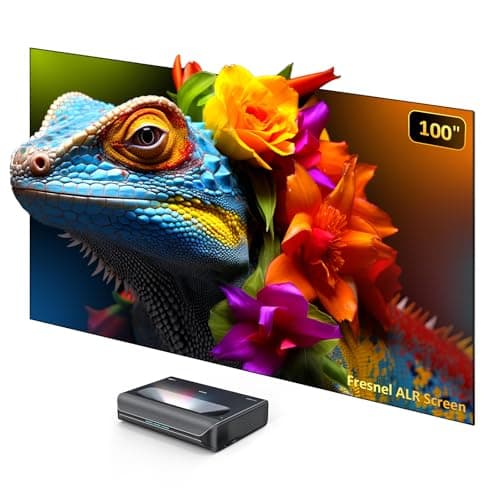
Brightness levels are closely matched, with Epson offering 2,500 lumens and NexiGo 2,400 lumens. This minor difference means both can contend with some ambient light, but the NexiGo's inclusion of a 100-inch Fresnel ALR screen provides a significant advantage in semi-lit rooms by rejecting ambient light, effectively making its perceived brightness higher in real-world scenarios. The Epson's motorized lens shift, focus, and zoom offer unparalleled installation flexibility and precision for traditional setups, allowing for perfect image alignment without physically moving the projector. The NexiGo, by nature of its ultra-short throw, requires precise initial placement but then largely remains fixed. Finally, the NexiGo supports advanced HDR formats like Dolby Vision and Dolby Atmos, offering a more complete audio-visual experience out-of-the-box, whereas the Epson focuses on HDR10+.
Key Differences
The most significant spec differences at a glance
Brightness Ansi Lumens
4% moreAdvantages
Where each product wins

Epson
- Brightness Ansi Lumens: 4% higher (2500 vs 2400)
Which to Pick for Your Situation
Concrete scenarios with a clear recommendation
For a versatile living room setup
NexiGoThe NexiGo's 0.21:1 ultra-short throw ratio allows it to sit close to the wall, and its bundled 100-inch ALR screen helps combat ambient light, making it perfect for multi-purpose rooms.
For a dedicated, light-controlled home theater
EpsonThe Epson LS11000's 1,200,000:1 dynamic contrast ratio and precise motorized lens adjustments excel in dark environments, providing exceptional cinematic depth.
For the sharpest possible image detail
NexiGoThe NexiGo Aurora Pro MKII delivers true native 4K resolution, offering finer pixel clarity compared to Epson's 4K PRO-UHD pixel-shifting technology.
When precise installation flexibility is paramount
EpsonEpson's motorized lens shift, focus, and zoom provide unparalleled control for aligning the image perfectly in various traditional setups, overcoming placement challenges.
Who Should Buy Which?
Find the right product for your needs

Buy Epson if...
Epson Home Cinema LS11000
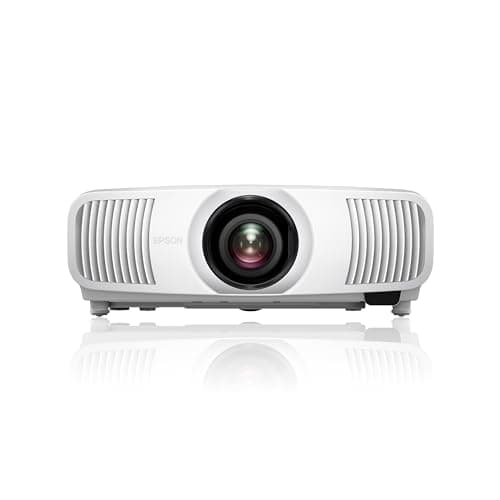
The Epson Home Cinema LS11000 is ideal for the dedicated home theater enthusiast who has a controlled environment and prioritizes cinematic immersion above all else. This buyer typically has a dark room where the Epson's phenomenal 1,200,000:1 dynamic contrast ratio can truly shine, delivering exceptionally deep blacks and vibrant, accurate colors for an authentic movie-watching experience. They appreciate the flexibility of a traditional projector setup, perhaps ceiling-mounted, and value the precision offered by its motorized lens shift, focus, and zoom features for perfect image alignment and aspect ratio adjustments. This user might already have a preferred screen or desires the freedom to choose their own size and material. They understand that while the 4K PRO-UHD is pixel-shifted, the overall image quality, especially contrast, is paramount. With a budget around $3200, they are comfortable with a 'renewed' product for the value it offers, sacrificing native 4K clarity and ultra-short throw convenience for superior contrast and traditional installation flexibility.

Buy NexiGo if...
NexiGo Aurora Pro MKII
The NexiGo Aurora Pro MKII is perfectly suited for the modern home entertainment consumer looking to integrate a large screen experience into a multi-purpose living space without the complexity or footprint of a traditional projector. This buyer prioritizes convenience, a clean aesthetic, and native 4K sharpness. Their setup typically involves placing the projector just inches from a wall, eliminating the need for ceiling mounts or long cable runs, thanks to its 0.21:1 ultra-short throw ratio. The inclusion of a high-quality 100-inch Fresnel ALR screen is a major draw, providing a complete, high-performance solution that performs well even in rooms with some ambient light. They value the cutting-edge support for advanced HDR formats like Dolby Vision and Dolby Atmos, ensuring a premium visual and auditory experience. With a budget around $3100, they seek a hassle-free, native 4K picture with a long-lasting laser light source, willingly trading the Epson's extreme dynamic contrast and motorized lens adjustments for unparalleled placement flexibility and out-of-the-box convenience.
Spec Comparison
8 specs compared
| Specification | 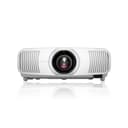 |  |
|---|---|---|
| Price | $3199 | $3099 |
| Rating | 4.3(16) | 5.0(3) |
| Brightness Ansi Lumens | 2500 | 2400 |
| Native Resolution | 4K Pixel Shift | Native 4K |
| Lens Shift | Yes | — |
| Hdr Support | Yes | Yes |
| Light Source | Laser | Laser |
| Contrast Ratio | 1200000:1 | 30000:1 |
| Throw Ratio | — | 0.21 |
| Lamp Life Hours | — | 30000 hrs |
Swipe horizontally to see all columns
Pros & Cons
Quick overview of strengths and weaknesses
Epson Home Cinema
- 4K PRO-UHD pixel shifting delivers sharp images.
- 2,500 lumens for bright ambient light rooms.
- Laser light source for long operational life.
- 1,200,000:1 dynamic contrast ratio.
- 4K PRO-UHD resolution is pixel-shifted, not native.
- Renewed status may affect warranty or reliability.
NexiGo Aurora Pro
- Native 4K resolution for detailed image output
- 30,000:1 contrast ratio delivers deep blacks
- 0.21:1 ultra-short throw for flexible placement
- Laser light source provides 30,000 hours of use
- Included 100-inch screen limits size flexibility
- Ultra-short throw placement demands precise alignment
- 2400 lumens may struggle in high ambient light
Frequently Asked Questions
Common questions about this comparison
What is the primary difference in resolution between these two projectors?
The NexiGo Aurora Pro MKII offers true Native 4K resolution, providing distinct pixels for ultimate clarity. The Epson LS11000 uses 4K PRO-UHD pixel shifting technology to achieve a 4K-like image, which is excellent but not natively 4K.
Which projector is better for a room with some ambient light?
While the Epson has slightly higher brightness at 2,500 lumens, the NexiGo's bundled 100-inch Fresnel ALR screen effectively rejects ambient light, making it often perform better in semi-lit rooms despite its 2,400 lumens.
Can either of these projectors be placed directly in front of the wall?
Only the NexiGo Aurora Pro MKII can be placed directly in front of the wall due to its 0.21:1 ultra-short throw ratio. The Epson LS11000 is a standard throw projector requiring distance.
How long do the laser light sources last on these projectors?
The NexiGo Aurora Pro MKII boasts a laser light source with a 30,000-hour lifespan. The Epson LS11000 also uses a laser light source, ensuring a very long operational life compared to traditional lamps.
Does either projector support Dolby Vision?
Yes, the NexiGo Aurora Pro MKII supports Dolby Vision, along with Dolby Atmos and HDR10+. The Epson LS11000 supports HDR and HDR10+.
Related Comparisons
Similar products people compare
Epson vs Hisense
$3199 vs $2998
Epson vs NexiGo
$3199 vs $2299
Hisense vs NexiGo
$2998 vs $3099
BenQ vs NexiGo
$2799 vs $3099
BenQ vs Epson
$2799 vs $3199
NexiGo vs Valerion
$3099 vs $1999
NexiGo vs NexiGo
$2999 vs $3099
NexiGo vs NexiGo
$3099 vs $2299
NexiGo vs NexiGo
$3099 vs $3199
Epson vs Valerion
$3199 vs $1999
AWOL VISION vs NexiGo
$2299 vs $3099
AWOL VISION vs NexiGo
$2499 vs $3099
BenQ vs NexiGo
$2199 vs $3099
AWOL VISION vs Epson
$2299 vs $3199
AWOL VISION vs NexiGo
$3499 vs $3099
Explore Other Categories
Popular comparisons across the site


Ask AI
Get instant answers about specs
Get the Deets
Ask our AI assistant
Ask Deets anything!