Our Verdict
BenQ TK710STi Wins
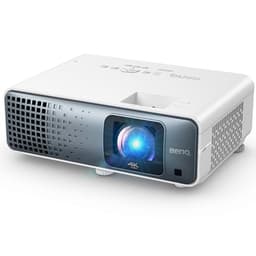
The BenQ projector takes the lead with its significantly higher brightness of 3200 ANSI lumens compared to the NexiGo's 2400 lumens, making it more versatile for rooms with ambient light. Furthermore, its ultra-low 4ms input lag at 1080p/240Hz offers a clear advantage for competitive gamers, whereas the NexiGo provides 8ms. This performance comes at a slightly lower price point of $2199 vs $2299. The NexiGo Aurora Pro is the better pick for users prioritizing native 4K resolution, superior contrast via 3000:1 native ratio and dynamic laser dimming, and integrated Dolby Vision support in a dedicated, light-controlled home cinema setup.
Bottom Line: BenQ TK710STi is the better choice. The BenQ projector takes the lead with its significantly higher brightness of 3200 ANSI lumens compared to the NexiGo's 2400 lumens, making it more versatile for rooms with ambient light.
In-Depth Analysis
How they compare in practice
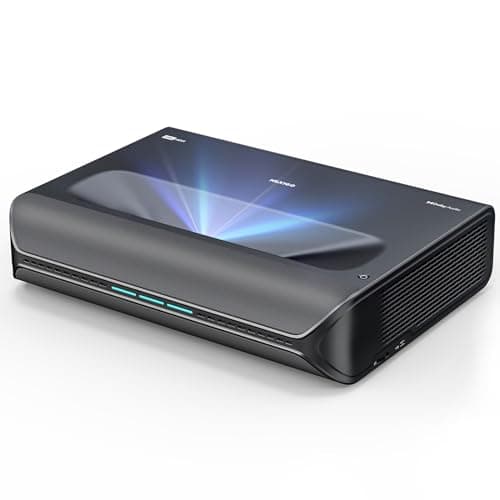
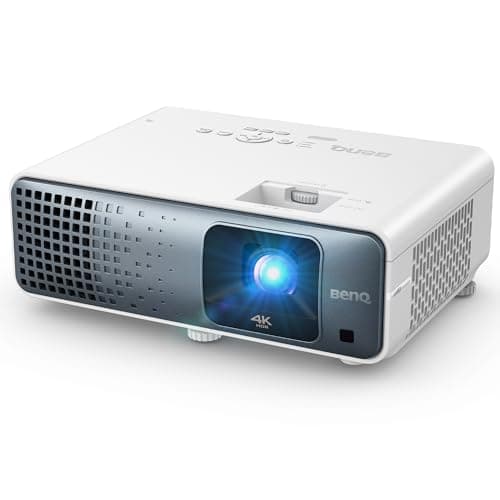
Comparing the BenQ TK710STi and the NexiGo Aurora Pro reveals distinct strengths catering to different user priorities, despite both utilizing laser light sources. The BenQ TK710STi carves out its niche as a powerful all-rounder, particularly excelling in brighter environments and for serious gamers. Its 3200 ANSI lumens output is a substantial advantage over the NexiGo’s 2400 lumens, allowing for a more watchable image even with some ambient light, which is crucial for living room setups. This brightness ensures HDR content, supported by HDR10 and HLG, truly pops.
For gamers, the BenQ is hard to beat with its astonishing 4ms input lag at 1080p/240Hz. While this lowest latency is resolution-dependent, even at 4K, it remains highly responsive. The NexiGo, by contrast, offers a still respectable 8ms input lag, which is excellent for most gaming but not on par with BenQ's absolute lowest. Where the NexiGo Aurora Pro truly shines is in its image fidelity and audio experience for dedicated home cinema enthusiasts. It boasts native 4K resolution, providing true pixel-for-pixel clarity compared to BenQ’s 4K pixel-shifting technology. Coupled with a high 3000:1 native contrast ratio and dynamic laser dimming, the NexiGo delivers deeper blacks and more nuanced shadow detail, making movies incredibly immersive. Its support for Dolby Vision & Atmos, alongside HDR10+ and HLG, further elevates the cinematic experience, which BenQ does not offer.
The NexiGo also integrates powerful 60W stereo speakers, offering a robust out-of-the-box audio solution that the BenQ lacks with its unstated internal audio system. The BenQ does, however, integrate Android TV, making it a smart projector ready for streaming without external devices, a convenience not explicitly highlighted for the NexiGo. Finally, the NexiGo’s ultra-short throw (UST) design allows it to sit inches from the wall, a significant aesthetic and practical advantage over BenQ's short-throw, which requires more distance. The trade-off for the NexiGo's superior contrast and native 4K comes at a slightly higher price and lower brightness, making the choice dependent on environment and primary use.
Key Differences
The most significant spec differences at a glance
Brightness Ansi Lumens
33% moreGaming Input Lag Ms
50% lessAdvantages
Where each product wins

BenQ
- Brightness Ansi Lumens: 33% higher (3200 vs 2400)

NexiGo
- Gaming Input Lag Ms: 50% higher (4 vs 8)
Which to Pick for Your Situation
Concrete scenarios with a clear recommendation
For competitive console or PC gaming
BenQThe BenQ TK710STi offers an industry-leading 4ms input lag at 1080p/240Hz, providing a significant competitive edge over the NexiGo's 8ms.
For a bright living room setup
BenQWith 3200 ANSI lumens, the BenQ TK710STi is considerably brighter than the NexiGo's 2400 lumens, ensuring better visibility in rooms with ambient light.
For a dedicated, dark home cinema
NexiGoThe NexiGo Aurora Pro offers true Native 4K resolution, a 3000:1 native contrast ratio, dynamic laser dimming, and Dolby Vision support for superior cinematic immersion.
For minimalist room design with wall placement
NexiGoThe NexiGo's ultra-short throw (UST) capability allows it to project a large image from mere inches away from the screen, ideal for clean aesthetics and limited space.
Who Should Buy Which?
Find the right product for your needs

Buy BenQ if...
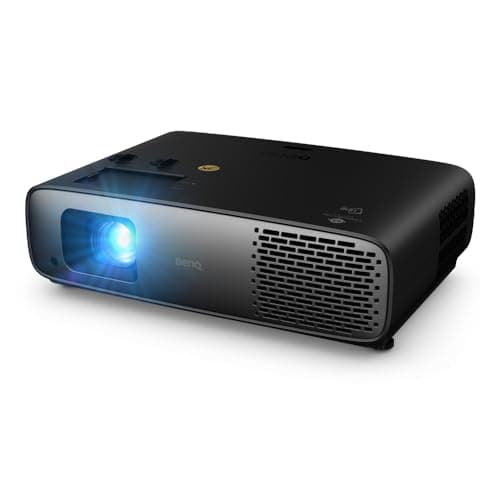
BenQ TK710STi 4K HDR
The BenQ TK710STi is the ideal choice for the casual to serious gamer who also enjoys movies and TV in a living room environment that isn't always pitch black. This buyer prioritizes exceptional responsiveness for gaming, benefiting from the BenQ's class-leading 4ms input lag at 1080p/240Hz, ensuring every action is registered instantly. They also value versatility and bright, vibrant images, which the 3200 ANSI lumens deliver consistently, allowing for enjoyable viewing even with some ambient light. The integrated Android TV, Chromecast, and AirPlay mean this user wants a streamlined, smart streaming experience without needing extra devices. While they might appreciate native 4K, the pixel-shifted 4K of the BenQ is sufficient for their needs, especially given its superior brightness and gaming performance. They are willing to forgo the absolute deepest blacks and a UST setup for a more flexible, brighter image and unmatched gaming latency at a slightly more accessible $2199 price point.

Buy NexiGo if...
NexiGo Aurora Pro, Ultra
The NexiGo Aurora Pro is perfectly suited for the home cinema purist and videophile who is building a dedicated, light-controlled entertainment space. This buyer prioritizes pristine image quality, seeking the absolute best cinematic experience with true native 4K resolution, which the NexiGo delivers over the BenQ's pixel-shifted 4K. They value deep, inky blacks and superior contrast, a strength of the Aurora Pro with its 3000:1 native contrast ratio and dynamic laser dimming. Integrated Dolby Vision and Atmos support further appeal to their desire for premium audio-visual fidelity, providing an immersive experience right out of the box with its 60W speakers. The ultra-short throw capability is a major draw for those who want a minimalist setup, allowing the projector to sit directly beneath the screen without casting shadows. While they appreciate good gaming performance (8ms input lag is still strong), it's not their top priority. They are prepared to pay a slightly higher price of $2299 and accept a lower brightness of 2400 lumens for an uncompromised, high-fidelity dark-room cinema experience.
Spec Comparison
8 specs compared
| Specification |  | 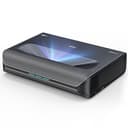 |
|---|---|---|
| Price | $2199 | $2299 |
| Rating | 4.4(412) | 4.3(280) |
| Brightness Ansi Lumens | 3200 | 2400 |
| Native Resolution | 4K Pixel Shift | Native 4K |
| Gaming Input Lag Ms | 4 | 8 |
| Hdr Support | Yes | Yes |
| Light Source | Laser | Laser |
| Keystone Correction | Full (H+V) | — |
| Speaker Watts | — | 60W |
| Contrast Ratio | — | 3000:1 |
Swipe horizontally to see all columns
Pros & Cons
Quick overview of strengths and weaknesses
BenQ TK710STi 4K
- 3200 ANSI lumens; bright in ambient light.
- Durable laser light source; no lamp replacements.
- 4ms input lag @ 1080p/240Hz for competitive gaming.
- Integrated Android TV for direct streaming access.
- 4K resolution achieved via pixel shifting, not native.
- 4ms input lag limited to 1080p@240Hz content.
NexiGo Aurora Pro,
- Native 4K resolution provides sharp images.
- 8ms input lag supports responsive gaming.
- 3000:1 native contrast deepens black levels.
- Dynamic laser dimming improves blacks and saves energy.
- 2400 lumens may limit use in bright rooms.
- Ultra-short throw requires precise screen setup.
- MEMC 120Hz can introduce motion artifacting.
Frequently Asked Questions
Common questions about this comparison
Which projector is brighter for use in rooms with ambient light?
The BenQ TK710STi is brighter, featuring 3200 ANSI lumens, compared to the NexiGo Aurora Pro's 2400 lumens. This makes the BenQ more suitable for environments that are not completely dark.
Does either projector offer native 4K resolution?
Yes, the NexiGo Aurora Pro features native 4K resolution for true pixel-for-pixel clarity. The BenQ TK710STi achieves 4K resolution via pixel-shifting technology.
Which projector has lower input lag for gaming?
The BenQ TK710STi boasts an impressive 4ms input lag when running at 1080p/240Hz, making it ideal for competitive gaming. The NexiGo Aurora Pro offers a still-excellent 8ms input lag.
What kind of audio experience do these projectors provide?
The NexiGo Aurora Pro includes powerful 60W built-in stereo speakers and Dolby Atmos support for a robust audio experience. The BenQ TK710STi integrates Android TV, but specific speaker wattage isn't highlighted.
Can I place these projectors close to the screen?
The NexiGo Aurora Pro is an Ultra Short Throw (UST) projector, meaning it can be placed very close to the projection surface. The BenQ TK710STi is a short-throw projector, requiring slightly more distance.
Related Comparisons
Similar products people compare
Epson vs NexiGo
$3199 vs $2299
AWOL VISION vs NexiGo
$2299 vs $2299
NexiGo vs NexiGo
$2999 vs $2299
BenQ vs NexiGo
$1998 vs $2299
NexiGo vs Valerion
$2299 vs $1999
BenQ vs BenQ
$1998 vs $2199
NexiGo vs NexiGo
$3099 vs $2299
AWOL VISION vs BenQ
$2299 vs $2199
AWOL VISION vs BenQ
$2499 vs $2199
BenQ vs Valerion
$2199 vs $1999
BenQ vs BenQ
$2199 vs $2799
AWOL VISION vs NexiGo
$2499 vs $2299
BenQ vs NexiGo
$2799 vs $2299
BenQ vs NexiGo
$2199 vs $2999
BenQ vs NexiGo
$2199 vs $3099
Explore Other Categories
Popular comparisons across the site



Ask AI
Get instant answers about specs
Get the Deets
Ask our AI assistant
Ask Deets anything!