Our Verdict
BenQ TK700ST Wins
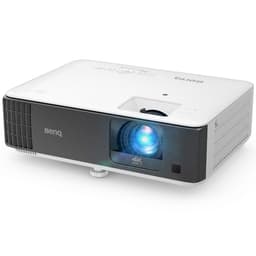
It delivers a superior gaming experience with its 16ms input lag and 4K pixel shift resolution, making it ideal for responsive, high-detail visuals in a home entertainment setting. While slightly more expensive at $1399 vs $1349.99, its short-throw capability also suits smaller entertainment spaces, projecting a large image from close distances. The ViewSonic LS741HD is the better pick for bright environments or professional installations requiring maximum brightness at 5000 lumens and robust installation flexibility, sacrificing 4K and specialized gaming performance.
Bottom Line: BenQ TK700ST is the better choice. It delivers a superior gaming experience with its 16ms input lag and 4K pixel shift resolution, making it ideal for responsive, high-detail visuals in a home entertainment setting.
In-Depth Analysis
How they compare in practice
The BenQ TK700ST and ViewSonic LS741HD cater to distinct user profiles, each excelling in its designed niche. The BenQ, priced at $1399, clearly targets gamers and home theater enthusiasts seeking a sharper image. Its 4K pixel shift resolution delivers significantly more detail than the ViewSonic’s native 1080p, creating a more immersive visual experience for movies and high-fidelity games. Crucially, the BenQ’s 16ms input lag at 4K makes it exceptionally responsive, providing a critical advantage in fast-paced gaming where every millisecond counts. Combined with HDR10/HLG support, it renders vibrant colors and impressive contrast, making cinematic content truly pop. Its short-throw lens (0.89 throw ratio) is a game-changer for smaller rooms, allowing a large image from a short distance, a flexibility the ViewSonic cannot match with its standard 1.4 throw ratio.
Conversely, the ViewSonic LS741HD, at $1349.99, prioritizes raw brightness, reliability, and installation versatility. With a staggering 5000 ANSI lumens, it’s vastly brighter than the BenQ's 3000 lumens. This 66% increase in brightness means the ViewSonic performs far better in rooms with significant ambient light, such as classrooms, conference rooms, or brightly lit living areas, where the BenQ might struggle. Its laser light source is another substantial advantage, offering up to 20,000 hours of maintenance-free operation compared to the BenQ’s lamp, which will require periodic replacement, adding to long-term costs. The ViewSonic also boasts extensive installation features like a 1.6x optical zoom, full H/V keystone, 4-corner adjustment, and 360-degree projection, making it incredibly adaptable to challenging setups.
While the BenQ offers a higher perceived resolution and superior gaming responsiveness, its lamp-based light source means more frequent maintenance and potentially less consistent brightness over time. The ViewSonic provides robust, consistent performance in brighter environments and professional settings, thanks to its powerful laser and extensive installation controls, but it sacrifices the fine detail of 4K and specialized gaming responsiveness. The trade-off is clear: immersive, responsive 4K for gaming/home cinema in controlled lighting versus bright, reliable 1080p for diverse and challenging environments.
Key Differences
The most significant spec differences at a glance
Brightness Ansi Lumens
40% lessThrow Ratio
36% lessAdvantages
Where each product wins

ViewSonic
- Brightness Ansi Lumens: 40% higher (3000 vs 5000)
- Throw Ratio: 36% higher (0.89490008 vs 1.4)
Which to Pick for Your Situation
Concrete scenarios with a clear recommendation
For dedicated home theater and serious gaming in a dark room
BenQThe BenQ TK700ST offers 4K pixel shift resolution and a low 16ms input lag, crucial for immersive, responsive gaming and high-detail movie watching.
For a bright living room or classroom requiring high visibility
ViewSonicThe ViewSonic LS741HD’s 5000 ANSI lumens significantly outperform the BenQ’s 3000 lumens, ensuring a clear image even with substantial ambient light.
For installations needing maximum setup flexibility and low maintenance
ViewSonicWith a laser light source, 1.6x optical zoom, and 360-degree projection, the ViewSonic offers superior longevity and adaptability for diverse mounting conditions.
For a small apartment where space is limited
BenQThe BenQ TK700ST features a short throw ratio of 0.89, allowing it to project a large image from a very close distance.
Who Should Buy Which?
Find the right product for your needs

Buy BenQ if...
BenQ TK700ST 4K HDR
The BenQ TK700ST is the ideal choice for dedicated gamers and home theater aficionados who prioritize sharp, responsive visuals and vibrant colors. This buyer is meticulously crafting an entertainment space, perhaps a dedicated gaming den or a living room where ambient light can be reasonably controlled, and their core desire is an immersive experience. They demand top-tier gaming performance, making the BenQ's exceptionally low 16ms input lag at 4K a non-negotiable feature for competitive edge and fluid, lag-free gameplay. The 4K pixel shift resolution is a significant draw, appealing to those who crave a detailed, crisp image for both high-fidelity gaming and cinematic movie watching, appreciating the enhanced clarity and textural richness over standard 1080p. Furthermore, its short-throw capabilities (0.89 throw ratio) are perfect for users with limited space, enabling them to project a massive image from a surprisingly close distance to the screen, solving common spatial constraints. While they acknowledge the lamp-based light source and its eventual replacement cost, the superior gaming-centric specifications—including 4K pixel shift, 16ms lag, and HDR10/HLG support—at its $1399 price point make it an unbeatable value for their specific, performance-driven needs. They willingly forego the ViewSonic’s extreme brightness or advanced installation features, which are simply not their primary concern.

Buy ViewSonic if...
ViewSonic LS741HD 5000 Lumens
The ViewSonic LS741HD is perfectly suited for buyers prioritizing powerful, consistent brightness and exceptional installation flexibility, particularly in challenging or commercial environments. This user might be outfitting a large conference room, a brightly lit classroom, a sports bar, or a home theater in a very bright living space where ambient light cannot be fully controlled. Their primary need is a vivid, clear image that cuts through environmental light, a task at which the ViewSonic excels with its formidable 5000 ANSI lumens – significantly brighter than most projectors in its class. The robust laser light source is a key selling point, offering a long, maintenance-free operational life (up to 20,000 hours), which translates to lower long-term costs and consistent performance, a critical factor for professional or high-usage scenarios. Furthermore, its comprehensive installation features, including a 1.6x optical zoom, extensive H/V keystone correction, 4-corner adjustment, and 360-degree projection, make it incredibly adaptable to various mounting positions and screen shapes. For those requiring a reliable workhorse projector for business or high-ambient-light home use, and where native 4K resolution and ultra-low gaming latency are not the primary drivers, the ViewSonic LS741HD delivers immense value at $1349.99, far exceeding the BenQ’s capabilities in these specific areas.
Spec Comparison
7 specs compared
| Specification |  |  |
|---|---|---|
| Price | $1399 | $1350 |
| Rating | 4.4(412) | 4.4(32) |
| Brightness Ansi Lumens | 3000 | 5000 |
| Native Resolution | 4K Pixel Shift | 1080p |
| Gaming Input Lag Ms | 16 | — |
| Hdr Support | Yes | — |
| Throw Ratio | 0.89 | 1.4 |
| Light Source | — | Laser |
| Keystone Correction | — | Full (H+V) |
Swipe horizontally to see all columns
Pros & Cons
Quick overview of strengths and weaknesses
BenQ TK700ST 4K
- 16ms input lag for responsive gaming
- 3000 lumens offers good brightness in ambient light
- Short throw projects large image in limited space
- 4K pixel shift delivers high resolution
- 4K resolution is pixel shifted, not native
- Image quality affected by room ambient light
- Precise placement needed for optimal screen fill
- Lamp replacement adds to long-term operational cost
ViewSonic LS741HD 5000
- 5000 lumens ensures bright, clear image projection.
- Laser light source provides long life, consistent output.
- 1080p native resolution delivers sharp visual detail.
- 1.6x optical zoom aids flexible projector placement.
- Native 1080p resolution; lacks 4K display capability.
- Standard throw ratio demands specific room distance.
- No explicit mention of HDR compatibility.
Frequently Asked Questions
Common questions about this comparison
Which projector offers a truly native 4K resolution?
Neither. The BenQ TK700ST uses 4K pixel shift to achieve its resolution, while the ViewSonic LS741HD has a native 1080p resolution.
How does the brightness compare between the two models?
The ViewSonic LS741HD is significantly brighter at 5000 ANSI lumens, compared to the BenQ TK700ST's 3000 ANSI lumens, making it better for lit rooms.
Is the BenQ TK700ST suitable for fast-paced gaming?
Yes, the BenQ TK700ST is excellent for gaming, boasting a very low 16ms input lag at 4K resolution, ensuring highly responsive gameplay.
What is the advantage of the ViewSonic's laser light source?
The ViewSonic LS741HD’s laser light source provides extended operational life (up to 20,000 hours) and consistent brightness without needing lamp replacements, unlike the BenQ.
Can either projector be used in a small room?
The BenQ TK700ST is ideal for small rooms due to its 0.89 short throw ratio, enabling large images from close distances. The ViewSonic has a standard throw.
Does the ViewSonic LS741HD support HDR content?
The specifications for the ViewSonic LS741HD do not explicitly mention HDR compatibility, whereas the BenQ TK700ST clearly supports HDR10/HLG.
Related Comparisons
Similar products people compare
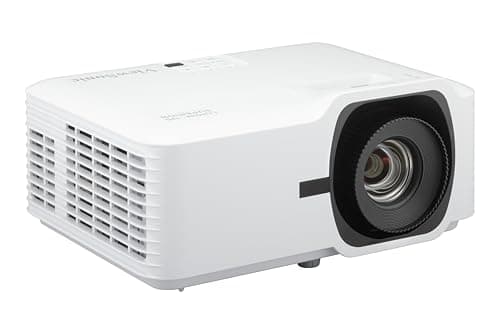
BenQ vs ViewSonic
$949 vs $1350
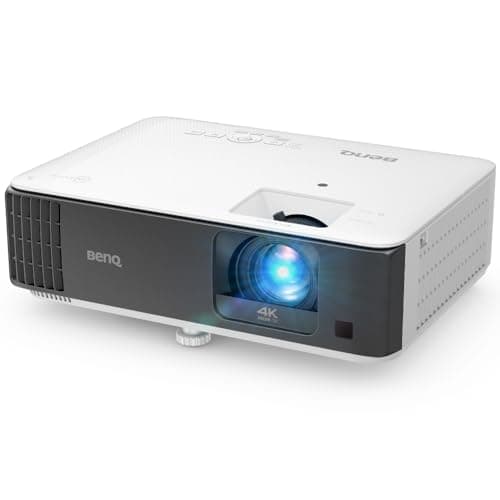
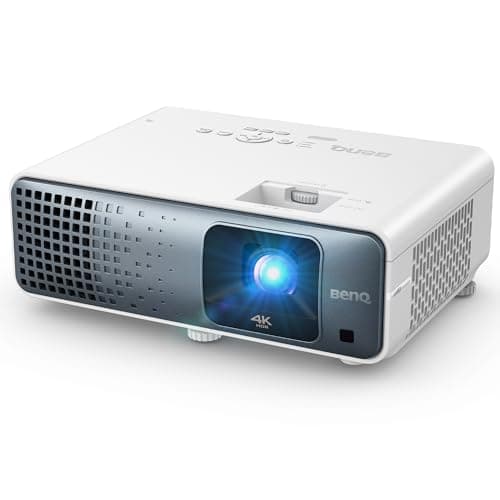
BenQ vs BenQ
$1399 vs $1998
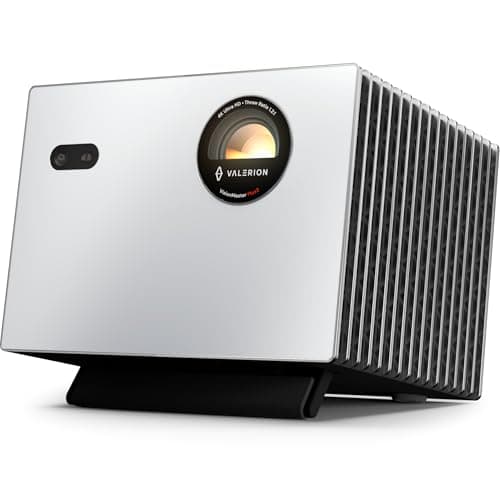
Valerion vs ViewSonic
$1499 vs $1350
BenQ vs ViewSonic
$1599 vs $1350
Optoma vs ViewSonic
$999 vs $1350
BenQ vs Optoma
$1399 vs $999
Optoma vs ViewSonic
$970 vs $1350
BenQ vs BenQ
$1599 vs $1399
BenQ vs ViewSonic
$1998 vs $1350
BenQ vs Valerion
$1399 vs $1499
BenQ vs ViewSonic
$1399 vs $1623
Explore Other Categories
Popular comparisons across the site




Ask AI
Get instant answers about specs
Get the Deets
Ask our AI assistant
Ask Deets anything!