Our Verdict
FLASHFORGE AD5X Wins
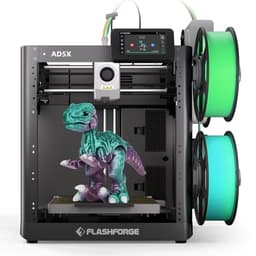
Its compatibility with CF materials without requiring a separate enclosure is also a key advantage for advanced users. The Bambu Lab P1S, however, with its explicit 256x256x256mm enclosed build chamber and robust support for diverse filaments like ABS and PC, is the better pick for users prioritizing consistent performance with higher-temp, warp-prone materials where a known, controlled environment is paramount.
Bottom Line: FLASHFORGE AD5X is the better choice. Its compatibility with CF materials without requiring a separate enclosure is also a key advantage for advanced users.
In-Depth Analysis
How they compare in practice
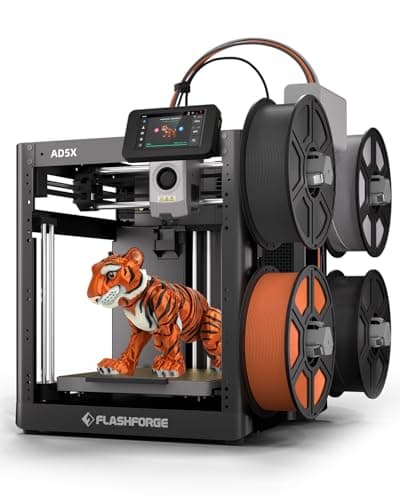
The BAMBULAB P1S and FLASHFORGE AD5X represent two distinct philosophies in desktop FDM 3D printing, each catering to different user priorities. This enclosure is critical for maintaining stable internal temperatures, directly translating to superior print quality and reduced warping when using high-temperature materials like ABS, PA, and PC. Users needing to produce functional, dimensionally accurate parts will find the P1S's known 256x256x256mm build volume and consistent auto bed leveling highly reassuring. While its 500mm/s max print speed is fast, its multi-color capability requires the additional purchase of an AMS unit, impacting the out-of-the-box experience. Its impressive 600mm/s print speed offers a tangible advantage for users focused on rapid prototyping or churning out models quickly, making it a productivity booster. The AD5X's standout feature is its built-in 4-color printing system, allowing for immediate multi-material and multi-color creations without further investment. This is a significant differentiator from the P1S. Furthermore, its explicit compatibility with Carbon Fiber (CF) filaments broadens its utility for structural or specialized applications. However, the lack of an explicitly stated enclosed chamber, and an 'UNKNOWN' build volume in the specifications, introduces some uncertainty regarding environmental control for highly sensitive materials. While the AD5X boasts CoreXY with vibration compensation, ensuring print stability, the P1S offers a more transparent and controlled environment for engineering-grade materials.
Key Differences
The most significant spec differences at a glance
Max Print Speed Mm S
17% lessAdvantages
Where each product wins

FLASHFORGE
- Max Print Speed Mm S: 17% higher (500.0 vs 600.0)
Which to Pick for Your Situation
Concrete scenarios with a clear recommendation
For rapid prototyping or small batch production.
FLASHFORGEWith a top speed of 600mm/s, the FLASHFORGE AD5X can complete prints faster than the Bambu Lab P1S's 500mm/s, boosting productivity.
For printing engineering-grade, warp-prone materials like ABS or PC.
BAMBULABThe Bambu Lab P1S features a fully enclosed build chamber, crucial for maintaining stable temperatures and preventing warping with sensitive filaments.
For users wanting immediate 4-color printing without extra purchases.
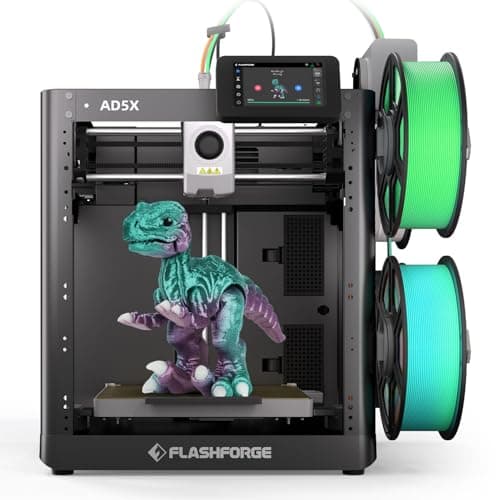
FLASHFORGEThe FLASHFORGE AD5X includes a built-in 4-color printing system, whereas the Bambu Lab P1S requires a separate AMS unit for multi-color functionality.
Who Should Buy Which?
Find the right product for your needs

Buy BAMBULAB if...
Bambu Lab P1S
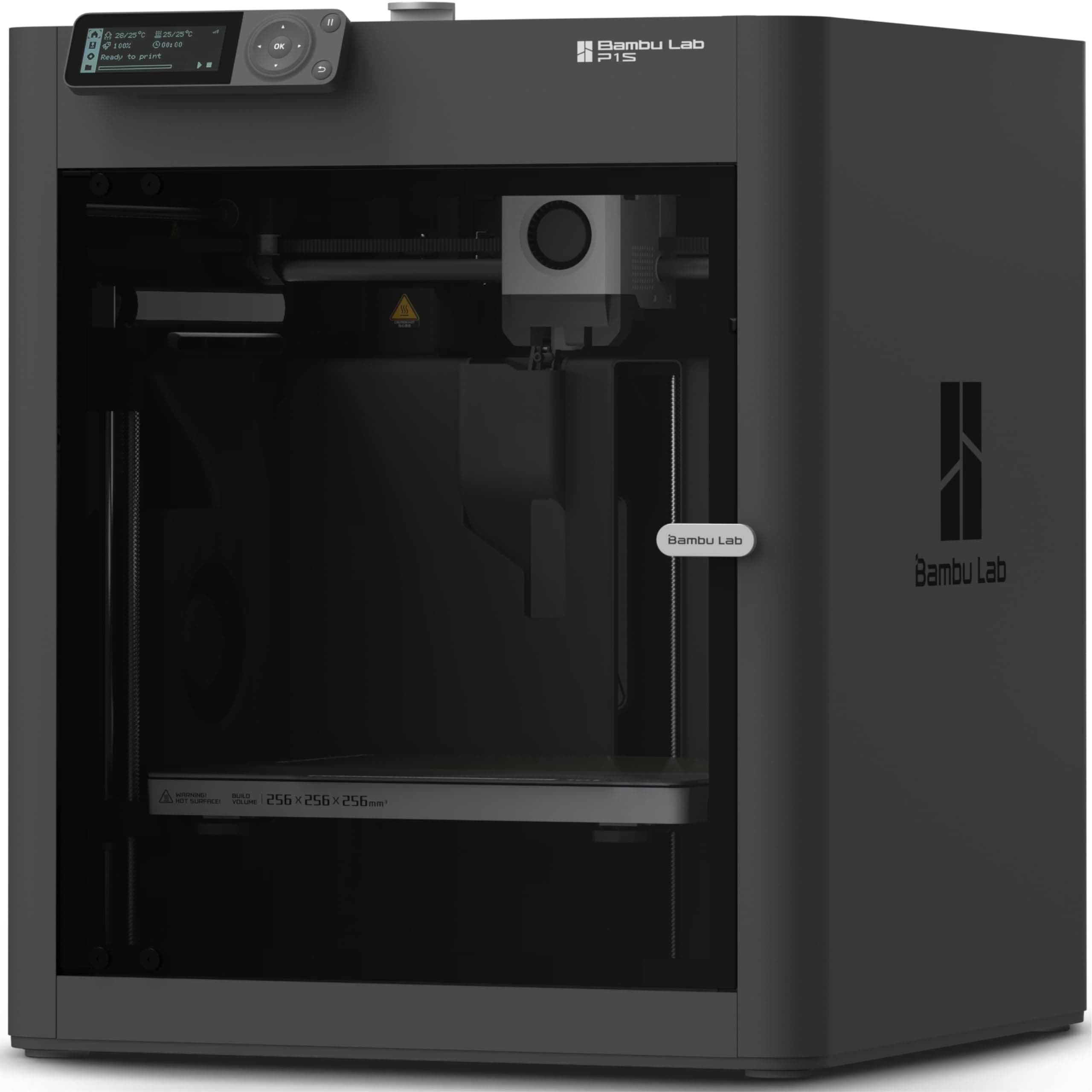
The ideal buyer for the BAMBULAB Bambu Lab P1S is an enthusiast or professional who prioritizes consistent, high-quality prints, especially when working with challenging filaments that are prone to warping and cracking. This user deeply values a controlled printing environment for materials like ABS, PA, or PC, where the P1S's fully enclosed build chamber is a critical asset for maintaining stable temperatures and ensuring optimal layer adhesion. They need a printer that delivers reliable results for functional prototypes, engineering parts, or intricate models that demand thermal stability and precision across its generous 256x256x256mm build volume. This buyer might eventually consider multi-color printing via a separate AMS unit, but their immediate focus is on robust single-color results from a diverse range of standard and advanced filaments, foregoing the Flashforge AD5X's integrated 4-color system and slightly higher speed for guaranteed environmental control and material integrity.

Buy FLASHFORGE if...
4-Color
The FLASHFORGE AD5X is perfectly suited for the maker or small business owner who prioritizes rapid production, creative multi-color capabilities, and a keen eye on their budget. This buyer is driven by efficiency, appreciating the AD5X's impressive 600mm/s print speed for churning out prototypes or batch-producing models quickly. Their projects often involve aesthetic complexity or require integrating multiple colors, making the built-in 4-color printing system a significant draw over requiring an additional accessory. They might also be interested in experimenting with more robust materials like Carbon Fiber (CF), which the AD5X explicitly supports. This buyer is willing to accept the lack of an explicit enclosed chamber, perhaps relying on less warp-prone filaments or managing their print environment, in favor of speed, multi-color flexibility, and cost savings compared to the Bambu Lab P1S.
Spec Comparison
9 specs compared
| Specification |  |  |
|---|---|---|
| Rating | 4.6(442) | 4.0(407) |
| Build Volume mm | 256x256x256 | UNKNOWN |
| Max Print Speed mm S | 500 | 600 |
| Leveling Type | Auto | Auto |
| Enclosed | Yes | — |
| Weight | 38.9 lbs | — |
| Printer Type | FDM | FDM |
| Multi Color Support | Yes | Yes |
| Model Number | — | 6937120321521 |
| Filament Sensor | — | Yes |
Swipe horizontally to see all columns
Pros & Cons
Quick overview of strengths and weaknesses
BAMBULAB Bambu Lab P1S
- 500mm/s max print speed for faster output.
- Enclosed build chamber handles advanced filaments.
- Auto bed leveling for consistent first layers.
- Quick setup: ready to print in 15 minutes.
- Multi-color printing needs separate AMS unit.
- Does not support carbon or glass fiber filaments.
FLASHFORGE 4-Color
- Prints at 600mm/s for rapid output.
- Supports 4-color printing simultaneously.
- Compatible with PLA, TPU, PETG, and CF materials.
- Full auto-leveling ensures consistent first layer.
- 4-color system increases material waste potential.
- Multi-material system may require more maintenance.
- Lacks explicit mention of an enclosed print chamber.
Frequently Asked Questions
Common questions about this comparison
Which printer offers faster out-of-the-box printing?
The FLASHFORGE AD5X boasts a max print speed of 600mm/s, making it 100mm/s faster than the Bambu Lab P1S, which peaks at 500mm/s.
Do both printers support multi-color printing?
Yes, both do. The FLASHFORGE AD5X includes an integrated 4-color system. The Bambu Lab P1S supports multi-color, but requires the separate purchase of an AMS unit.
Is an enclosed build chamber important, and which printer has one?
An enclosed chamber is vital for printing advanced, warp-prone filaments like ABS or PC. The Bambu Lab P1S explicitly features a fully enclosed design for better temperature control.
What is the build volume of these printers?
The Bambu Lab P1S offers a generous 256x256x256mm build volume. The FLASHFORGE AD5X's build volume is not explicitly specified in the provided information.
Which printer is better for compatibility with carbon fiber materials?
The FLASHFORGE AD5X explicitly supports CF materials, making it a better choice for those applications. The Bambu Lab P1S does not support carbon or glass fiber filaments.
Related Comparisons
Similar products people compare
BAMBULAB vs FLASHFORGE
ELEGOO vs FLASHFORGE
BAMBULAB vs FLASHFORGE
FLASHFORGE vs FLASHFORGE
BAMBULAB vs FLASHFORGE
BAMBULAB vs Comgrow
BAMBULAB vs ELEGOO
Creality vs FLASHFORGE
BAMBULAB vs Comgrow
BAMBULAB vs Creality
ELEGOO vs FLASHFORGE
FLASHFORGE vs FLASHFORGE
BAMBULAB vs ELEGOO
BAMBULAB vs Creality

BAMBULAB vs ELEGOO
Explore Other Categories
Popular comparisons across the site





Ask AI
Get instant answers about specs
Get the Deets
Ask our AI assistant
Ask Deets anything!