Our Verdict
ViewSonic LX700-4K Wins
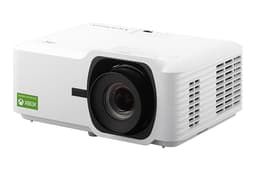
It offers a significantly brighter image at 4000 ANSI lumens compared to BenQ's 3200 lumens, crucial for ambient light viewing, and boasts a superior 4.2ms input lag for 4K gaming versus BenQ's 16ms at 4K. All these advantages come at a considerably lower price of $1635.1 vs $1998.0. The BenQ TK710 is the better pick for users requiring greater installation flexibility due to its vertical lens shift, or those prioritizing 1080p high-refresh-rate gaming with its 4ms lag at 240Hz.
Bottom Line: ViewSonic LX700-4K is the better choice. It offers a significantly brighter image at 4000 ANSI lumens compared to BenQ's 3200 lumens, crucial for ambient light viewing, and boasts a superior 4.
In-Depth Analysis
How they compare in practice
The ViewSonic LX700-4K positions itself as a dominant force in value for a 4K laser projector, primarily due to its striking brightness and exceptional gaming performance at a more accessible price point. With a formidable 4000 ANSI lumens, the ViewSonic effortlessly handles rooms with moderate ambient light, making it suitable for daytime viewing or living spaces that aren't completely blackout-enabled. This contrasts with the BenQ TK710's 3200 ANSI lumens, which, while bright, will feel notably dimmer and more washed out in similar conditions. For many users, this extra brightness translates directly into a more versatile entertainment hub, allowing for spontaneous viewing without the need to meticulously control lighting.Gaming is another battleground where the ViewSonic LX700-4K clearly shines, especially for 4K enthusiasts. Its 4.2ms input lag for 4K content is incredibly responsive, providing an almost instantaneous connection between controller and action on screen. This makes it a formidable choice for competitive gamers where every millisecond counts. The BenQ TK710, while offering a similar 4ms lag at 1080p/240Hz, falls short for true 4K gaming, presenting a higher 16ms input lag. This difference, though seemingly small, can be perceptible to dedicated gamers, potentially impacting fast-paced gameplay.However, the BenQ TK710 carves out its niche with superior installation flexibility, a critical factor for home theater enthusiasts. Its vertical lens shift feature allows for precise image placement without resorting to digital keystone correction, which can degrade image quality. This is a significant advantage over the ViewSonic LX700-4K, which lacks any lens shift, relying solely on keystone correction for image geometry adjustments. For those with challenging room layouts or specific screen mounting preferences, the BenQ offers a much less compromised setup experience. While both projectors deliver native 4K resolution and employ a long-lasting laser light source, the ViewSonic’s lower price of $1635.1 makes its combination of brightness and low 4K input lag an exceptional value proposition compared to the BenQ’s $1998.0 tag. Ultimately, the choice hinges on whether uncompromising 4K gaming and bright room performance outweigh the desire for advanced installation features.
Key Differences
The most significant spec differences at a glance
Brightness Ansi Lumens
20% lessGaming Input Lag Ms
281% moreAdvantages
Where each product wins

BenQ
- Gaming Input Lag Ms: 281% higher (16 vs 4.2)

ViewSonic
- Brightness Ansi Lumens: 20% higher (3200 vs 4000)
Which to Pick for Your Situation
Concrete scenarios with a clear recommendation
For a dedicated home theater room (darkened)
BenQIn a fully dark environment, the BenQ's vertical lens shift provides precise image alignment without digital degradation, crucial for maximizing native 4K picture quality.
For a living room with ambient light
ViewSonicThe ViewSonic's 4000 ANSI lumens delivers a significantly brighter and more viewable image than the BenQ's 3200 lumens when battling moderate ambient light.
For competitive 4K console gaming
ViewSonicWith an ultra-low 4.2ms input lag at 4K, the ViewSonic offers a far more responsive gaming experience compared to the BenQ's 16ms at 4K.
For a budget-conscious 4K upgrade
ViewSonicThe ViewSonic offers superior brightness and 4K gaming performance for $1635.1, representing a better overall value than the BenQ at $1998.0.
Who Should Buy Which?
Find the right product for your needs

Buy BenQ if...
BenQ TK710 4K Laser
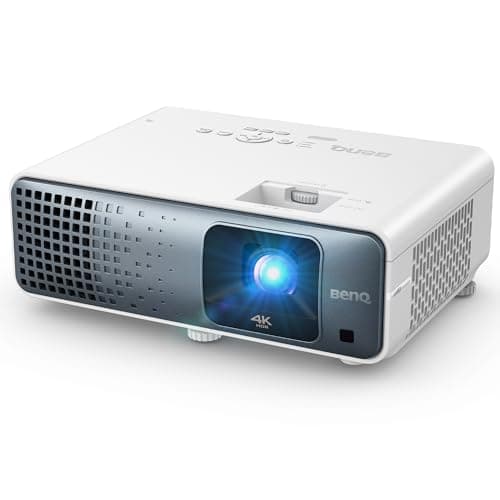
The BenQ TK710 is tailor-made for the discerning home theater enthusiast or the gamer who values installation precision and high refresh rate 1080p gaming above all else. This buyer typically has a dedicated viewing space, perhaps a basement theater or a living room where they can control ambient light, ensuring they can fully appreciate its native 4K UHD resolution. Their priorities include pristine image quality with minimal digital manipulation, making the vertical lens shift a non-negotiable feature for perfectly aligned, unwarped visuals without resorting to image-degrading keystone correction. They might be setting up in a challenging space where a perfect ceiling mount isn't possible, and the lens shift offers invaluable flexibility. Furthermore, this user might be an avid PC gamer who prioritizes ultra-smooth motion over raw 4K resolution in competitive titles, taking full advantage of the BenQ's impressive 4ms input lag at 1080p/240Hz. While its 16ms 4K input lag is higher than some rivals, they understand the trade-offs and might play a mix of casual 4K games and competitive 1080p titles. They are willing to pay the premium price of $1998.0 for these specific advantages, acknowledging that they are giving up the ViewSonic's superior ambient light performance and lower 4K gaming input lag for a more adaptable setup and specific high-refresh gaming niche.

Buy ViewSonic if...
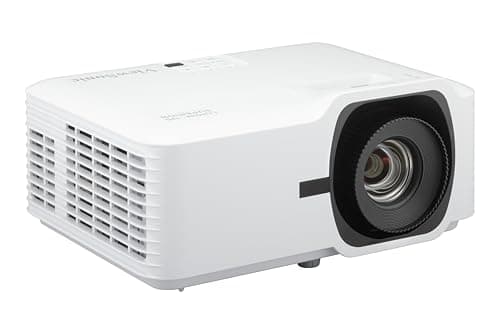
ViewSonic LX700-4K 3500 Lumens
The ViewSonic LX700-4K is the ideal choice for the practical, value-driven buyer seeking a versatile, high-performance 4K laser projector that excels in everyday living environments and delivers a competitive edge in 4K gaming. This user often plans to use their projector in a multi-purpose room, like a living room or family room, where complete darkness isn't always achievable. Their priority is a bright, vibrant image that can stand up to some ambient light, and the ViewSonic's impressive 4000 ANSI lumens delivers exactly that, ensuring content remains punchy and watchable throughout the day. This buyer is also likely a dedicated console or PC gamer who demands minimal latency for the most immersive and responsive 4K gaming experience. The LX700-4K's exceptionally low 4.2ms input lag at 4K is a major draw, providing a distinct advantage in fast-paced action or competitive titles where split-second reactions matter. They appreciate getting top-tier gaming performance and superior brightness at a compelling price point of $1635.1, recognizing its strong value proposition. While they forgo advanced installation features like lens shift, they are comfortable with standard keystone correction and might have a simpler setup or a less demanding installation environment, happily trading that flexibility for a brighter picture and faster 4K gaming responsiveness.
Spec Comparison
10 specs compared
| Specification |  |  |
|---|---|---|
| Price | $1998 | $1623 |
| Rating | 4.4(412) | 4.0(111) |
| Brightness Ansi Lumens | 3200 | 4000 |
| Native Resolution | Native 4K | Native 4K |
| Gaming Input Lag Ms | 16 | 4.2 |
| Lens Shift | Yes | — |
| Hdr Support | Yes | Yes |
| Light Source | Laser | Laser |
| Keystone Correction | Full (H+V) | Full (H+V) |
| Hdmi Ports | — | 2 |
| Throw Ratio | — | 1.3 |
| Model Number | — | LX700-4K |
Swipe horizontally to see all columns
Pros & Cons
Quick overview of strengths and weaknesses
BenQ TK710 4K
- 3200 lumens supports viewing in ambient light
- Laser light source ensures extended lifespan
- Native 4K UHD delivers sharp image detail
- Low 4ms input lag at 1080p/240Hz for gaming
- 4K gaming input lag is 16ms, not 4ms
- Optimal contrast needs a fully dark environment
- Vertical lens shift only, lacks horizontal adjustment
ViewSonic LX700-4K 3500
- 4000 ANSI lumens ensures bright images.
- Native 4K resolution delivers sharp visuals.
- 4.2ms input lag for responsive gaming.
- Laser light source provides long operating life.
- Lacks lens shift for advanced placement.
- Only two HDMI inputs, may limit connections.
- No integrated smart TV functions.
Frequently Asked Questions
Common questions about this comparison
Which projector is better for gaming at native 4K resolution?
The ViewSonic LX700-4K is superior for 4K gaming, offering an impressive 4.2ms input lag. The BenQ TK710 has a higher 16ms input lag for 4K content, though it achieves 4ms at 1080p/240Hz.
Can these projectors be used in rooms with some lights on?
Yes, but the ViewSonic LX700-4K with 4000 ANSI lumens will perform significantly better in rooms with ambient light than the BenQ TK710's 3200 ANSI lumens, producing a brighter image.
What kind of light source do these projectors use, and what are its benefits?
Both utilize a laser light source. This provides a long operating life (typically 20,000+ hours), consistent brightness, and quicker on/off times compared to traditional lamp-based projectors.
Does either projector offer flexible installation options like lens shift?
The BenQ TK710 offers vertical lens shift for easier, distortion-free image positioning. The ViewSonic LX700-4K lacks lens shift, relying solely on digital keystone correction for adjustments.
Is there a significant price difference between the two models?
Yes, the ViewSonic LX700-4K is priced at $1635.1, making it considerably more affordable than the BenQ TK710, which costs $1998.0, while offering higher brightness and lower 4K input lag.
Related Comparisons
Similar products people compare
BenQ vs Valerion
$1998 vs $1999
BenQ vs ViewSonic
$1599 vs $1623
BenQ vs BenQ
$1399 vs $1998
BenQ vs BenQ
$1599 vs $1998
Valerion vs ViewSonic
$1499 vs $1623
BenQ vs BenQ
$1998 vs $2799
BenQ vs NexiGo
$1998 vs $2299
BenQ vs BenQ
$1998 vs $2199
Valerion vs ViewSonic
$1999 vs $1623
BenQ vs Valerion
$1998 vs $1499
AWOL VISION vs BenQ
$2299 vs $1998
AWOL VISION vs BenQ
$2499 vs $1998
BenQ vs ViewSonic
$1998 vs $1350
NexiGo vs ViewSonic
$2299 vs $1623
AWOL VISION vs ViewSonic
$2299 vs $1623
Explore Other Categories
Popular comparisons across the site




Ask AI
Get instant answers about specs
Get the Deets
Ask our AI assistant
Ask Deets anything!