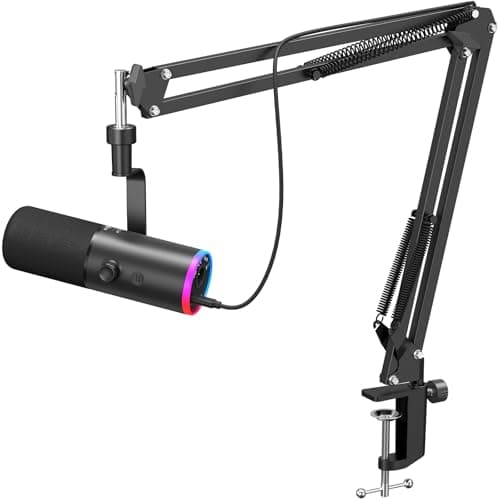
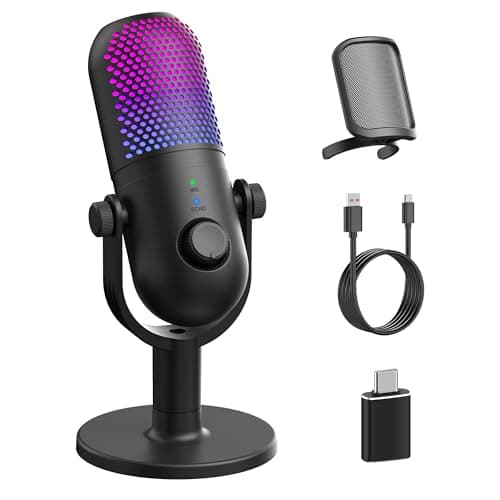
Our Verdict
TONOR TD510 AIR S H+ Wins
While both microphones offer a 48kHz sample rate and zero-latency monitoring, the TONOR TD510 AIR S H+ provides superior versatility with its dual USB/XLR connection, a feature absent from the GUEVWES ZTD39 which is limited to USB. The GUEVWES ZTD39 is the better pick for budget-conscious users who only require a basic USB microphone and appreciate the included accessories.
Bottom Line: TONOR TD510 AIR S H+ is the better choice. While both microphones offer a 48kHz sample rate and zero-latency monitoring, the TONOR TD510 AIR S H+ provides superior versatility with its dual USB/XLR connection, a feature absent from the GUEVWES ZTD39 which is limited to USB.
In-Depth Analysis
How they compare in practice
The TONOR TD510 AIR S H+ and GUEVWES ZTD39 both target the gaming and streaming audience with essential features, but their real-world utility diverges primarily due to connectivity and bundled value. Both units boast a 48kHz sample rate and zero-latency monitoring, ensuring clear audio capture and real-time feedback crucial for live applications. However, the TONOR TD510 AIR S H+ sets itself apart with its dual USB/XLR output. This means a user can plug it directly into a PC via USB for plug-and-play convenience, or connect it to an audio interface or mixer via XLR for more advanced setups, potentially in a home studio or a growing streaming rig. This flexibility translates into a longer lifespan for the microphone as a user's setup evolves. In contrast, the GUEVWES ZTD39 is strictly a USB-only microphone. While highly convenient for direct connection to PC, Mac, and even PS4/5, it lacks the upgrade path that XLR offers. This makes it an excellent choice for a new streamer or gamer who needs a complete, affordable solution without additional purchases. Both microphones feature noise reduction capabilities – "AI noise cancellation" for TONOR and "One-tap noise reduction" for GUEVWES. While the effectiveness might vary, both aim to mitigate background distractions, a critical feature for any recording environment. The TONOR's integrated volume control and tap mute button provide hands-on control, mirroring the GUEVWES's quick mute. Ultimately, the TONOR offers a slightly more professional entry point with its XLR option, while the GUEVWES prioritizes affordability and immediate usability for the casual user.
Which to Pick for Your Situation
Concrete scenarios with a clear recommendation
For a budding streamer with future upgrade plans
TONORThe TONOR TD510 AIR S H+ offers dual USB/XLR connectivity, allowing for immediate USB use and future integration with professional audio interfaces.
For podcasting on a laptop with basic needs
GUEVWESThe GUEVWES ZTD39 offers simple plug-and-play USB connectivity and zero-latency monitoring at a lower price, making it ideal for straightforward laptop setups.
For a versatile home studio setup
TONORThe TONOR TD510 AIR S H+ with its XLR output provides greater flexibility for connecting to mixers and audio interfaces, a key for studio environments.
Who Should Buy Which?
Find the right product for your needs

Buy TONOR if...
Dynamic Gaming Microphone
The ideal buyer for the TONOR TD510 AIR S H+ is an aspiring streamer, podcaster, or gamer who values long-term versatility and potential for system expansion. This individual might start with a simple USB setup but envisions upgrading to a more professional audio interface or mixer in the future. Their priorities include clear audio capture, excellent noise reduction, and the flexibility to adapt their equipment as their content creation journey evolves. They appreciate the integrated controls like gain control, tap mute, and 3.5mm headphone jack for zero-latency monitoring, providing a smooth user experience. They don't mind that it lacks a dedicated software suite, as the hardware features meet their essential needs. They are giving up the immediate cost savings and included accessories of the GUEVWES, but gain crucial connectivity options.

Buy GUEVWES if...
USB Microphone
The GUEVWES ZTD39 is perfectly suited for the casual gamer, student, or new content creator seeking an immediate, affordable, and effective microphone solution without any fuss. This buyer prioritizes plug-and-play simplicity, a low entry price, and essential features for clear communication or basic recording. They primarily use a PC, Mac, or PlayStation console and don't foresee needing XLR connectivity for professional audio setups. They value features like the quick mute button with an LED indicator and zero-latency monitoring for immediate feedback during calls or streams. While they won't get advanced software or XLR versatility, the GUEVWES ZTD39 fulfills their core need for a reliable USB microphone that's ready to go right out of the box, without overcomplicating their setup or overspending.
Spec Comparison
8 specs compared
| Specification |  |  |
|---|---|---|
| Rating | 4.5(676) | 4.3(936) |
| Sample Rate | 48 kHz | 48 kHz |
| Connection | USB/XLR | USB |
| Zero-Latency | Yes | Yes |
| Mute Button | Yes | Yes |
| Gain Control | Yes | Yes |
| Model Number | TD510 Air S H+ | ZTD39 |
| Software | None | None |
| Headphone Out | Yes | — |
Swipe horizontally to see all columns
Pros & Cons
Quick overview of strengths and weaknesses
TONOR Dynamic Gaming Microphone
- AI noise cancellation reduces background sound.
- Dual USB/XLR outputs for flexible connections.
- Zero-latency monitoring via 3.5mm headphone jack.
- Integrated volume control and tap mute button.
- No dedicated software for advanced mic settings.
- RGB lighting provides no functional utility.
GUEVWES USB Microphone
- One-tap noise reduction clears background sound.
- Zero-latency audio monitoring for real-time feedback.
- Plug-and-play: PC, Mac, PS4/5, and Android devices.
- Quick mute button with clear LED status indicator.
- Not compatible with Xbox consoles.
- Lacks dedicated software for advanced settings.
- RGB lighting offers no functional benefit.
Frequently Asked Questions
Common questions about this comparison
Do both microphones offer zero-latency monitoring?
Yes, both the TONOR TD510 AIR S H+ and the GUEVWES ZTD39 feature zero-latency monitoring, allowing you to hear your audio in real-time without delay.
What is the primary connectivity difference between the two mics?
The TONOR TD510 AIR S H+ offers both USB and XLR connectivity, providing more versatility. The GUEVWES ZTD39 is limited to USB connection only.
What sample rate do these microphones use?
Both microphones capture audio at a 48kHz sample rate, which is a standard quality for streaming, gaming, and general vocal recording.
Does the GUEVWES ZTD39 come with any accessories?
Yes, the GUEVWES ZTD39 includes a pop filter, a desktop stand, and a Type-C adapter, offering a complete out-of-the-box solution.
Which microphone is better for reducing background noise?
The TONOR TD510 AIR S H+ features 'AI noise cancellation,' while the GUEVWES ZTD39 has 'one-tap noise reduction.' Both aim to reduce background sound effectively.
Related Comparisons
Similar products people compare
Explore Other Categories
Popular comparisons across the site



Ask AI
Get instant answers about specs
Get the Deets
Ask our AI assistant
Ask Deets anything!