Our Verdict
Dyson Purifier Cool PC1 Wins
Its advanced HEPA H13 filtration and fully sealed system also justify the premium.
Bottom Line: Dyson Purifier Cool PC1 is the better choice. Its advanced HEPA H13 filtration and fully sealed system also justify the premium.
In-Depth Analysis
How they compare in practice
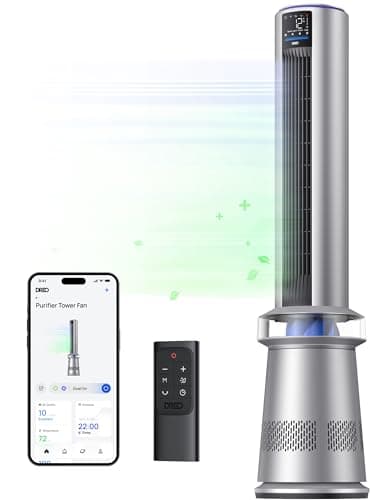
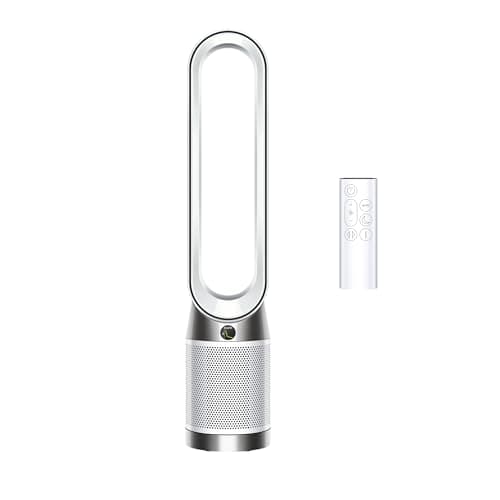
The core difference between the Dreo MC710S and the Dyson Purifier Cool PC1 lies in their transparency and certified air purification performance versus raw fan power and affordability. This provides buyers with a quantifiable metric for its ability to clean air, an essential detail for an air purifier. Its HEPA H13 filtration system is also fully sealed, ensuring that purified air doesn't leak back into the room, a critical factor for true air quality improvement, especially for allergy sufferers. The integrated activated carbon filter also tackles gases and odors, a feature absent or unspecified in the Dreo. It boasts an impressive 27ft/s airflow velocity, capable of reaching 40 ft, suggesting superior air circulation and cooling power. While it features "True HEPA" filtration, its lack of a CADR rating or specific room coverage makes it challenging to assess its air purification efficiency compared to the Dyson. This implies that while it will capture particles, its speed and effectiveness for a given room size are uncertified, potentially requiring longer operation to achieve comparable purification results in larger spaces. From a user experience standpoint, both offer smart features like app control and smart sensors for air quality, enhancing convenience. However, the Dyson's 350° oscillation provides broader air distribution compared to the Dreo's 120°, which could be beneficial in larger, open-plan areas. The Dreo's standout feature is its remarkably low noise output of 25dB, making it exceptionally quiet for bedrooms or offices where minimal disturbance is paramount. The Dyson, while generally quiet, does not provide a comparable low-end noise specification. Ultimately, the Dyson Purifier Cool PC1 presents a more complete and certified air purification solution for those serious about measurable air quality improvement in medium-sized rooms, despite its higher cost. The Dreo MC710S, on the other hand, offers a compelling value proposition for users who prioritize powerful cooling airflow, whisper-quiet operation, and basic particle filtration at a more budget-friendly price, even if the purification claims aren't as rigorously detailed. The trade-off is often between certified performance and a more versatile, budget-conscious fan-first approach.
Key Differences
The most significant spec differences at a glance
Cadr Smoke
100% lessCoverage Sq Ft
100% lessAdvantages
Where each product wins

Dyson
- Cadr Smoke: 100% higher (0 vs 76)
- Coverage Sq Ft: 100% higher (0 vs 400)
Which to Pick for Your Situation
Concrete scenarios with a clear recommendation
For optimal air purification in a master bedroom or living room
DysonThe Dyson provides a smoke CADR of 76 and covers 400 sq ft, offering certified and effective purification for medium-sized rooms.
For powerful cooling airflow and quiet operation in a bedroom
DreoThe Dreo generates 27ft/s airflow for strong cooling and operates at a very low 25dB, ideal for undisturbed sleep.
For managing allergies and odors in a home office
DysonThe Dyson's HEPA H13 filter with activated carbon captures fine particles and removes gases/odors, crucial for allergy relief and fresh air.
Who Should Buy Which?
Find the right product for your needs
Buy Dreo if...
MC710S
The ideal buyer for the Dreo MC710S is someone who prioritizes powerful, widespread cooling airflow and whisper-quiet operation, with basic air filtration as a welcome secondary benefit. They might live in an apartment or a smaller home where effective air circulation across a room is key, benefiting from the Dreo's 27ft/s airflow velocity that reaches up to 40 ft distance. While they value cleaner air, they aren't necessarily seeking certified CADR ratings or battling severe allergies, making the "True HEPA" filtration sufficient for their needs to capture common dust and pet dander. This user values the convenience of smart features like app control, scheduling, and Alexa compatibility for seamless integration into their smart home. The remarkably low 25dB noise level is a significant draw, making it perfect for bedrooms, nurseries, or quiet home offices where intrusive fan noise would be disruptive. They are willing to overlook the absence of a specific CADR rating or room coverage because their primary goal is a powerful, quiet fan that also happens to filter the air, offering a great combination of features for its price. What they are giving up is the rigorously tested and certified purification efficacy that a product like the Dyson provides.

Buy Dyson if...
Purifier Cool PC1
The Dyson Purifier Cool PC1 is best suited for individuals who are serious about measurable air quality improvement and are willing to invest a premium for certified performance. This buyer typically suffers from allergies, lives in an area with pollution concerns, or simply desires the reassurance of a scientifically validated air purification system. Their priorities extend beyond just cooling; they specifically need to remove fine particulate matter, gases, and odors from their living space. The Dyson's HEPA H13 filtration, which captures 99.97% of particles down to 0.3 microns, and its activated carbon filter for gases and odors, directly address these advanced purification needs. This user appreciates the transparency of a stated smoke CADR of 76 and a coverage area of 400 sq ft, providing a clear expectation of the device's efficacy. They value the fully sealed filtration system, understanding that this prevents polluted air from bypassing the filters. They will likely use the app for detailed air quality monitoring and appreciate the broader 350° oscillation for even air distribution. What they are giving up is the lower price point and the potentially quieter operation of the Dreo at its absolute lowest fan speed.
Spec Comparison
7 specs compared
| Specification | 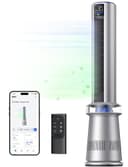 | 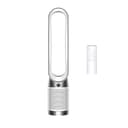 |
|---|---|---|
| Rating | 4.6(272) | 4.4(141) |
| Cadr Smoke | 0 | 76 |
| Coverage Sq Ft | 0 | 400 |
| Noise Level db Min | 25 dB | — |
| Filter Type | True HEPA | HEPA H13 |
| Smart Sensor | Yes | Yes |
| WiFi | Yes | Yes |
| Model Number | — | TP11 |
Swipe horizontally to see all columns
Pros & Cons
Quick overview of strengths and weaknesses
Dreo MC710S
- Independent fan and purification motor control.
- Generates 27ft/s airflow, reaching 40 ft distance.
- True HEPA filtration captures 99.9% of 0.3µm particles.
- Low noise output, operates quietly at 25dB.
- No CADR rating for purification efficiency.
- Requires regular replacement of HEPA filters.
- Specific room coverage (sq ft) not clearly stated.
Dyson Purifier Cool PC1
- Captures 99.97% particles down to 0.3 microns.
- Activated carbon filter removes gases and odors.
- HEPA H13 fully sealed filtration system.
- Projects 76 gallons/sec airflow for cooling.
- Low smoke CADR of 76 for 400 sq ft coverage.
- Requires extended operation for full room purification.
Frequently Asked Questions
Common questions about this comparison
What is the main difference in air purification capability?
The Dyson Purifier Cool PC1 has a stated smoke CADR of 76 and covers 400 sq ft with HEPA H13 filtration. The Dreo MC710S uses True HEPA but lacks specific CADR or coverage ratings.
Which fan is quieter during operation?
The Dreo MC710S has a specified low noise output of 25dB, making it exceptionally quiet, especially for nighttime use. Dyson's minimum noise isn't specified but typically higher.
Does either product help with odors?
Yes, the Dyson Purifier Cool PC1 includes an activated carbon filter designed to capture gases and odors, enhancing overall air quality beyond particle removal.
Can I control these devices remotely?
Both the Dreo MC710S and Dyson Purifier Cool PC1 are Wi-Fi enabled and can be controlled via their respective smartphone apps, allowing remote adjustments and monitoring.
Related Comparisons
Similar products people compare
Explore Other Categories
Popular comparisons across the site

Ask AI
Get instant answers about specs
Get the Deets
Ask our AI assistant
Ask Deets anything!