Our Verdict
Creality K1C Wins
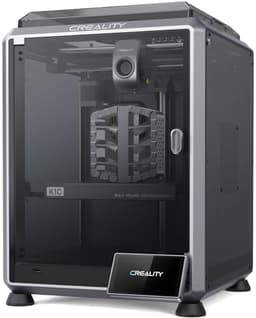
While both printers achieve 600mm/s max print speeds and feature auto-leveling, the K1C's larger 220x220x250mm build volume provides slightly more Z-axis flexibility than the AD5X's 220x220x220mm.
Bottom Line: Creality K1C is the better choice. While both printers achieve 600mm/s max print speeds and feature auto-leveling, the K1C's larger 220x220x250mm build volume provides slightly more Z-axis flexibility than the AD5X's 220x220x220mm.
In-Depth Analysis
How they compare in practice
The Creality K1C and Flashforge AD5X both represent the new wave of high-speed FDM printers, sharing an impressive 600mm/s maximum print speed and automated bed leveling, which significantly reduces setup time. However, their core differences cater to distinct user profiles. The K1C's standout feature is its fully enclosed build chamber, a non-negotiable for enthusiasts or professionals working with challenging filaments such as ABS, Nylon, or carbon fiber-infused materials. This enclosure maintains a stable internal temperature, preventing warping and improving layer adhesion, making the K1C a more versatile and reliable choice for advanced material printing up to its 300°C nozzle limit. Furthermore, the K1C includes an AI camera, offering remote monitoring and print failure detection, which adds a layer of convenience and reduces material waste, particularly for long prints. This feature opens up a world of creative possibilities for users focused on aesthetic prints, functional parts with visual differentiation, or prototyping multi-component designs in a single run. While it also boasts a 300°C direct drive extruder, the absence of an enclosed chamber means it's less suited for high-temperature, warp-prone filaments without external modifications or careful environmental control. Its build volume, 220x220x220mm, is slightly smaller on the Z-axis compared to the K1C's 220x220x250mm, a minor but occasionally relevant difference for taller objects. The K1C's "clog-free robust direct extruder" promises higher reliability, complemented by its open-source firmware which appeals to users who enjoy tinkering and customization. The AD5X, on the other hand, prioritizes ease of use with "1-click auto leveling" and interchangeable nozzles for optimizing detail or speed, making it appealing for users who want to jump straight into printing. Ultimately, the K1C offers a more robust platform for technical materials and print reliability, while the AD5X delivers an exciting multi-color experience at a more budget-friendly price point, albeit with limitations for certain advanced filaments.
Which to Pick for Your Situation
Concrete scenarios with a clear recommendation
For printing engineering-grade materials like carbon fiber
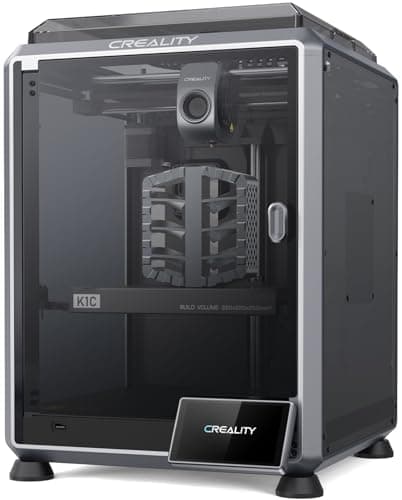
CrealityThe Creality K1C features an enclosed build chamber, essential for temperature stability when printing warp-prone filaments like carbon fiber.
For creative projects with multiple colors
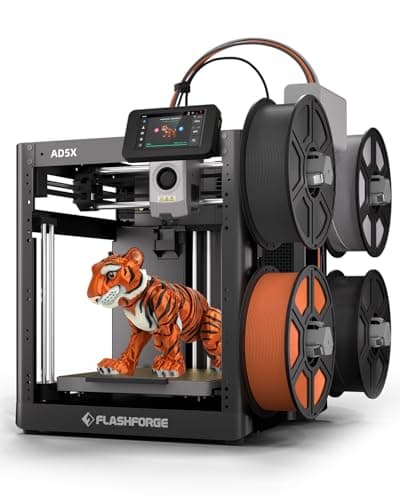
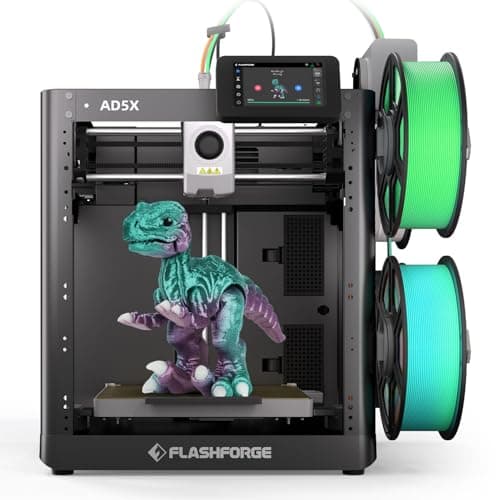
FLASHFORGEThe Flashforge AD5X offers multi-color printing support, allowing for up to 4 colors in a single print.
For remote print monitoring and failure detection
CrealityThe Creality K1C includes an AI camera for real-time print monitoring and automatic detection of printing errors.
Who Should Buy Which?
Find the right product for your needs
Buy Creality if...
K1C
The Creality K1C is ideally suited for the intermediate to advanced maker, small business owner, or educational institution that prioritizes material versatility, print reliability, and intelligent monitoring. This buyer frequently works with or plans to explore engineering-grade filaments such as carbon fiber composites, ABS, ASA, or Nylon, which demand a stable thermal environment to prevent warping and ensure optimal layer adhesion. The K1C's fully enclosed build chamber (220x220x250mm) is a non-negotiable for these materials, allowing users to leverage its 300°C max nozzle temperature effectively. They value the peace of mind offered by the integrated AI camera, which can detect print failures early, minimizing material waste and saving valuable time, especially during long or overnight prints. This buyer is not primarily interested in multi-color aesthetics but rather in functional strength and material performance.
Buy FLASHFORGE if...
AD5X Multi-Color 3D Printer
The Flashforge AD5X targets the creative enthusiast, hobbyist, or educator looking to add vibrant multi-color capabilities to their 3D printing projects without breaking the bank. They appreciate the convenience of its "1-click auto leveling" and the straightforward operation, making it suitable for those who want to start printing quickly without extensive technical setup. While its 220x220x220mm build volume is slightly smaller on the Z-axis than the K1C, it's perfectly adequate for most common projects. This buyer primarily prints with standard filaments like PLA, PETG, and basic ABS, where an enclosed chamber isn't strictly necessary or can be managed with simpler solutions. They might be upgrading from a basic single-color printer or are entering the hobby and see multi-color printing as a compelling feature. They are less concerned with printing highly specialized, warp-prone engineering materials that require precise thermal control and are willing to forgo an AI camera for the benefit of simultaneous multi-color production and a lower initial investment.
Spec Comparison
10 specs compared
| Specification |  | 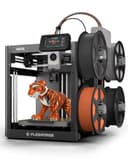 |
|---|---|---|
| Rating | 4.2(345) | 4.1(582) |
| Build Volume mm | 220x220x250 | 220x220x220 |
| Max Print Speed mm S | 600 | 600 |
| Leveling Type | Auto | Auto |
| Enclosed | Yes | — |
| Model Number | K1C | AD5X |
| Printer Type | FDM | FDM |
| Nozzle Temp Max C | 300 | 300 |
| Resume Print | — | Yes |
| WiFi | — | Yes |
| Multi Color Support | — | Yes |
Swipe horizontally to see all columns
Pros & Cons
Quick overview of strengths and weaknesses
Creality K1C
- Prints at 600mm/s; reduces print time.
- Supports carbon fiber and high-temp filaments.
- Direct extruder resists clogging; reliable feeding.
- AI camera monitors prints; detects failures.
- Requires replacement of activated carbon filters.
- Open-source firmware may require technical knowledge.
- Build volume 220x220x250mm limits part size.
FLASHFORGE AD5X Multi-Color 3D Printer
- Supports up to 4-color simultaneous printing
- 600mm/s print speed for rapid production
- 300C direct drive extruder handles diverse materials
- Automated bed leveling, 1-click operation
- 220x220x220mm build volume limits large prints
- Lacks enclosed chamber for high-temp materials
Frequently Asked Questions
Common questions about this comparison
What is the maximum print speed for both printers?
Both the Creality K1C and Flashforge AD5X can achieve an impressive maximum print speed of 600mm/s, significantly reducing print times for various projects.
Which printer is better for printing large objects?
The Creality K1C has a slightly larger build volume of 220x220x250mm (Z-axis is 30mm taller) compared to the Flashforge AD5X's 220x220x220mm.
Can both printers handle high-temperature filaments?
Both have a 300°C max nozzle temp. However, the K1C's enclosed chamber makes it more suitable for high-temp materials that benefit from a controlled environment.
Does either printer support multi-color printing?
Yes, the Flashforge AD5X supports multi-color printing, allowing users to print with up to four different colors simultaneously for diverse designs.
Is an enclosed chamber important for 3D printing?
An enclosed chamber, like on the K1C, is crucial for printing with certain filaments (e.g., ABS, Nylon) as it maintains consistent temperature, preventing warping and improving print quality.
Related Comparisons
Similar products people compare
ELEGOO vs FLASHFORGE
BAMBULAB vs FLASHFORGE
FLASHFORGE vs FLASHFORGE
Creality vs ELEGOO
ELEGOO vs FLASHFORGE
Creality vs ELEGOO
FLASHFORGE vs FLASHFORGE
ELEGOO vs FLASHFORGE
Creality vs FLASHFORGE
FLASHFORGE vs FLASHFORGE
BAMBULAB vs Creality
Comgrow vs FLASHFORGE
ELEGOO vs FLASHFORGE
Creality vs FLASHFORGE
Comgrow vs Creality
Explore Other Categories
Popular comparisons across the site






Ask AI
Get instant answers about specs
Get the Deets
Ask our AI assistant
Ask Deets anything!