Air Purifier Size Calculator
Enter your room dimensions to find the minimum CADR your air purifier needs to hit — then see real purifiers from our catalog that meet or beat that number.
The single most common air purifier mistake is buying the wrong size — almost always too small. Manufacturers list a "room size" on the box that quietly assumes 2 air changes per hour (ACH), which is barely enough to dilute indoor pollutants. For real performance — allergy relief, smoke filtration, COVID-era safer indoor air — you want 4-6 ACH, which roughly doubles the CADR you actually need.
CADR (Clean Air Delivery Rate) is the AHAM-certified measure of how much clean air a purifier produces per minute. It's reported for three particle types: smoke (smallest), dust, and pollen (largest). Smoke CADR is the right number to match because anything that cleans the smallest particles handles the larger ones easily. The calculator multiplies your room volume by your desired ACH and converts to the smoke CADR target.
Headroom matters too. A purifier sized exactly to your room runs at max fan speed constantly — loud, energy-hungry, and a candidate for getting unplugged. Sized 125-150% over your target, the same unit runs on medium or low and is quiet enough to leave on overnight. We filter our matches to units that exceed your minimum so you can pick the one with the right noise/price/features balance, not the bare minimum.
Your room
Air changes per hour
Minimum CADR
For a 300 sqft room with 8' ceilings (2,400 ft³)
Smoke CADR (the one that matters most)
200CFM
Dust
220 CFM
Pollen
200 CFM
Why smoke CADR? It's the toughest particle size to filter, so any purifier hitting this number will clean your room of dust and pollen too. Look for AHAM Verifide certification when shopping.
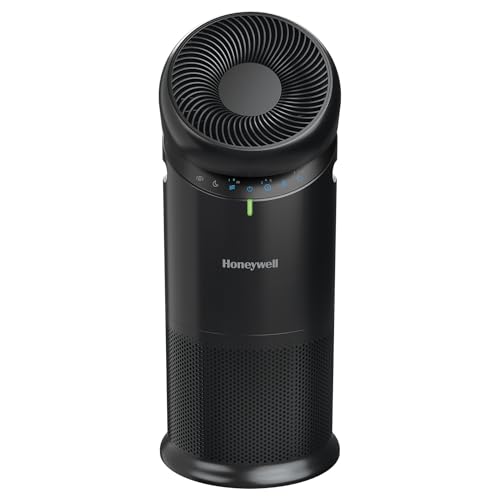
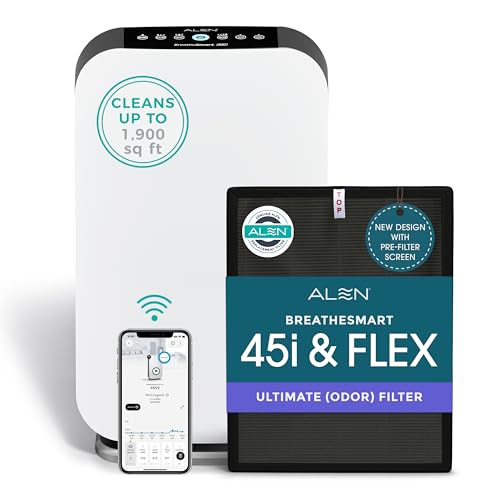
Purifiers that hit 200 CFM smoke CADR
Sorted by closest match to your needs, then by price. Real specs from our catalog.


How this calculator works
What is CADR and why does it matter?
Clean Air Delivery Rate measures cubic feet of filtered air a purifier delivers per minute, certified by AHAM. Higher CADR = bigger rooms cleaned faster. Look for the AHAM Verifide seal — manufacturer-claimed numbers without it are often inflated by 30-50%, since uncertified tests can be run in undersized chambers or with new filters that quickly degrade.
How is the minimum CADR for my room calculated?
Room volume (sqft × ceiling height) × air changes per hour ÷ 60 = required CFM. For most homes 4-5 ACH is plenty; allergies or smoke push you to 6 ACH; clinical settings (post-COVID, immunocompromised households) hit 8 ACH. The calculator above defaults to 5 ACH and lets you bump up if you have specific concerns.
Why focus on the smoke CADR number?
Smoke particles are the smallest of the three CADR test particles (0.09-1.0 microns), so any purifier that hits your target smoke CADR will easily handle dust (0.5-3 microns) and pollen (5-11 microns). Smoke is the worst-case design point. If wildfire smoke is a regular concern, also check whether the unit has an activated carbon stage for VOCs.
Should I oversize the purifier?
A bit, yes. Running an oversized purifier on its lowest, quietest setting filters as well as a smaller unit running flat-out — and uses less energy and noise. Aim for ~125-150% of your calculated CADR. Most purifiers are 2-3× louder on max than on medium, so headroom is the difference between "running it constantly" and "turning it off at night."
How often do I need to replace filters?
HEPA filters last 6-12 months at typical use; activated carbon filters 3-6 months (carbon saturates faster). Smart purifiers track filter life by run-hours, not calendar months, which is more accurate. Annual filter cost is usually $40-120 — factor this into the total cost-of-ownership when comparing models.
HEPA, H13, True HEPA — what's the difference?
True HEPA (US): 99.97% capture of 0.3-micron particles. H13 (EU): 99.95% at the most penetrating particle size. "HEPA-type" or "HEPA-like" without the True qualifier may only hit 95-99%, which sounds close but lets through 10x more particles. Always look for the specific certification.
Do air purifiers help with COVID and other viruses?
Yes — viral droplets attach to particles in the 0.3-1.0 micron range that HEPA filters capture efficiently. Run at 5-6 ACH for shared indoor spaces during illness in the home. UV and ionic stages are marketing add-ons; the HEPA filter is doing the work.
Should I run the purifier all the time?
Yes for allergy households, wildfire-prone areas, or anyone with respiratory conditions. The cost is small ($5-15/month in electricity) and the air quality benefit accumulates over hours, not minutes. Smart auto modes ramp up only when air quality sensors detect particles, which is a reasonable compromise.