Our Verdict
COCONISE Gaming Microphone (Product A) Wins
Priced only marginally higher at $23.99, Product A offers superior audio fidelity with its 192kHz sample rate, significantly higher than Product B's 48kHz. Its explicit Cardioid polar pattern also provides clearer sound capture by focusing on the speaker and reducing ambient noise. Product B, while offering convenient 'one-tap noise reduction,' is a better pick for users prioritizing immediate, automated background sound suppression over the highest possible recording resolution or for those needing Android device compatibility.
Bottom Line: COCONISE Gaming Microphone (Product A) is the better choice. Priced only marginally higher at $23.
In-Depth Analysis
How they compare in practice
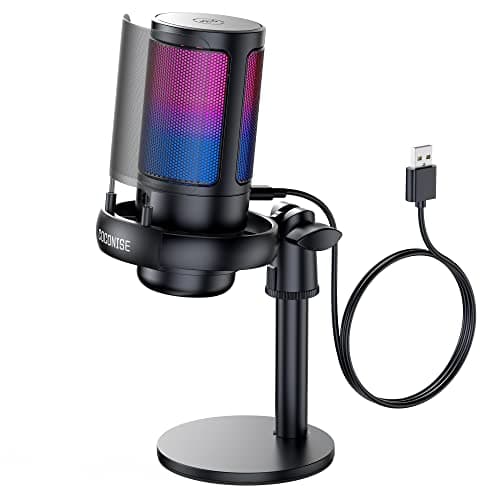
While both the COCONISE ME6S and GUEVWES ZTD39 cater to the budget-conscious gamer or streamer, their approaches to audio capture diverge significantly, influencing real-world performance. The most substantial difference lies in their core audio specifications: the COCONISE ME6S boasts an impressive 192kHz sample rate, quadruple that of the GUEVWES ZTD39’s 48kHz. In practical terms, this means Product A can capture a much richer, more detailed sound spectrum, making it potentially superior for professional-sounding podcasts, vocal recordings, or nuanced streaming where audio fidelity is paramount. While 48kHz is standard for most voice applications, 192kHz offers greater headroom for editing and a more 'studio-quality' feel.
Product A further distinguishes itself with an explicitly stated Cardioid polar pattern, a design choice inherently effective at isolating the sound source directly in front of the microphone while rejecting sounds from the sides and rear. This is a fundamental aspect of clear audio recording for voice. Product B, conversely, highlights its 'one-tap noise reduction' feature. While this offers convenience for users in noisier environments, it's a digital processing solution that might introduce artifacts or slightly reduce overall audio clarity compared to a naturally noise-rejecting microphone design paired with a high sample rate. For a quick fix to background hum, Product B's approach is appealing; for foundational audio quality, Product A leads.
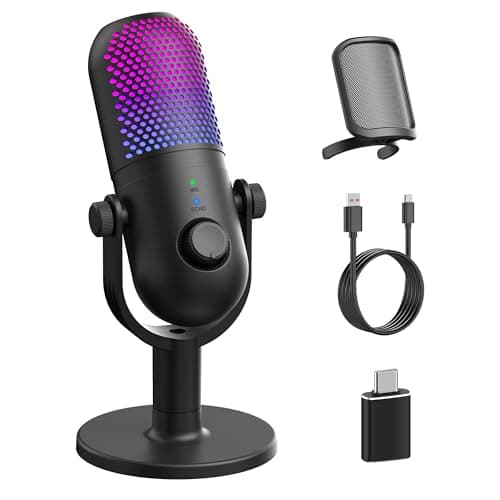
Both microphones offer essential features like quick mute buttons and zero-latency monitoring via headphone output (Product A explicitly states this, Product B implies it with zero-latency monitoring). However, Product A lacks a headphone volume control directly on the mic, which can be an inconvenience for some users. Product B's broader compatibility, including Android devices, gives it an edge for mobile content creators, though it notably excludes Xbox consoles. The build quality sees Product A featuring a weighted base for stability, while Product B includes a pop filter and desktop stand, balancing their respective value propositions at near-identical price points. The trade-off is often between raw audio capture capability and convenient digital processing or broader out-of-the-box compatibility.
Key Differences
The most significant spec differences at a glance
Sample Rate
300% moreAdvantages
Where each product wins

COCONISE
- Sample Rate: 300% higher (192 vs 48.0)
Which to Pick for Your Situation
Concrete scenarios with a clear recommendation
For high-fidelity podcasting or streaming
COCONISEProduct A's 192kHz sample rate provides significantly higher audio detail and clarity compared to Product B's 48kHz, crucial for professional-sounding content.
For gaming in a noisy room
GUEVWESProduct B's 'one-tap noise reduction' feature offers a convenient and effective way to minimize background sound without complex setup, beneficial for less-than-ideal acoustic environments.
For real-time vocal monitoring
TieBoth microphones feature zero-latency monitoring, allowing users to hear their voice in real-time without delay through a headphone output.
For a versatile plug-and-play setup across multiple devices
GUEVWESProduct B explicitly supports PC, Mac, PS4/5, and Android devices, offering broader compatibility, though it lacks Xbox support.
Who Should Buy Which?
Find the right product for your needs

Buy COCONISE if...
Gaming Microphone for PC:
The COCONISE Gaming Microphone (Product A) is ideally suited for the aspiring content creator, dedicated streamer, or casual podcaster who places a premium on crisp, high-fidelity audio capture. Its standout specification, the 192kHz sample rate, means that vocals and instrumentals will be recorded with exceptional detail and clarity, providing ample headroom for post-production and ensuring a professional sound profile. Users who want their voice to sound as rich and true-to-life as possible, distinguishing their content from competitors, will benefit most from this. The explicit Cardioid polar pattern is perfect for those who understand the importance of isolating their voice and minimizing ambient room noise through proper microphone technique. This buyer is likely operating on a budget, given the $23.99 price, but isn't willing to compromise on core audio quality. They might have a dedicated setup or are willing to adapt to the fixed stand, perhaps investing in an aftermarket boom arm if needed, and can manage headphone volume through their PC or streaming software. They value the real-time audio monitoring for confidence in their delivery. They are giving up the 'one-tap noise reduction' convenience and Android compatibility of Product B, but gain a superior foundation for sound capture that can elevate their content.

Buy GUEVWES if...
USB Microphone for PC
The GUEVWES USB Microphone (Product B) is the perfect choice for the pragmatic gamer, casual streamer, or online communicator who needs an immediate, effective solution for clear voice transmission, especially if operating in a less-than-ideal acoustic environment. For just $23.39, its standout 'one-tap noise reduction' feature is a game-changer, allowing users to instantly cut down on fan hum, keyboard clicks, or background chatter without needing complex software or audio engineering knowledge. This buyer prioritizes simplicity and functional ease over raw, unadulterated audio fidelity. This user likely wants a true plug-and-play experience that works across multiple platforms, benefiting from its compatibility with PC, Mac, PS4/5, and notably, Android devices, making it a versatile tool for mobile content creation. They appreciate the included pop filter and desktop stand for a complete out-of-the-box setup. While its 48kHz sample rate is perfectly adequate for voice communication and most streaming, they are less concerned with producing studio-grade recordings and more focused on ensuring their teammates or audience can hear them clearly without annoying distractions. They are giving up the higher audio resolution and explicit cardioid pattern of Product A but gain unparalleled ease of use for noise management and broader device compatibility for their daily needs.
Spec Comparison
9 specs compared
| Specification |  |  |
|---|---|---|
| Price | $24 | $23 |
| Rating | 4.3(4.7k) | 4.3(936) |
| Sample Rate | 192 kHz | 48 kHz |
| Connection | USB | USB |
| Polar Pattern | Cardioid | — |
| Zero-Latency | Yes | Yes |
| Mute Button | Yes | Yes |
| Gain Control | Yes | Yes |
| Model Number | ME6S | ZTD39 |
| Headphone Out | Yes | — |
| Software | — | None |
Swipe horizontally to see all columns
Pros & Cons
Quick overview of strengths and weaknesses
COCONISE Gaming Microphone
- Quick mute via touch sensor and RGB indicator
- Real-time audio monitoring via headphone jack
- Cardioid pattern reduces background noise
- High 192kHz sample rate for audio capture
- RGB lights not independently controllable
- Fixed stand limits optimal mic placement
- No headphone volume control on the mic
GUEVWES USB Microphone
- One-tap noise reduction clears background sound.
- Zero-latency audio monitoring for real-time feedback.
- Plug-and-play: PC, Mac, PS4/5, and Android devices.
- Quick mute button with clear LED status indicator.
- Not compatible with Xbox consoles.
- Lacks dedicated software for advanced settings.
- RGB lighting offers no functional benefit.
Frequently Asked Questions
Common questions about this comparison
What is the primary difference in audio quality?
The COCONISE ME6S (Product A) records at a 192kHz sample rate, offering higher fidelity and more detailed audio capture than the GUEVWES ZTD39 (Product B), which records at 48kHz. Product A also explicitly uses a Cardioid polar pattern for focused sound.
Do these microphones offer real-time audio monitoring?
Yes, both microphones feature zero-latency monitoring. Product A specifically includes a headphone output, allowing users to hear their voice as they speak without any delay, which is essential for accurate recording.
Which microphone is better for reducing background noise?
Product A uses a Cardioid polar pattern to naturally reduce off-axis background noise, while Product B offers a 'one-tap noise reduction' button for digital background sound clearing. Product A's inherent design might offer a cleaner, less processed sound.
Are these microphones compatible with gaming consoles?
Both the COCONISE ME6S and GUEVWES ZTD39 are compatible with PS4 and PS5. However, Product B is explicitly noted as not compatible with Xbox consoles, while Product A does not specify Xbox compatibility.
Do either of these microphones have gain control?
Yes, both the COCONISE ME6S (Product A) and GUEVWES ZTD39 (Product B) include gain control directly on the microphone, allowing users to adjust input sensitivity for optimal audio levels.
Related Comparisons
Similar products people compare
Explore Other Categories
Popular comparisons across the site




Ask AI
Get instant answers about specs
Get the Deets
Ask our AI assistant
Ask Deets anything!