Our Verdict
NexiGo N680E Pro 4K Webcam with Ring Light Wins
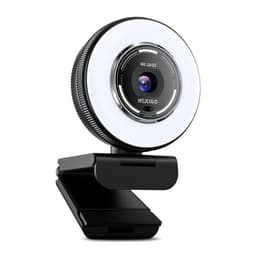
This model edges out the N60 Pro primarily due to its advanced PDAF autofocus, which offers faster and more precise subject tracking, and the invaluable integrated ring light. For only $1.29 more ($71.28 vs $69.99), the N680E Pro provides superior image consistency and lighting control, even though both feature 4K resolution and 1080p 60fps video. The NexiGo N60 Pro is the better pick only for those strictly adhering to the lowest possible budget and for users who have ample, controlled lighting, thus negating the primary advantage of the N680E Pro's ring light.
Bottom Line: NexiGo N680E Pro 4K Webcam with Ring Light is the better choice. This model edges out the N60 Pro primarily due to its advanced PDAF autofocus, which offers faster and more precise subject tracking, and the invaluable integrated ring light.
In-Depth Analysis
How they compare in practice
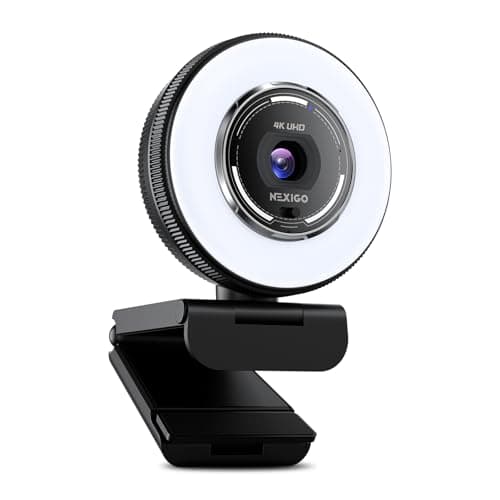
While both the NexiGo N60 Pro and the NexiGo N680E Pro offer robust 4K UHD video capture and smooth 1080p at 60 frames per second, their real-world performance diverges significantly due to key technological enhancements in the N680E Pro. The most impactful difference lies in their autofocus systems and the N680E Pro's integrated lighting. The N60 Pro utilizes standard autofocus (AF), which performs adequately for static subjects but can lag or "hunt" when there's movement. In contrast, the N680E Pro boasts PDAF (Phase Detection Autofocus). This advanced system uses phase detection to quickly and precisely lock onto subjects, making it far more responsive to motion. For users who gesticulate, lean back and forth, or involve multiple people in a frame, the N680E Pro will consistently deliver sharper, more stable video without distracting blur. Furthermore, the N680E Pro's integrated ring light is a game-changer for many users. This feature allows for adjustable brightness and tone, effectively eliminating shadows, improving skin tones, and ensuring optimal illumination even in dimly lit environments or rooms with harsh overhead lighting. The N60 Pro, lacking this, will rely entirely on external light sources, often resulting in less flattering or inconsistent video quality. For content creators, streamers, or remote professionals where looking your best is crucial, the N680E Pro's lighting capability saves the cost and clutter of a separate ring light. Both cameras share an identical 80-degree field of view and feature dual noise-canceling microphones, providing comparable audio quality for standard use. However, the N680E Pro delivers a significantly improved overall user experience in terms of visual fidelity and consistency, offering a higher value proposition for just a $1.29 price difference. The N60 Pro is a capable 4K webcam but without the refined focus and essential lighting flexibility of its slightly pricier counterpart, it represents a less complete package for modern video communication demands.
Which to Pick for Your Situation
Concrete scenarios with a clear recommendation
For professional video calls in varied lighting
NexiGoThe N680E Pro's integrated ring light ensures consistent, professional illumination regardless of ambient room lighting, while its PDAF autofocus keeps you sharp.
For content creation or streaming with motion
NexiGoThe N680E Pro's PDAF autofocus offers superior tracking speed and accuracy, maintaining sharp video quality even when subjects move, crucial for dynamic content.
For basic remote work or online learning on a tight budget
NexiGoFor those needing a reliable 4K webcam and already have decent room lighting, the N60 Pro provides excellent resolution and frame rate for $1.29 less.
For a gaming setup with a Nintendo Switch 2
NexiGoThe N60 Pro explicitly states "Works with Switch 2" while the N680E Pro notes "Switch 2 needs a USB-C to USB-A adapter," making the N60 Pro more plug-and-play for this specific console.
Who Should Buy Which?
Find the right product for your needs

Buy NexiGo if...
NexiGo N60 Pro 4K
The NexiGo N60 Pro is the ideal choice for individuals seeking a high-quality 4K webcam who prioritize value and essential functionality over premium enhancements. This buyer typically operates in environments with consistent and sufficient ambient lighting, meaning the absence of an integrated ring light isn't a significant drawback. They might be remote workers, students, or casual streamers whose primary need is sharp, clear video for daily meetings, online classes, or personal calls. The N60 Pro's 4K UHD Sony Sensor ensures exceptional detail, while its ability to record at 1080p 60 fps provides a smooth, fluid visual experience, critical for conveying professionalism or engaging effectively. The standard autofocus is perfectly adequate for users who tend to remain relatively static during video calls, and the noise-canceling mics deliver clear audio. At $69.99, it offers substantial performance for its price, making it an excellent fit for those with a strict budget. While it lacks PDAF and a built-in light, its robust core specifications fulfill the needs of users who desire reliable performance without the added cost or complexity of extra features.

Buy NexiGo if...
NexiGo N680E Pro 4K
The NexiGo N680E Pro is custom-made for the discerning user who demands professional-grade video quality and adaptability, even in challenging lighting conditions or with dynamic movement. This buyer includes content creators, serious streamers, online educators, or business professionals who frequently present remotely and require their video to always look its best. The N680E Pro's standout feature, the integrated ring light, is a critical asset, providing adjustable brightness and tone to ensure optimal illumination, eliminating harsh shadows and enhancing facial clarity regardless of ambient room lighting. Paired with its advanced PDAF (Phase Detection Autofocus), this webcam excels at keeping subjects sharply focused even when they move, gesticulate, or change positions within the frame, ensuring a consistently crisp image for their audience. While its core 4K resolution and 1080p 60fps capabilities mirror the N60 Pro, the N680E Pro elevates the user experience with these crucial enhancements. For just $71.28, a marginal increase over the N60 Pro, this webcam delivers a significantly more polished and professional visual output, making it an indispensable tool for anyone whose online presence is paramount.
Spec Comparison
11 specs compared
| Specification | 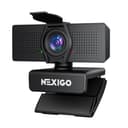 | 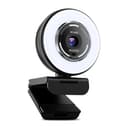 |
|---|---|---|
| Price | $70 | $71 |
| Rating | 4.3(52.3k) | 4.4(7.1k) |
| Resolution | 4K | 4K |
| Autofocus | Yes | Yes |
| Model Number | N60 Pro | B0GCYZVCSD |
| Sensor Brand | Sony | Sony |
| Tripod Mount | Yes | Yes |
| Autofocus Type | AF | PDAF |
| Connection | USB-A | USB-A |
| Microphone Type | noise-canceling | noise-canceling |
| Privacy Shutter | Yes | Yes |
| Max Frame Rate Fps | 60 | 60 |
| Field Of View Degrees | 80 | 80 |
Swipe horizontally to see all columns
Pros & Cons
Quick overview of strengths and weaknesses
NexiGo N60 Pro
- Provides 4K UHD video resolution.
- Achieves smooth 1080p at 60 frames per second.
- Fast autofocus maintains sharp image clarity.
- Dual noise-canceling mics capture clear audio.
- Full 4K output depends on software settings.
- Microphone optimal range is limited to 10 feet.
- Fixed 80-degree field of view lacks adjustment.
NexiGo N680E Pro
- 4K resolution sensor provides sharp video output
- Smooth 1080p video capture at 60 frames per second
- PDAF autofocus tracks motion with speed and precision
- Dual noise-canceling mics improve voice clarity
- Full 4K resolution output depends on software
- Switch 2 needs a USB-C to USB-A adapter
- USB-A connection limits direct use with modern USB-C ports
Frequently Asked Questions
Common questions about this comparison
What is the main difference in autofocus between the two models?
The N60 Pro uses standard AF, which is generally responsive. The N680E Pro features PDAF (Phase Detection Autofocus), offering significantly faster and more precise subject tracking, especially beneficial for movement within the frame.
Does either webcam offer a built-in light source?
Yes, the NexiGo N680E Pro includes an integrated ring light with adjustable brightness and tone. The NexiGo N60 Pro does not have a built-in light, relying solely on external lighting.
Can both webcams achieve 4K resolution?
Both webcams are equipped with 4K UHD Sony sensors, capable of 4K resolution. However, the actual output resolution depends on software settings and the capabilities of the connected device.
Are the microphones different between the N60 Pro and N680E Pro?
No, both models feature dual noise-canceling microphones. They are designed to capture clear audio by reducing background noise, with comparable performance.
Which webcam is better for use with a Nintendo Switch 2?
The N60 Pro is explicitly stated to "Works with Switch 2" directly. The N680E Pro requires a USB-C to USB-A adapter for Switch 2 compatibility, making the N60 Pro more convenient.
Related Comparisons
Similar products people compare
NexiGo vs acer
$71 vs $60
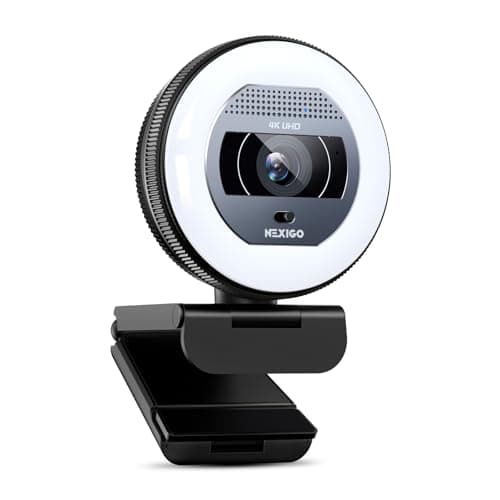
NexiGo vs NexiGo
$70 vs $100
EMEET vs NexiGo
$60 vs $70
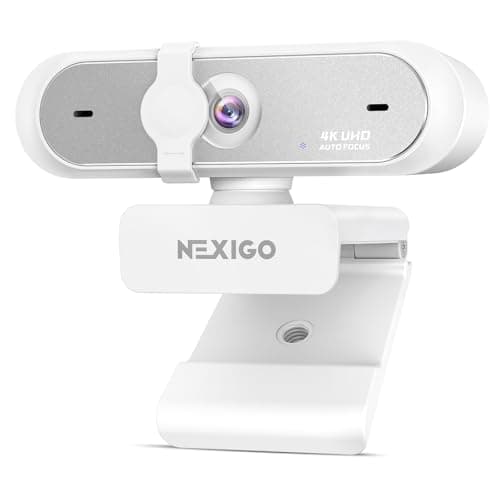
NexiGo vs NexiGo
$70 vs $71
NexiGo vs NexiGo
$71 vs $100
EMEET vs NexiGo
$60 vs $71
NexiGo vs NexiGo
$70 vs $70
DEPSTECH vs NexiGo
$50 vs $70
EMEET vs NexiGo
$59 vs $70
NexiGo vs acer
$70 vs $60
EMEET vs NexiGo
$48 vs $71
DEPSTECH vs NexiGo
$50 vs $71
EMEET vs NexiGo
$59 vs $71
EMEET vs NexiGo
$48 vs $70
Explore Other Categories
Popular comparisons across the site


Ask AI
Get instant answers about specs
Get the Deets
Ask our AI assistant
Ask Deets anything!