Our Verdict
Creality K1C Wins
This FDM printer excels with an unparalleled 600mm/s print speed, far surpassing typical FDM speeds, and offers support for high-temperature engineering filaments up to 300 P8C. Its robust capabilities make it ideal for rapid functional prototyping and durable part production at its $399 price point. The ELEGOO Mars 5 Ultra is the better pick for users prioritizing extreme detail and resolution in models like miniatures or jewelry, thanks to its 9K MSLA technology and lower $284.98 price, despite its significantly smaller build volume and inherent limitations of resin printing.
Bottom Line: Creality K1C is the better choice. This FDM printer excels with an unparalleled 600mm/s print speed, far surpassing typical FDM speeds, and offers support for high-temperature engineering filaments up to 300 P8C.
In-Depth Analysis
How they compare in practice
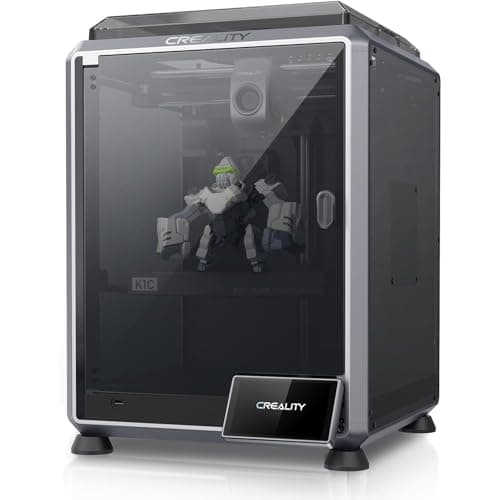
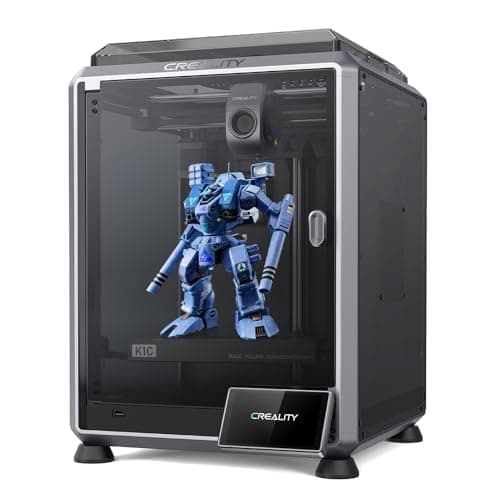
The Creality K1C and ELEGOO Mars 5 Ultra represent two distinct approaches to 3D printing, FDM (Fused Deposition Modeling) and MSLA Resin respectively, each with unique strengths and applications. The K1C, priced at $399, stands out with its incredible 600mm/s maximum print speed, positioning it as a powerhouse for rapid manufacturing and functional prototyping. Its direct extruder and 300 P8C nozzle temperature support advanced filaments, including carbon fiber, making it suitable for producing strong, durable parts. While its build volume is not specified, FDM printers typically offer larger build areas for bigger models.
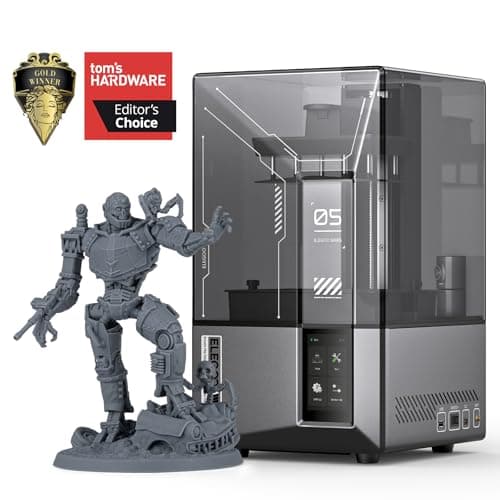
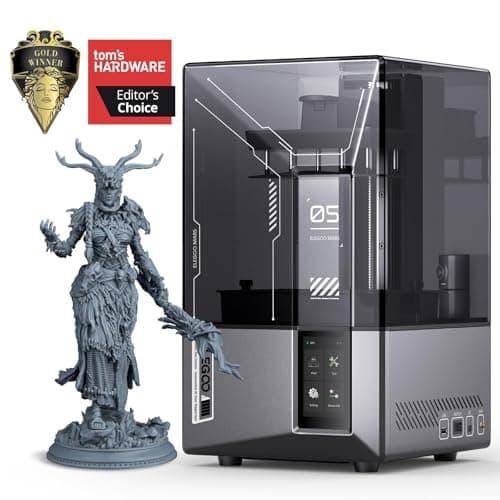
In contrast, the ELEGOO Mars 5 Ultra, at a more accessible $284.98, is engineered for precision and fine detail. Its 9K MSLA screen delivers an astounding 18.18 P8m XY resolution, which is critical for intricate models like miniatures, jewelry, or highly detailed artistic pieces. While its stated print speed of 150mm/h (approximately 0.04mm/s) might seem slow compared to FDM, it's exceptionally fast for a resin printer, significantly reducing cure times per layer. The build volume of 153.42x77.72x164.85mm is typical for a resin printer, accommodating smaller, more intricate designs.
Real-world use highlights these differences. The K1C is a workhorse for those needing to iterate quickly or produce structurally sound components without extensive post-processing. Its auto-leveling and AI camera enhance usability and reliability for sustained production. However, FDM prints inherently show layer lines. The Mars 5 Ultra, conversely, delivers smooth, almost injection-molded quality surfaces, but demands more involved post-processing (washing, curing) and careful handling of liquid resins. Both printers feature auto-leveling and AI cameras for print monitoring, simplifying setup and increasing success rates within their respective technologies.
Ultimately, the choice hinges on application. The K1C offers speed, material versatility, and robustness for functional prints, representing excellent value for productivity. The Mars 5 Ultra provides unparalleled detail and surface finish for aesthetic or highly intricate models at a lower entry cost, a compelling option for artists and detail-oriented hobbyists willing to engage with the specifics of resin printing.
Key Differences
The most significant spec differences at a glance
Max Print Speed Mm S
1439900% moreAdvantages
Where each product wins

Creality
- Max Print Speed Mm S: 1439900% higher (600.0 vs 0.041666666666666664)
Which to Pick for Your Situation
Concrete scenarios with a clear recommendation
For rapid functional prototyping
CrealityThe Creality K1C boasts an exceptional 600mm/s maximum print speed, significantly accelerating the production of functional parts and prototypes.
For highly detailed miniatures or artistic models
ELEGOOThe ELEGOO Mars 5 Ultra's 9K MSLA resolution and 18.18 P8m XY precision offer superior detail and smoother surface finishes compared to FDM.
For printing with advanced engineering filaments (e.g., carbon fiber)
CrealityThe Creality K1C supports a 300 P8C nozzle temperature and features a clog-free direct extruder specifically designed for carbon fiber and other high-performance materials.
For a budget-conscious buyer seeking high quality
ELEGOOAt $284.98, the ELEGOO Mars 5 Ultra offers outstanding resolution and print quality for its price, making it an excellent value for intricate models.
Who Should Buy Which?
Find the right product for your needs

Buy Creality if...
Creality K1C 3D Printer,
The Creality K1C is ideal for users who prioritize speed, material versatility, and the production of strong, functional parts. This includes hobbyists who want to quickly iterate on designs or produce durable components for personal projects, as well as small businesses or educational institutions needing rapid prototyping capabilities. The K1C's standout 600mm/s maximum print speed means less waiting and more creating, making it perfect for anyone focused on productivity. Its ability to reach 300 P8C nozzle temperatures and reliably feed carbon fiber filaments with its direct extruder opens doors to advanced engineering materials for robust applications. Buyers who choose the K1C are looking for a workhorse FDM printer that can handle diverse printing needs from PLA to ABS and composites, offering both high performance and features like auto-leveling and an AI camera for ease of use. They're willing to invest $399 for a significant leap in FDM technology, knowing they're sacrificing the ultra-fine surface detail that resin printers offer for the sake of speed and material strength.

Buy ELEGOO if...
ELEGOO Mars 5 Ultra
The ELEGOO Mars 5 Ultra is perfectly suited for artists, miniature enthusiasts, jewelers, and anyone for whom extreme detail and smooth surface finish are paramount. Its comparatively lower price of $284.98 makes high-resolution resin printing accessible without compromising quality. The Mars 5 Ultra's 9K MSLA screen and 18.18 P8m XY resolution deliver prints with incredible fidelity, capturing intricate textures and sharp edges that FDM printers simply cannot match. Users will appreciate its fast printing speed for a resin machine (up to 150mm/h), significantly reducing the time it takes to produce small, highly detailed objects. Ideal buyers are comfortable with the post-processing steps (washing and curing) inherent to resin printing and understand the safety precautions involved. They prioritize aesthetic quality and precision for small-scale models over the ability to print large, robust functional parts, leveraging features like automatic leveling and an AI camera to ensure successful, flawless prints. This printer is for those who crave perfection in tiny details and seek an excellent value proposition in the resin 3D printing space.
Spec Comparison
9 specs compared
| Specification |  |  |
|---|---|---|
| Price | $399 | $285 |
| Rating | 4.2(2.7k) | 4.3(786) |
| Build Volume mm | UNKNOWN | 153.42x77.72x164.85 |
| Max Print Speed mm S | 600 | 0.04 |
| Leveling Type | Auto | Auto |
| Enclosed | Yes | Yes |
| Model Number | K1C | — |
| Printer Type | FDM | Resin (SLA/MSLA) |
| Nozzle Temp Max C | 300 | — |
| Resume Print | — | Yes |
| WiFi | — | Yes |
Swipe horizontally to see all columns
Pros & Cons
Quick overview of strengths and weaknesses
Creality K1C 3D
- 600mm/s print speed enables rapid part production
- 300C nozzle supports high-temp engineering filaments
- Direct extruder reliably feeds carbon fiber filaments
- Auto-leveling simplifies setup and bed adhesion
- Proprietary tri-metal nozzle may limit third-party options
- Enclosed build chamber can impede quick access for repairs
- High speed operation could increase wear on moving parts
ELEGOO Mars 5
- Fast print speed up to 150mm/h reduces production time.
- 9K screen delivers 18.18µm XY resolution for fine detail.
- Automatic leveling simplifies printer setup.
- Smart sensor detects print issues and resumes operation.
- WiFi file transfer speed is moderate at 6-10Mbps.
- Requires manual resin calibration for optimal parameters.
- Relies on complex AI and sensor systems for fault detection.
Frequently Asked Questions
Common questions about this comparison
What is the key difference in print speed between these two printers?
The Creality K1C achieves 600mm/s for FDM layer deposition, ideal for rapid prototyping. The ELEGOO Mars 5 Ultra prints up to 150mm/h (0.04mm/s) for resin, which is fast for its technology, focusing on curing layers quickly rather than linear movement.
Which printer is better for highly detailed models like miniatures?
The ELEGOO Mars 5 Ultra is superior for detail. Its 9K MSLA screen delivers 18.18 P8m XY resolution, creating exceptionally smooth and precise miniature models, surpassing FDM capabilities.
Can either printer handle high-temperature filaments?
Yes, the Creality K1C can print with high-temperature engineering filaments, supporting a maximum nozzle temperature of 300 P8C, including carbon fiber types. The ELEGOO Mars 5 Ultra uses UV-curable resins.
Do both printers feature automatic bed leveling?
Yes, both the Creality K1C and the ELEGOO Mars 5 Ultra come equipped with automatic leveling, simplifying the setup process and ensuring consistent first-layer adhesion for reliable printing.
What is the price difference between these 3D printers?
The Creality K1C is priced at $399.00, while the ELEGOO Mars 5 Ultra is more affordable at $284.98. The Mars 5 Ultra offers a lower entry point for high-resolution resin printing.
Related Comparisons
Similar products people compare
Explore Other Categories
Popular comparisons across the site


Ask AI
Get instant answers about specs
Get the Deets
Ask our AI assistant
Ask Deets anything!